Logic Loft Blog
Word Adventure
6 articles
Most word puzzles reset the moment you finish them. You solve the anagram, post the score, and the board forgets you existed by the time you open the app again tomorrow. Word Adventure games refuse that arrangement. They bolt a journey onto the puzzle — a map, a character, a reason to keep playing beyond the dopamine of one clean solve — so that a wrong answer costs you something more durable than a moment's pride.
That single change reorders the whole design problem. A crossword only has to hold your attention for one sitting; its difficulty curve is set once, by a themed grid and a Friday deadline. An adventure has to hold you for dozens of hours, so the puzzles have to escalate against a story that is escalating on its own schedule, and the two clocks rarely agree. Ease the puzzles and the story outruns the challenge. Toughen them and players stall on a chapter they are otherwise desperate to finish.
It is worth being specific about what a wrong guess costs in this genre, because that is the actual mechanical difference from a normal word game. In a daily puzzle a bad guess burns one of your attempts. In an adventure it can cost health, a resource you were saving, or a return trip to a location you thought you had cleared — the failure state reaches backward into progress you had already made, not just forward into the puzzle in front of you.
Epic Words, which we build ourselves, is what pulled us toward this genre in the first place — a word-ladder adventure that runs across fifty kingdoms, where each ladder is also a step through a place rather than an isolated grid. The genre sits at a real crossroads: it overlaps word-based RPGs that use vocabulary as a combat stat, and puzzle-adventure hybrids that use the puzzle as a lock on the next room rather than the point of the game.
We have not written about this genre elsewhere on the site yet — that is a gap in the coverage, not a judgment on the games in it. It sits close to what we actually spend our time building: word and puzzle mechanics, just without the map wrapped around them.
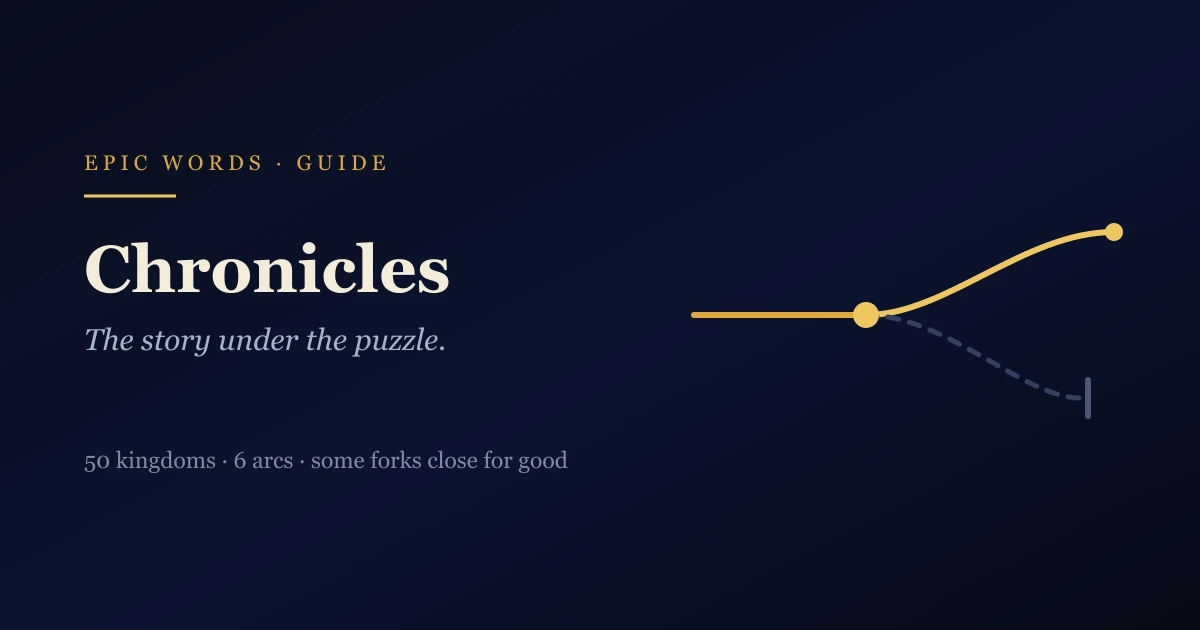
Chronicles: The Story Under the Epic Words Puzzle
How the Chronicles layer of Epic Words works — when an Encounter interrupts, why some choices permanently close a path, what the Journal records, and how the Echo Stone lets you replay a finished Chronicle.
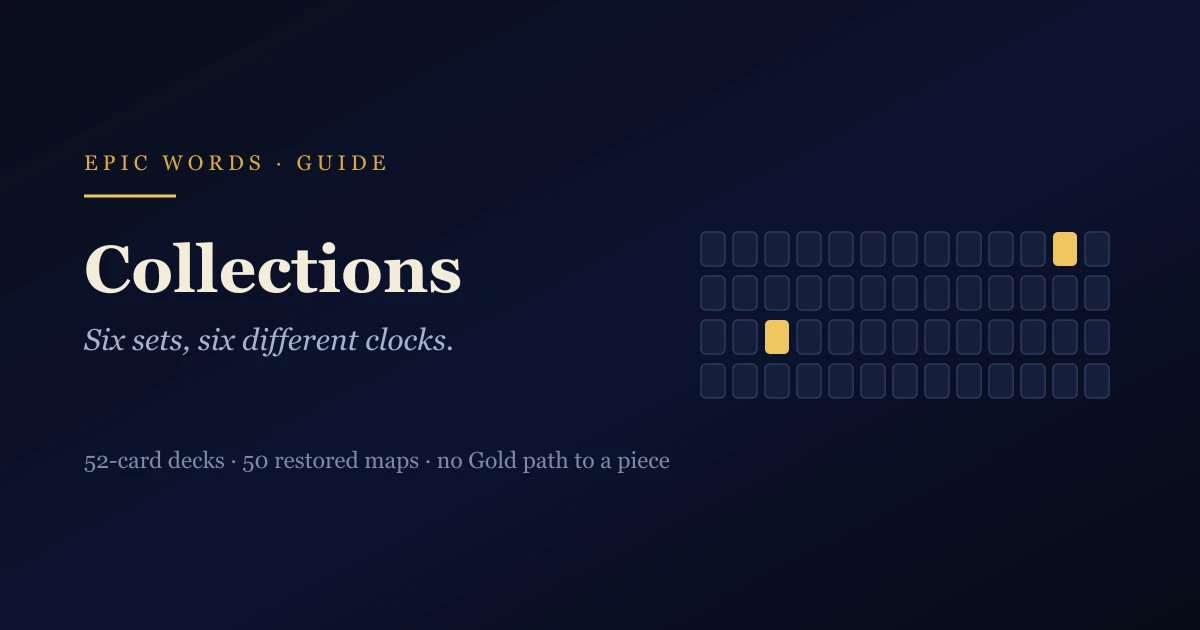
How to Build Collections in Epic Words
Epic Words keeps six separate collections, and they fill at wildly different speeds. Here is what each one tracks, what it actually costs to complete, and which one is designed never to finish.
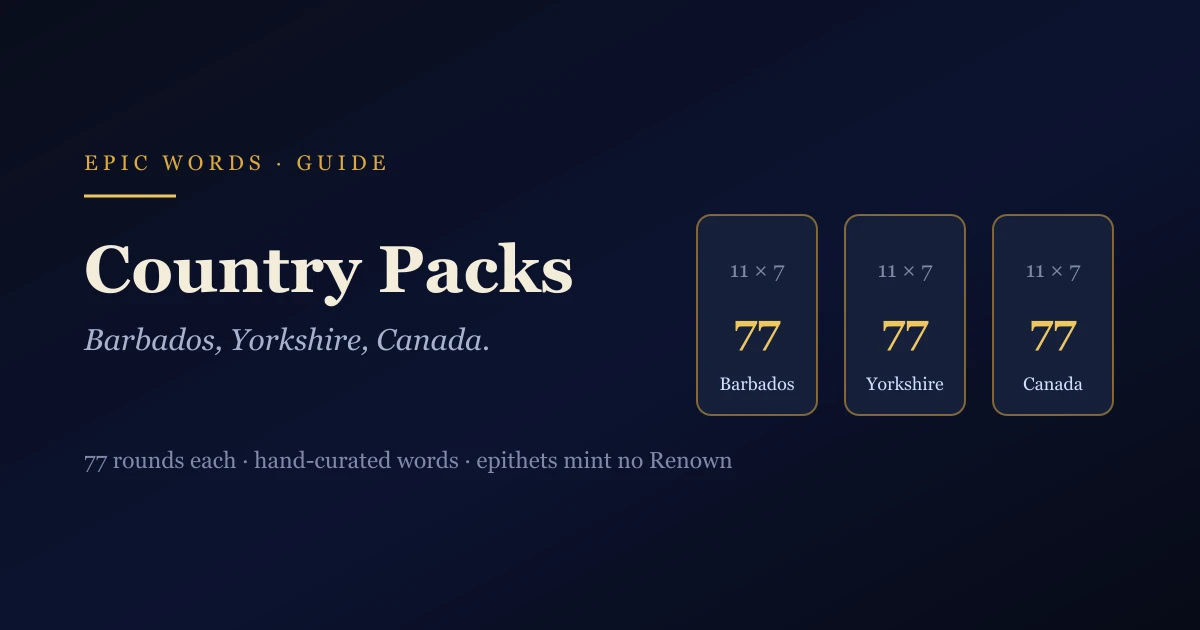
The Epic Words Country Packs: Barbados, Yorkshire and Canada
A plain look at the three Epic Words country packs — what a 77-round pack actually contains, what $1.99 buys you, and why a pack epithet can never move you up the Renown leaderboard.
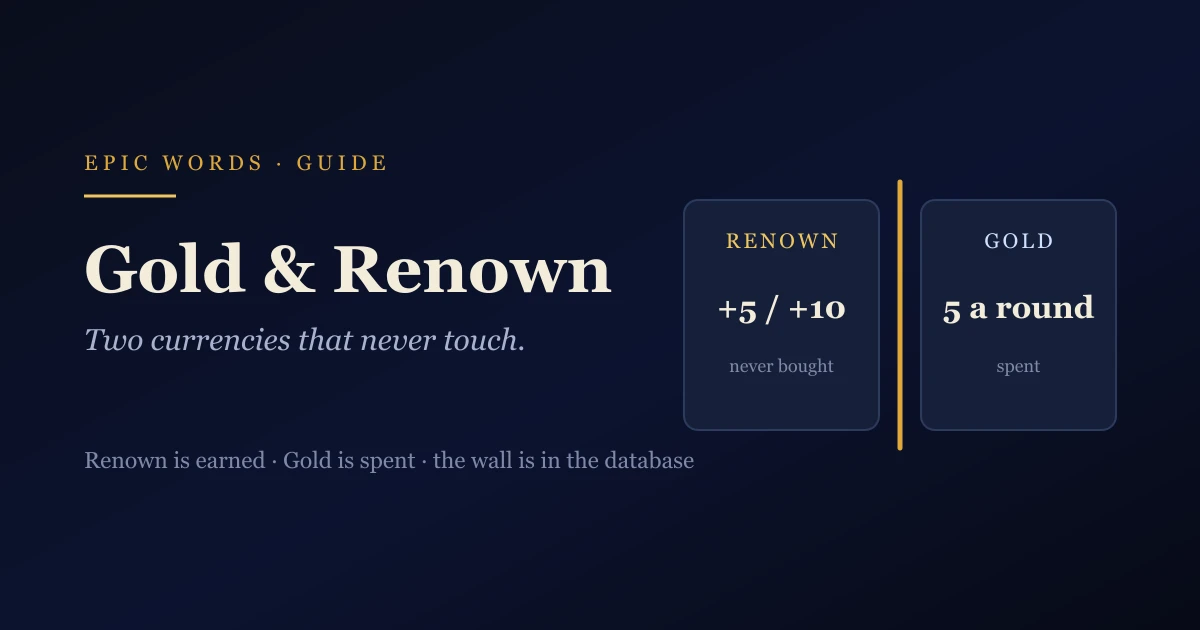
Gold, Renown and the Tools in Epic Words
Epic Words runs two currencies that never touch — Renown, minted only by six skill sources and enforced in the database, and Gold, which pays for hints, tools and Vault rolls.
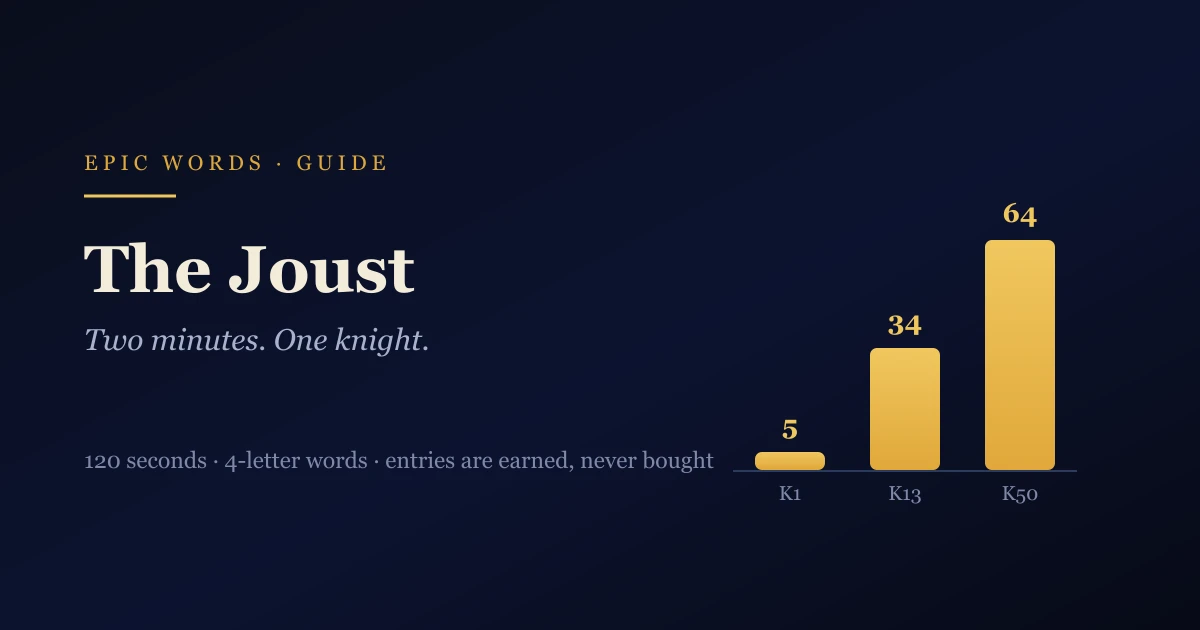
The Joust: Epic Words' Two-Minute Word Sprint
The Joust is a fixed 120-second, four-letter sprint against one reigning knight per kingdom. Here is what the targets are, what a win pays, and why entries cannot be bought.
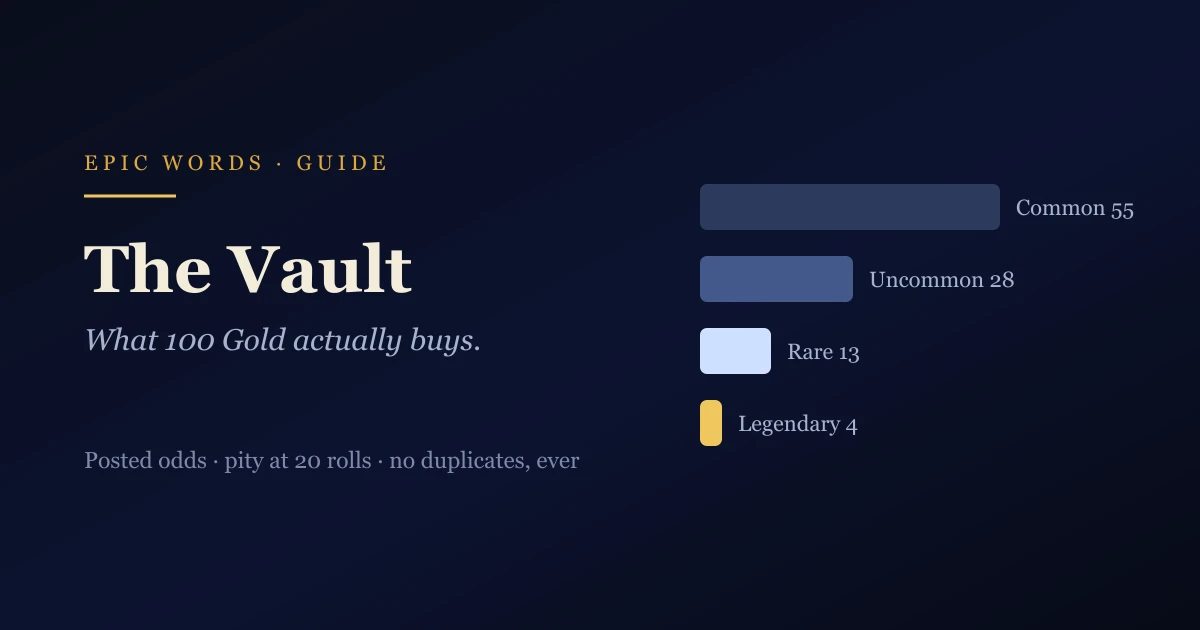
How to Explore the Vault in Epic Words
A plain walkthrough of the Vault in Epic Words — what a roll costs, the posted tier odds, how the pity timer and no-duplicate rule work, and the two rewards the paid roll will never give you.
Ten Word Adventure games worth playing
- 1.
Bookworm Adventures
Takes the tile-swapping word game Bookworm and turns every solved word into an attack against a monster in a linear campaign map. Longer words hit harder and burn fire tiles for bonus damage, so vocabulary becomes damage output rather than just a score.
- 2.
Alphabear
Build words on a shrinking letter grid to summon and grow bears, then carry those bears into new puzzle boards across a light, whimsical progression. The collection layer and cooldown timers give an otherwise ordinary word-grid game a genuine sense of a world continuing after you close the app.
- 3.
Letter Quest: Grimm's Journey
A turn-based RPG where spelling words is the entire combat system: longer words and better letter combinations deal more damage to the monster on the opposite side of the screen. It commits harder to the spelling-as-combat idea than almost anything else on this list.
- 4.
Puzzle Quest
Not a word game at all, but the template most word-adventure hybrids are quietly copying: match-three tiles resolve into RPG damage, mana, and loot across a real campaign map. Worth knowing as the adjacent genre that proved players will grind a simple grid puzzle for a story's sake.
- 5.
Scribblenauts
Instead of solving a fixed puzzle, you type the noun that solves it: summon a ladder, a rope, a rocket, and the world responds accordingly. It belongs on this list as word-as-mechanic rather than word-as-puzzle — the writing is the tool, not the obstacle.
- 6.
Typing of the Dead
An arcade light-gun zombie shooter reworked so that typing the word on screen, correctly and fast, is how you kill the enemy standing in front of you. It is an adjacent cousin more than a true word adventure, but the campaign structure and escalating word difficulty earn it a place here.
- 7.
Wordscapes
A crossword-style word search with thousands of levels arranged across named regions on a map, each one unlocking a small piece of scenery as a reward. There is no story to speak of, but the level-to-level progression and the sense of travelling somewhere gives it a genuine adventure shape.
- 8.
Word Cookies
Build words from a fixed letter wheel to clear level packs themed around different foods and locations, unlocking the next pack only once the last one is cleared. Like Wordscapes, it trades narrative for pure structural progression, which is honest but worth naming plainly rather than dressing up.
- 9.
Bonza Word Puzzle
Drag interlocking word fragments into a hidden crossword shape, then unlock the next themed puzzle pack as a reward for finishing the last one. The puzzle mechanic itself is unusually good; the journey here is really a sequence of unlocked packs rather than a narrative through-line.
- 10.
Knotwords
Each puzzle is a set of small constrained grids that only resolve once every one is correctly filled, so the progression lives inside a single sitting rather than across a saved campaign. It has no story and no map, but the layered structure is the closest thing to a journey a standalone daily puzzle offers.