Logic Loft Blog
Hidden Object
2 articles
Hidden object games are the quietest corner of the puzzle world and one of its largest. The premise has not changed since the I SPY books: you are given a densely illustrated scene and a list of things to find in it. A pocket watch. A blue umbrella. A cat, somewhere. You look until you see them.
The odd part, and the reason the genre rewards more thought than it looks like it should, is how little of it involves concealment. Most of the items on your list are drawn at full strength and left in clear view, and you still cannot see them. Everything interesting happens in the gap between an object being present and an object being noticed, which is also why the difficulty refuses to dissolve when you slow down and look carefully.
Four techniques do nearly all of the work. The first is camouflage, where an object's outline is made to coincide with something already in the picture — a comb drawn as the slats of a shutter, a ladder as the rigging of a boat. A boundary in a drawing can only be owned by the shape on one side of it, and once your eye has awarded it to the shutter it does not hand it back. The second is incongruity, which conceals nothing whatsoever: the object sits at full size in clear space, in a room its kind never appears in — a snowshoe propped in a greenhouse. It survives because you are not really examining the picture, you are examining the summary your eye made of it a second after you arrived, and that summary holds only what greenhouses are supposed to hold.
The third is crowding. Here the object is entirely distinct and simply outnumbered, and when a target differs from its neighbours by no single property but only by the arrangement of properties they all share, it cannot be picked out at a glance; it has to be examined one candidate at a time. That is the whole difference between a hardware aisle and an empty stairwell, and it holds even when what you want is no smaller in one than the other. The fourth and rarest is ambiguity, where the lines genuinely describe two different objects and your eye settled on the wrong one before you began. Looking harder cannot rescue you, because nothing is missing from your view — the trouble is that you are already successfully seeing something else.
One experiment sits underneath all four. Simons and Chabris, in 1999, gave viewers footage of two teams passing basketballs and a job to do while watching: keep count. A person in a gorilla suit strolled through the shot, and 46% of them reported nothing unusual afterwards. The blindness was manufactured by the job rather than the suit — viewers given the same footage and nothing to count spot the gorilla every time. A hidden object game issues that job before the scene has even loaded, in the form of a list, which is the quiet reason an item you have already stared straight at can be sitting in the open the moment its name comes up.
The modern genre has grown well past find-the-item. Most of the large titles wrap their scenes in a mystery: you are a detective, an heir to a strange estate, a traveller in a city that should not exist, and each cleared scene advances a story and unlocks the next location. Others have gone the opposite way and stripped everything back to pure looking, with no narrative and no energy meters.
We write about this genre from the building side as well as the playing side: the articles below take the four techniques apart with worked figures, and one of them is a scene we drew ourselves with the same character hidden in it twenty-three times, so you can test all four on a picture whose answer we are willing to publish. Beneath those is where we would point someone who just wants to start playing.
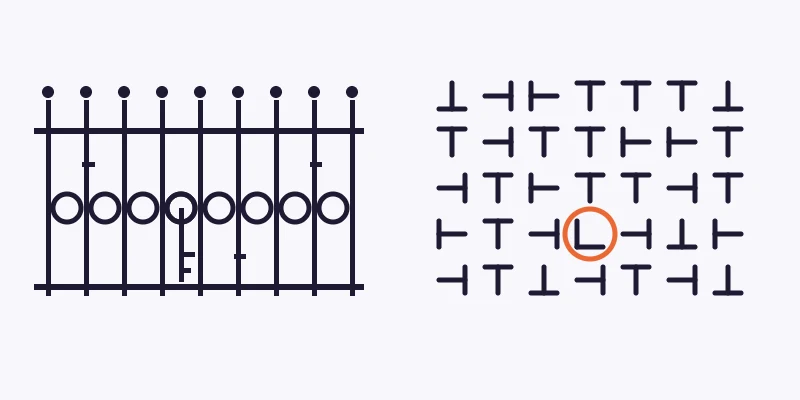
The Four Ways a Hidden Object Game Hides Things
Almost nothing in a hidden object scene is actually hidden. Four techniques do the work, and each exploits a different documented failure in how looking works.
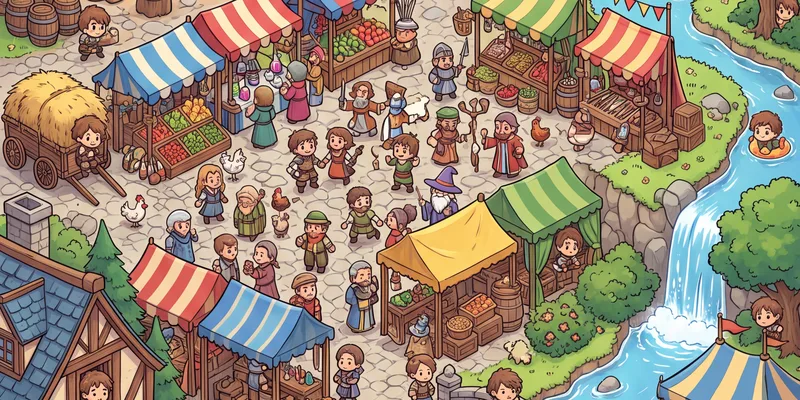
Where's Epic Words? A Hidden Object Puzzle You Can Play Right Here
We hid the Epic Words hero twenty-three times in one crowded medieval village. Scroll the scene, tap him when you spot him, and the answers are one button away.
Ten Hidden Object games worth playing
- 1.

Screenshot: Wooga June's Journey
Wooga's 1920s murder mystery is the most-played modern hidden object game, and the one that proved the genre could carry a serialised story. You restore an estate between scenes, which gives the looking a purpose.
- 2.

Screenshot: Hidden Folks B.V. Hidden Folks
A hand-drawn, black-and-white world you poke rather than scan: tents unzip, hatches open, bushes rustle aside. It replaces the usual list of props with a genuinely playful scene, and it has no timers or energy meters at all.
- 3.
Mystery Case Files: Ravenhearst
The Big Fish title that defined the PC era of the genre in 2006. Its haunted-house scenes are still the reference point for atmosphere, and it leaned harder on real puzzles between hunts than most of its imitators.
- 4.

Screenshot: G5 Entertainment Hidden City: Hidden Object Adventure
G5's long-running free-to-play entry, set in a city that appears out of fog. Enormous amount of content and a steady stream of events, which makes it the obvious pick if you want something to return to daily.
- 5.

Screenshot: MyTona Seekers Notes: Hidden Mystery
MyTona's take is built around the cursed town of Darkwood and mixes scene-hunting with match-3 and jigsaw breaks. Worth playing for the variety if straight object lists start to feel repetitive after a while.
- 6.

Screenshot: Pretty Simple Criminal Case
Pretty Simple reframed the genre as forensic work: you sweep crime scenes for evidence, then analyse it and interrogate suspects. The framing gives each search a concrete reason, which is why it found an audience well outside the genre.
- 7.

Screenshot: Wooga Pearl's Peril
A 1930s adventure serial from the June's Journey studio, with hand-painted scenes and a plot that leans cheerfully into pulp. Shorter and more linear than its sibling, which some players much prefer.
- 8.
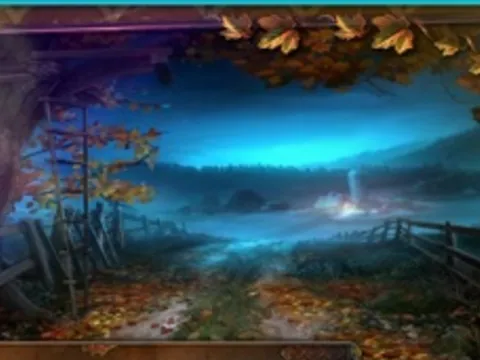
Screenshot: Artifex Mundi Enigmatis: The Ghosts of Maple Creek
Artifex Mundi's small-town disappearance mystery is one of the better story-first entries, and a good demonstration of the studio's habit of pairing every scene with a proper logic puzzle rather than filler.
- 9.
I SPY
Scholastic's picture-riddle books are where most people first met the format, and the game adaptations keep the rhyming clue structure. Still the cleanest introduction to the genre for a child or a complete newcomer.
- 10.
Where's Wally? (Where's Waldo?)
Martin Handford's search-and-find crowds are the archetype the whole genre descends from. The digital versions add zoom and hint tools, but the appeal is unchanged: one absurdly dense picture and one very specific striped jumper.