Logic Loft Blog
Mahjong
3 articles
Most people who say they play mahjong have never played mahjong. They are playing a different game that borrowed its tiles and its name, and the confusion is old enough and common enough that it is worth clearing up before anything else.
Mahjong proper is a four-player tile game that came out of nineteenth-century China. It plays like a distant cousin of rummy: each player draws and discards from a shared wall of tiles, building toward a winning hand of sets and pairs, reading what the other three players are collecting from what they choose to throw away. It is a social, often gambled-on game with real strategy in the discard, and it is still played that way at kitchen tables and in dedicated parlours around the world. Nobody plays that version alone.
Mahjong solitaire is something else entirely, and calling it mahjong is really shorthand for "the one-player puzzle that uses mahjong tiles." Sometimes it goes by its other name, Shanghai, which is arguably the more honest one. There is no wall, no discard, no opponent. Instead the tiles are stacked into a layout — a pyramid, a turtle, a dragon, whatever shape the puzzle designer chose — and your only job is to clear the board by removing matching pairs of tiles that are "free": not covered by another tile above them, and open on at least one side, left or right, so nothing else is blocking the two positions a tile needs to slide out. Clear every tile and you win. Run out of legal pairs and you are stuck, which is where the puzzle actually lives.
The two games share a tileset and essentially nothing else. One is an ancient, competitive, four-player card game with money changing hands. The other is a modern single-player screen puzzle that never involves drawing, discarding, or another human being. It is worth saying plainly: mahjong solitaire is not some ancient pastime that got digitised. It only exists because of computers. Brodie Lockard built the first known version, called Mah-Jongg, in 1981, and the format reached a mass audience in 1990 when Microsoft bundled its own version into the Windows Entertainment Pack — the reason so many office computers in the nineties had a tile-matching game quietly installed on them.
Because it looks like a game of pure luck, most people play it exactly backwards. A beginner sees an easy, uncovered pair sitting right there and clears it immediately, because it is available and taking it feels like progress. That is usually the wrong move. The tiles you should be chasing are the ones buried under the stack, not the ones already sitting free on top, because every layer you clear from the middle of the pile opens up tiles beneath it that you will need later. Clear the cheap, obvious pairs first and you can strand tiles two or three levels down with no legal partner left anywhere on the board — the layout simply locks. The real skill is reading the stack from the top down and unburying tiles on purpose, treating an easy visible pair as something to save rather than something to spend.
It is also worth knowing going in that not every layout is solvable. Depending on how the tiles were shuffled into position, some boards have no path to a clear win no matter how well you play, which is different from most puzzle genres, where a stuck position is always the player's fault. Good implementations account for this; sloppy ones do not, and will hand you a puzzle that was never winnable in the first place.
The articles below cover all of it: a beginner's walkthrough of how mahjong solitaire actually plays and how to avoid locking yourself out of a board, a guide to the real four-player game and the four rulesets — Japanese Riichi, Hong Kong, Chinese Official and American — that people actually sit down to play, and a ranked look at the best mahjong games worth playing online and on mobile in 2026.
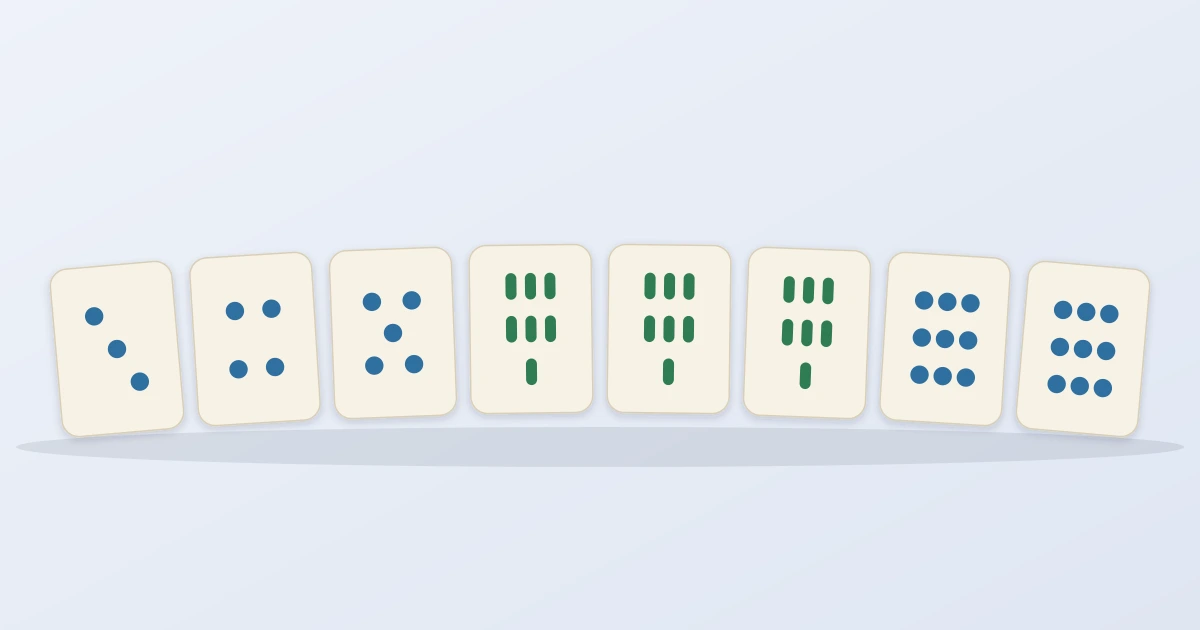
How to Play Mahjong: The Real Four-Player Game Explained
Not the tile pyramid — the real game. Four players, thirteen tiles, draw and discard. How a hand works, and how Riichi, Hong Kong, Chinese and American differ.

How to Play Mahjong Solitaire: A Beginner's Guide
Mahjong Solitaire isn't the four-player game — it's a one-player tile-matching puzzle. Here are the rules, what 'free' means, and how to avoid getting stuck.
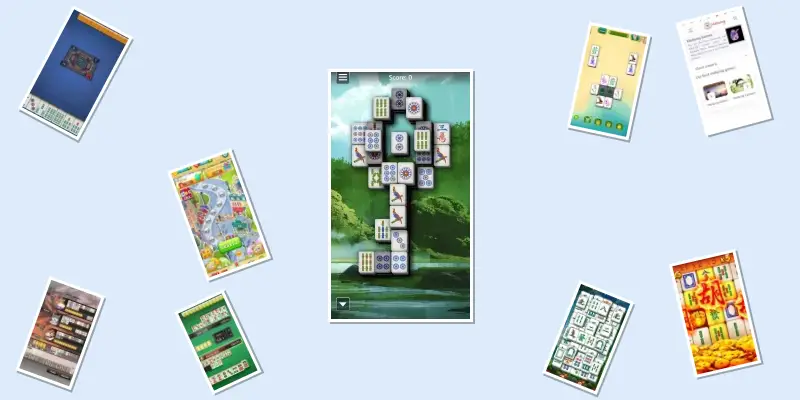
The 10 Best Mahjong Games to Play Online and Mobile (2026)
"Mahjong" means three different games. We sort the 10 best digital versions into solitaire, connect and the real four-player game — so you pick the right one.