Logic Loft Blog
Anagram Games
6 articles
An anagram is the simplest possible word puzzle and one of the hardest to put down. Take the letters of one word, rearrange them, and you have another: LISTEN becomes SILENT, ASTRONOMER becomes MOON STARER. Nothing is hidden from you. Every letter you need is sitting right there in plain sight, which is exactly why being stuck feels so personal.
That is a different pleasure from most word games. A crossword tests what you know — trivia, wordplay, a setter's sense of humour. A daily guessing game tests deduction. An anagram tests something closer to perception: your ability to stop seeing the word in front of you so you can see the one underneath it. The letters never change. Your reading of them does.
Which is also why anagrams reward technique far more than people expect. Most players stare at the whole string and wait for a flash of insight. Stronger solvers break the problem up instead: pull the vowels out and count them, look for the consonant clusters English actually permits, then test the handful of endings that swallow spare letters — ING, TION, ERS, IEST. Suddenly a seven-letter jumble has three plausible skeletons instead of five thousand permutations, and it stops being luck.
The genre runs wider than the word anagram suggests. Boggle is an anagram engine with a timer and a grid, where adjacency rules decide which rearrangements are even legal. Scrabble is anagramming under economic constraint — you are not looking for the best word, you are looking for the best word you can afford to play. Letter-shuffling mobile games strip the board out entirely and hand you six tiles and a target list. Our own Pairdle works the same muscle from the other direction: instead of loose letters you place fixed pairs, so the rearranging happens two letters at a time.
Anagrams also have a longer history than their puzzle-page reputation suggests. For centuries they were treated as something between a game and a code. Scholars rearranged Latin phrases looking for hidden meaning, poets buried their patrons' names in dedications, and Galileo announced at least two discoveries as scrambled Latin sentences — a way of timestamping a claim without revealing it to rivals who might race him to publication. The puzzle we now solve on a commute was once a serious instrument for saying something and not saying it at the same time.
The other thing worth knowing is that difficulty in an anagram is not really about length. A long word with distinctive letters can fall open immediately, while a short balanced one resists for ages, because the trouble is the number of arrangements the letters plausibly allow rather than how many letters there are. Six common letters with two vowels and no awkward consonants is a genuinely harder puzzle than eleven letters containing a J and a pair of Ks. Once you start reading a jumble for its texture instead of its size, you get much better at guessing which ones will be quick.
We write about this genre often because it is the one we build in. The articles below cover the mechanics — how anagrams actually work, and the unscrambling method we would teach a beginner — the rules and tactics for Boggle, and a ranked look at the anagram and letter-rearrangement games worth your time right now. Start with whichever matches what you are stuck on.
How to Use a Word Unscrambler Without Spoiling the Puzzle
A word unscrambler will hand you 348 words you did not ask for. The skill is narrowing it to the six that actually fit — without spoiling the answer.
Boggle Got Easier in 1987. It Also Lost 735 Words.
Parker Brothers replaced every Boggle die in 1987 and never said why. We simulated 100,000 boards on both sets: more words per board, 735 words lost.
Why Boggle Hates Coffee, Pizza and the Bible
COFFEE, PIZZA, BIBLE, OFF, JOB, KICK and about 10,000 other words can never appear on a Boggle board. Three rules built into the dice explain every one.
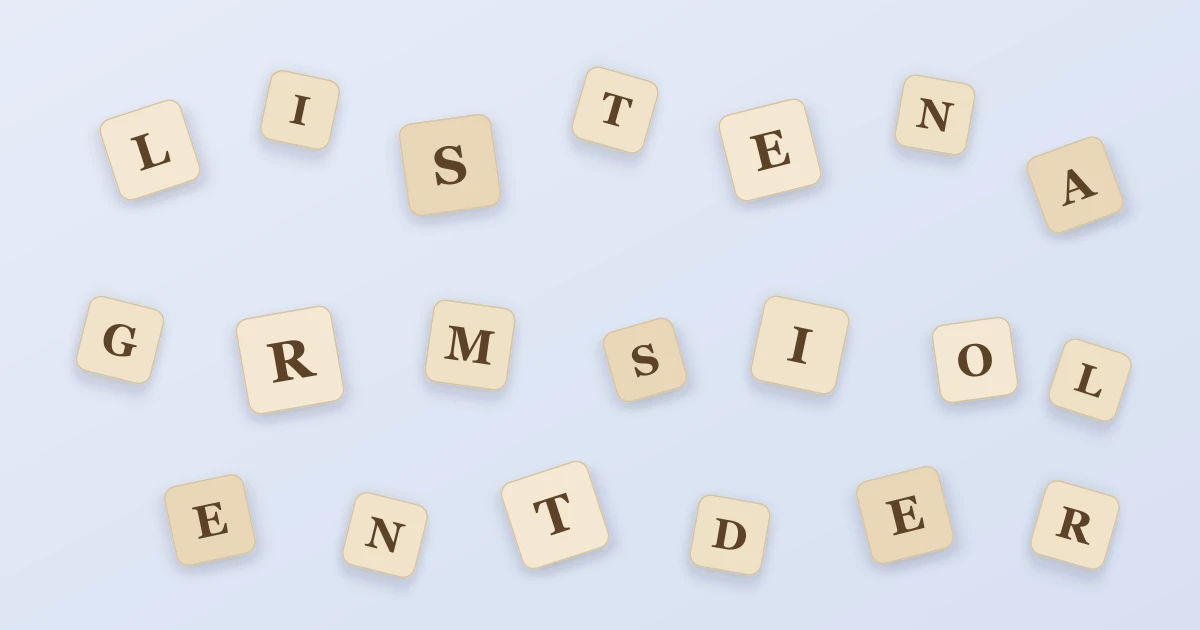
How Anagrams Work (and How to Unscramble Any Word)
An anagram rearranges the letters of a word into a new one. Here's how they work and a reliable method for unscrambling letters fast — no luck required.
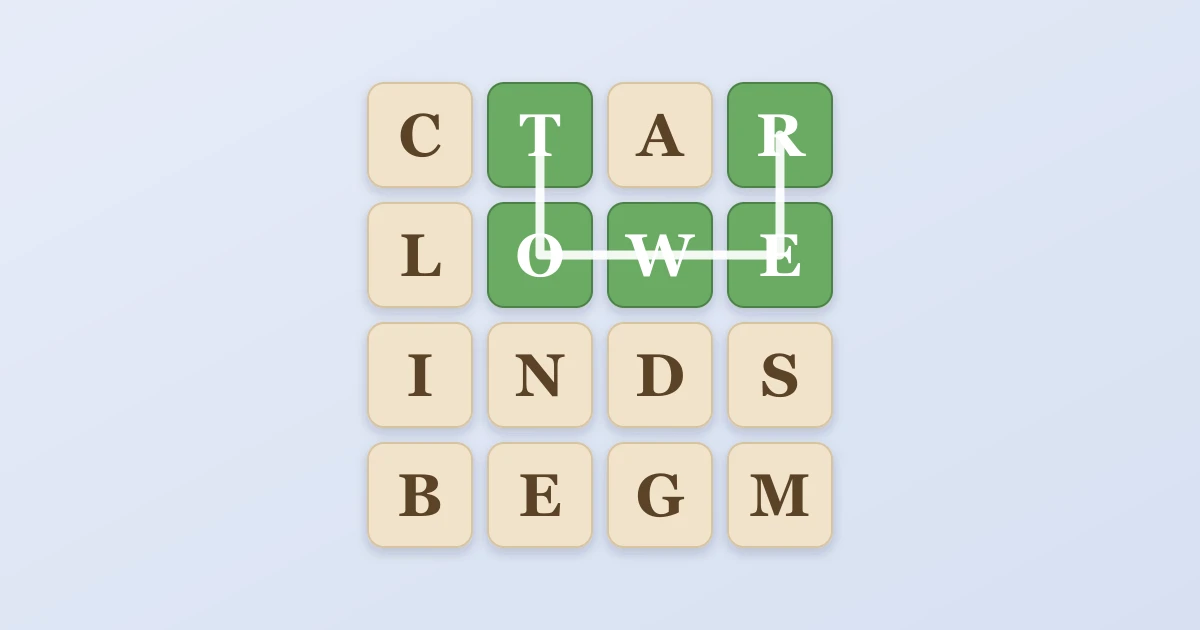
How to Play Boggle, and What 100,000 Boards Taught Us
Boggle rules and scoring, then real strategy: we rolled 100,000 boards against our game dictionary to find the words, pairs and letters that actually win.
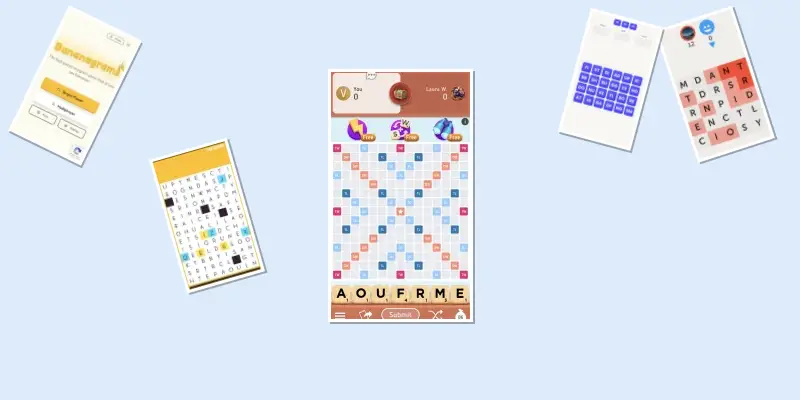
The 10 Best Anagram and Letter Rearrangement Games in 2026
From classic anagram solvers to modern letter-shuffling puzzles, these are the 10 best games that challenge you to rearrange letters into words.