Logic Loft Blog
Devlog
5 articles
A word game with a bug in production teaches you something a whiteboard never will: which of your assumptions were merely convenient. Design a mechanic that reads beautifully as a paragraph in a document, prototype it in an afternoon, and there is still no way to know whether it survives contact with a stranger's thumb on a bus at 7am. That gap — between what looks good on paper and what plays good in a hand — is most of what this category is about.
We build small. There is no publishing arm here, no separate design department and engineering department passing a spec back and forth; the same two or three people who argue about a mechanic on Monday are the ones debugging it on Friday. That has real costs. It also means nothing ships that nobody on the team actually likes, because there is no one else to blame if it goes wrong, and no committee to spread the decision thin enough that it stops feeling like anyone's decision at all.
The hardest lesson a small team learns, and keeps re-learning, is that a mechanic which is fun for its designer is not the same thing as a mechanic which is fun for a stranger. The designer already knows the solution. The designer already knows why the constraint exists, what it is protecting against, and which moves are clever. A stranger has none of that context and will find the one interpretation of your rules you did not consider, usually within the first thirty seconds. This is not a flaw in strangers. It is the entire point of testing with one.
And testing with one is, for most of the games covered in this category, closer to the truth than any of us would like to admit. A spouse willing to sit down with an unfinished build, say "I don't understand what I'm supposed to do here," and mean it, is worth more early on than a spreadsheet of hypothetical player personas. The sample size is embarrassingly small. The feedback is still real, and real feedback about a genuinely confusing screen beats no feedback about an imaginary one, every time.
What tends to surprise people from outside the field is how much of the job is deletion rather than addition. A feature earns its place by surviving the question of whether the game is worse without it, not by being clever on its own terms. Most of what gets built in a first pass does not survive that question. The versions of Pairdle, Pairdle Slide, and Word Slots Adventures that eventually reach a phone are the result of cutting far more than was kept — extra currencies that made the economy confusing, tutorial steps nobody needed, entire modes that were fun to build and forgettable to play. None of that shows up in the finished product, which is rather the point of doing it well. The seams are not supposed to be visible.
Ship dates are another place where the gap between plan and reality shows up reliably. Small things take a long time not because they are difficult but because they touch everything else — a single animation timing change can surface three unrelated bugs in code nobody has looked at in months, and a "one afternoon" fix routinely becomes a week once you account for every platform it has to work correctly on. Anyone who has shipped software knows this. It does not stop being true no matter how many times you plan around it, and the honest response is not a better estimate but a shorter list of things you insist on shipping at once.
The article in this category is about one specific version of that process: how Pairdle came to exist in the first place, which decisions were deliberate, and which were simply the ones that survived contact with an actual player. Read it if you are curious what the real sequence looked like, rather than the tidy version a launch announcement usually gives you.
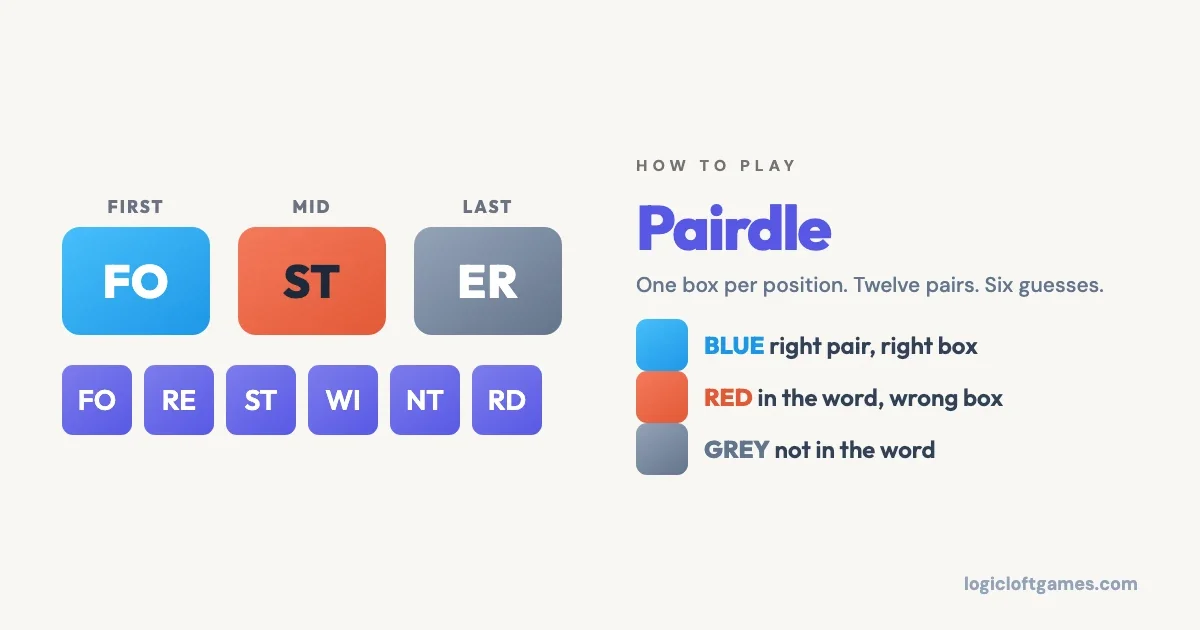
Pairdle 1.5: What's New, What's the Same, and an Exciting New Level
Pairdle 1.5 puts every level on one row, unlocks Pro, adds Expert and endless Practice, and introduces Olly the owl. Plus what a 12-tile board really holds.
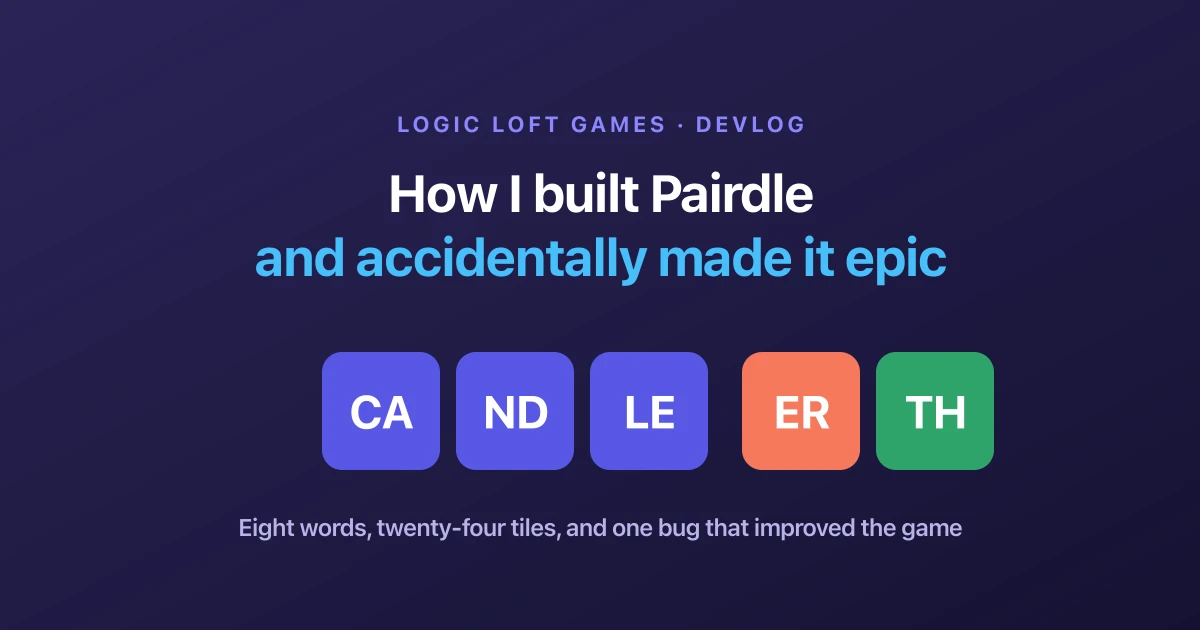
How I Came to Build Pairdle and Accidentally Made It EPIC
I loved Wordle but refused to clone it, so I built a puzzle out of letter pairs instead. Then, fact-checking this very article, I found the generator had been quietly throwing away seven of every eight words since December.
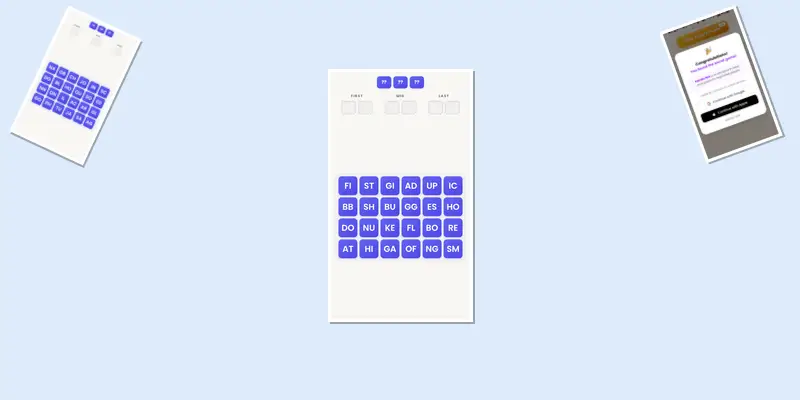
How Pairdle Was Born: From a CS50 Final Project to a Daily Word Game
The story of how a Harvard CS50 final project called Pairagrams became Pairdle — a daily word puzzle that tests logic, not vocabulary. From a Vic-20 in 1980 to a game played on three platforms.

Quest to 100 - My Attempt to Beat SLIDE
My best-ever Slide solve is 99 moves. My average is 222. The quest to break 100 starts with every tool in the bag — and today's Ice Cream board.
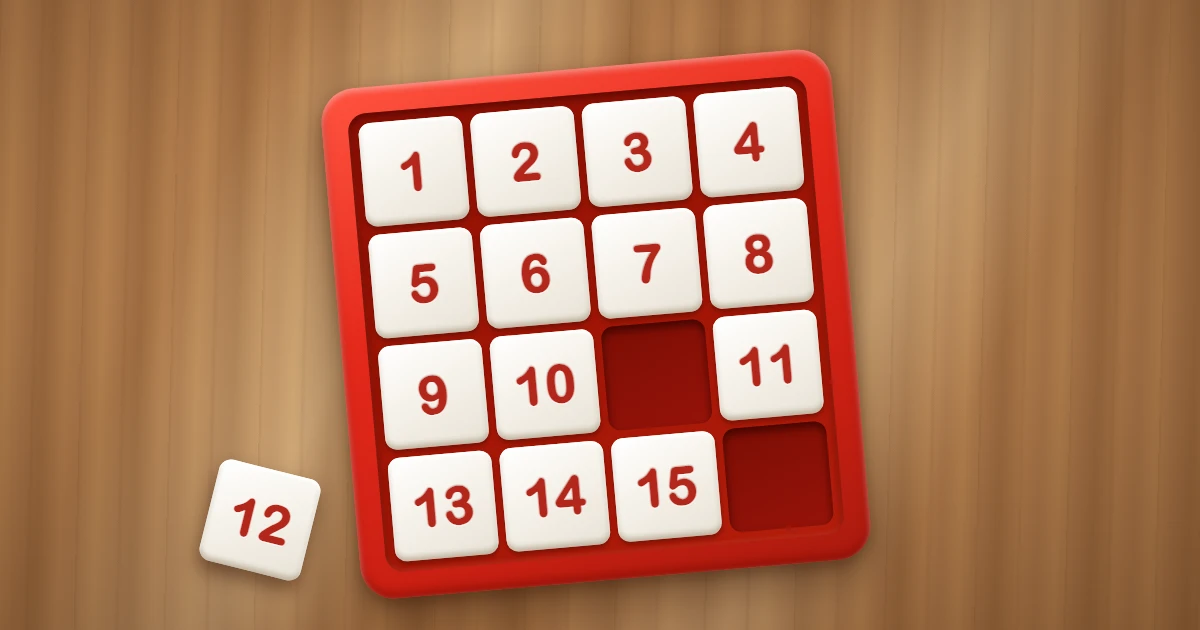
The Little Red Sliding Puzzle We All Grew Up With
The cheap plastic sliding puzzle drove us all crazy — some were literally unsolvable. Play two puzzles and see how a second hole fixes everything.