Logic Loft Blog
Daily Word Games
10 articles
A daily word game gives you exactly one puzzle and then, unusually for anything on a phone, tells you to stop. There is no next level to unlock, no second attempt to buy, nothing waiting behind a timer. You solve it or you do not, and either way the app is done with you until tomorrow. That constraint sounds like a limitation and is actually the entire feature — it is the reason these games spread the way they do and the reason people who would never describe themselves as "gamers" have one sitting on their home screen anyway.
The mechanism is simple: everyone gets the same puzzle on the same day. That single fact turns a private pastime into a shared one. You are not comparing your score to a leaderboard of strangers, you are comparing it to your sister who did the same puzzle an hour earlier, and the conversation that follows — did you get it in three, what was your opening guess, how did you not see that — is a genuine daily ritual rather than marketing. Wordle is the clearest example of how far this can travel. Josh Wardle built it for one person, released it publicly in late 2021, and within months it had spread almost entirely through word of mouth and one clever piece of design: the green-and-yellow result grid, shareable as text, which told your friends exactly how your solve went without giving away a single letter of the actual answer. The New York Times acquired the game in 2022, by which point the format itself — not just that one game — had become a template other studios were building on.
Streaks are the other half of why these games hold on to people, and they are a sharper mechanic than they look. A streak counter is a small number in the corner of the screen, and it produces a genuinely disproportionate amount of anxiety for something that costly-free to maintain. Missing a single day resets months of consecutive solves to zero, and that loss is felt far more than the streak itself was ever enjoyed day to day — which is precisely why it works as a retention mechanic, and also why studios that build these games, including ours, put real thought into how forgiving or punishing that mechanic should be.
Not every daily is testing the same skill, and the distinction is worth having language for. A vocabulary-based daily rewards knowing more words than your opponent does — Spelling Bee is essentially this, and so is a themed crossword. A deduction-based daily gives you limited information and asks you to reason your way to the answer through elimination, the way Wordle's letter-position feedback works, or the way our own Pairdle asks you to work out which letter pairs belong in which slots from the feedback each guess returns. The two feel completely different to play even when the format around them — one puzzle, once a day, a shareable result — looks identical from the outside, and knowing which kind of daily you are stuck on is often the fastest way to get better at it.
The articles in this hub follow directly from that split. One is a ranked look at the daily word games actually worth adding to your rotation this year. Another is aimed squarely at Pairdle players who already know the rules and want to improve their deduction, covering how to read the feedback pattern rather than guess around it. A third works through the opening-word math for Wordle specifically — which starting guesses actually eliminate the most letters — and the last looks at the letter pairs that show up constantly in English words, the kind of pattern recognition that helps in a deduction game whether or not the app tells you it does.
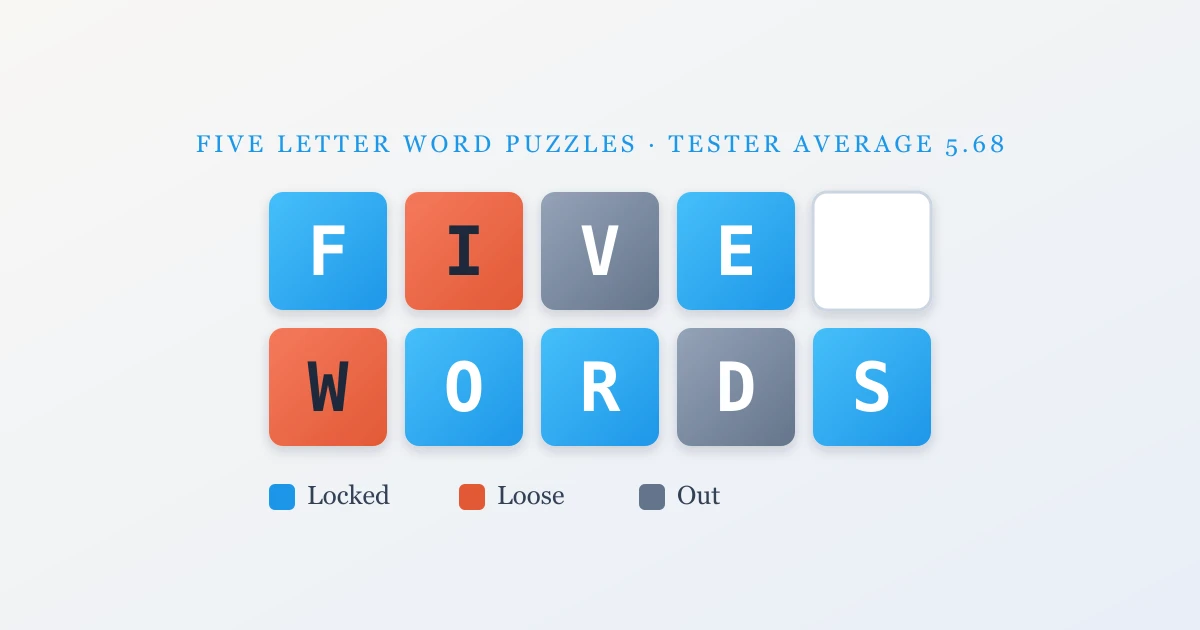
The Hardest Wordle Words on Record: Can You Solve Them?
We ranked 502 Wordle answers by the guesses they actually took, found the five worst, and built a five-round test so you can play them against the average.
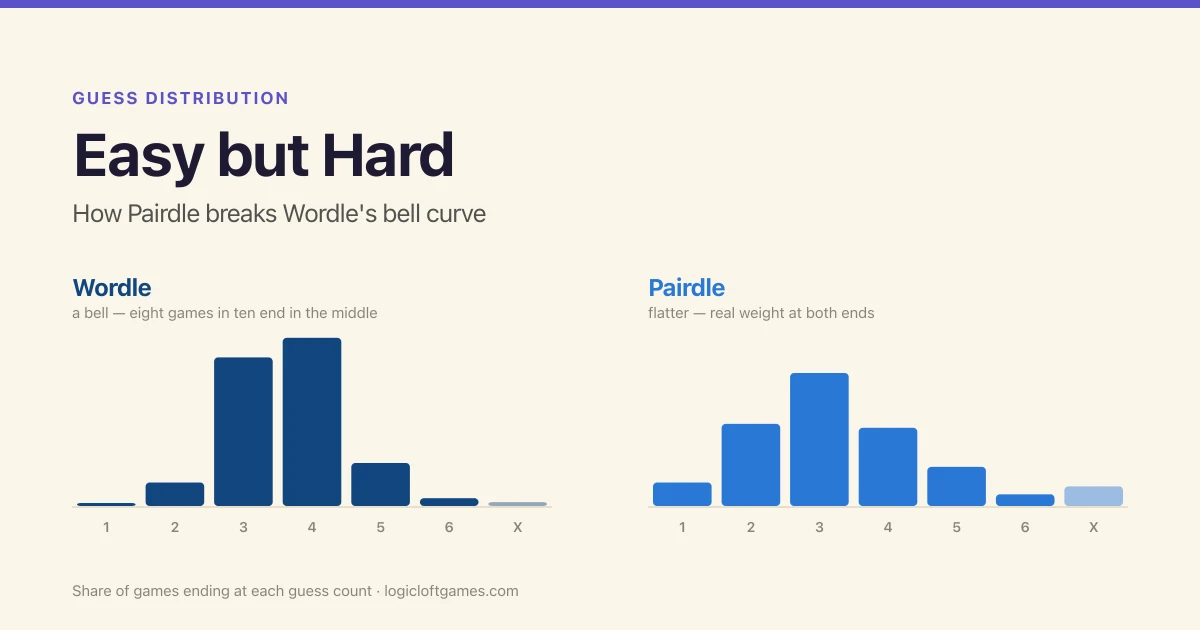
Easy but Hard: How Pairdle Breaks Wordle's Bell Curve
Wordle's guess distribution is a tight bell. Pairdle's isn't — players win faster and lose more often. We pulled real data to find out why.
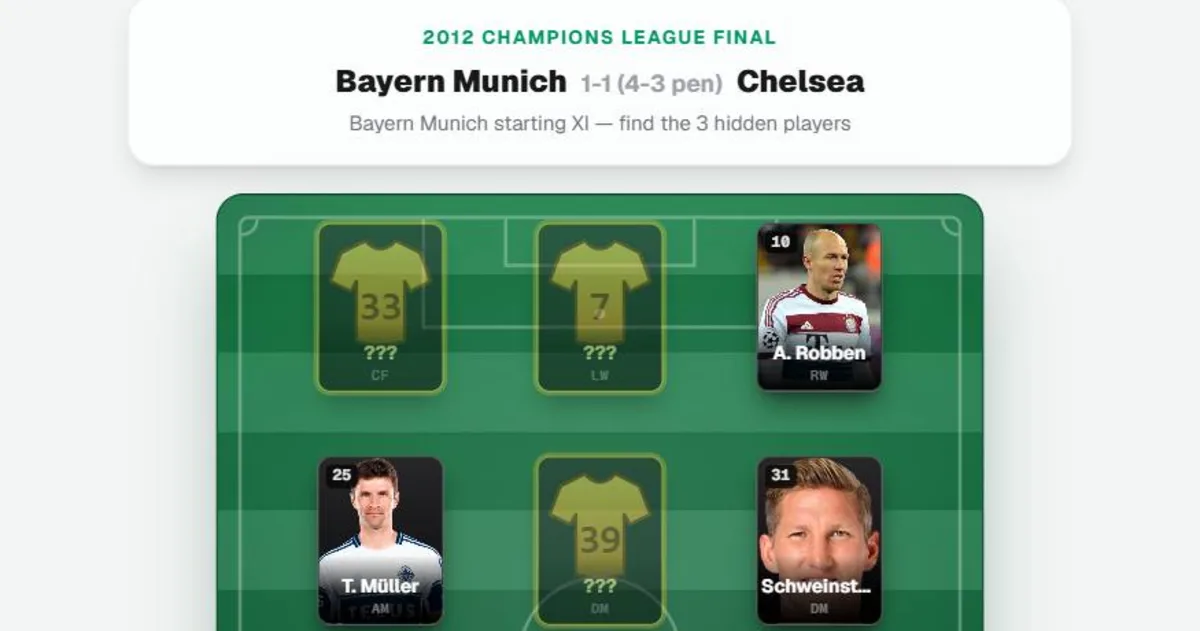
Futbolle: Eighteen Daily Football Puzzles
A solo developer in Turkey built Futbolle, eighteen daily football puzzles — a Wordle whose dictionary is a squad list, a hidden starting XI — earning nothing.
Capon? Where Wordle's Rarest Answers Really Come From
CAPON was never on Wordle's original list. We scored all 1,895 answers to date for rarity and found the 50 words the editor has quietly added since 2022.
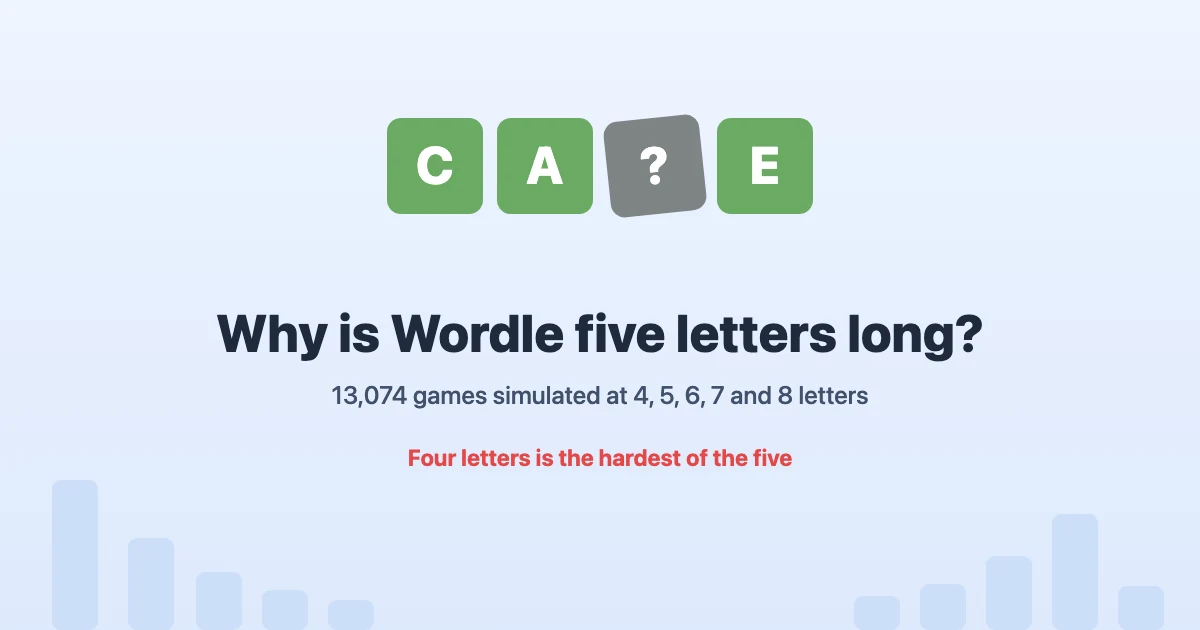
The Hobbit's (Wordle) Wager: Why Wordle Is Five Letters Long
I simulated every possible Wordle game at 4, 5, 6, 7 and 8 letters. Four letters is the hardest — short words hide in packs, and five is the sweet spot.
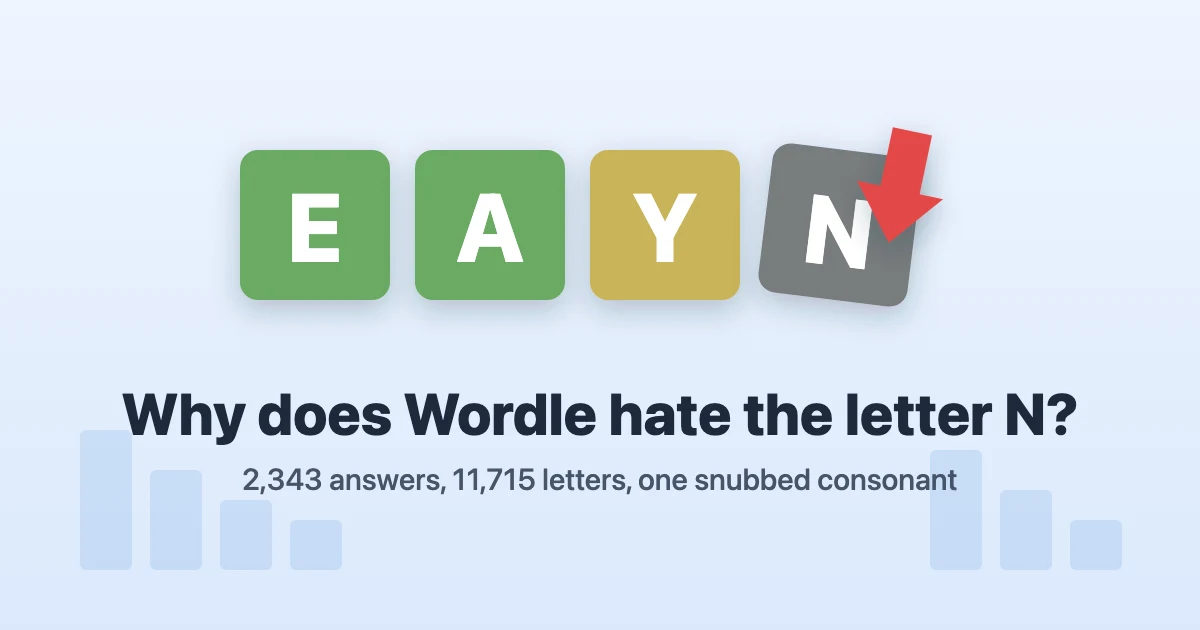
Why Does Wordle Hate the Letter N?
I counted every letter in all 2,343 Wordle answers and compared them to the dictionary. N and I get snubbed, Z runs five times hot — and F is innocent.
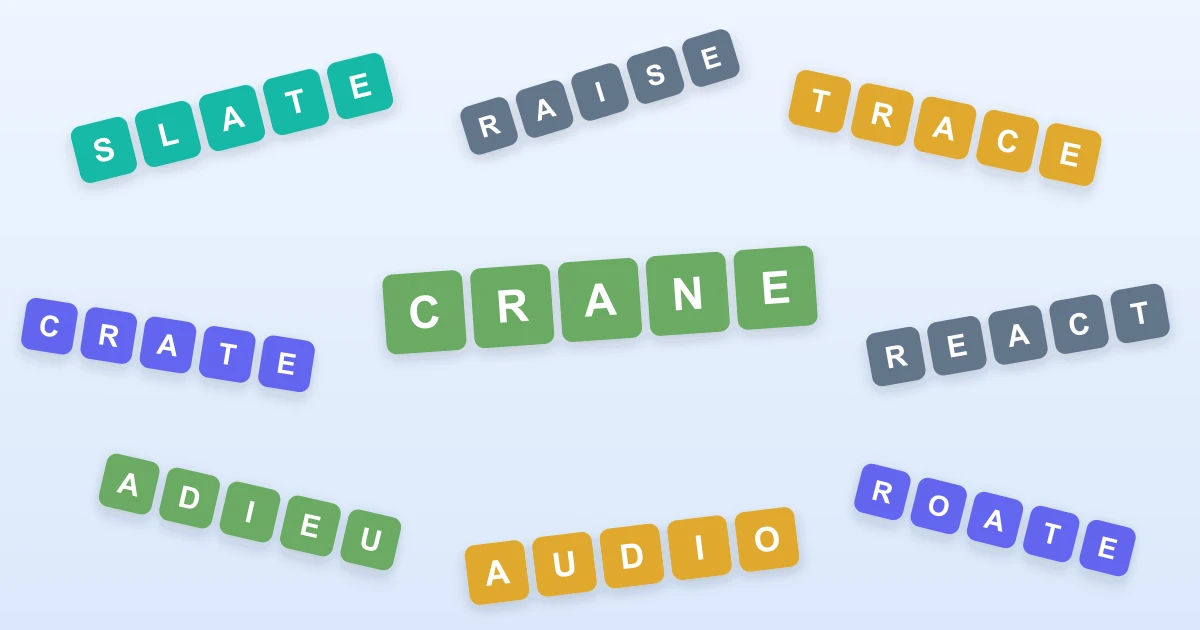
Best Wordle Starting Words (and the Math Behind Them)
Why CRANE, SLATE, and ADIEU dominate Wordle opener lists — explained by people who design word puzzles, with a checklist for picking your own starter.
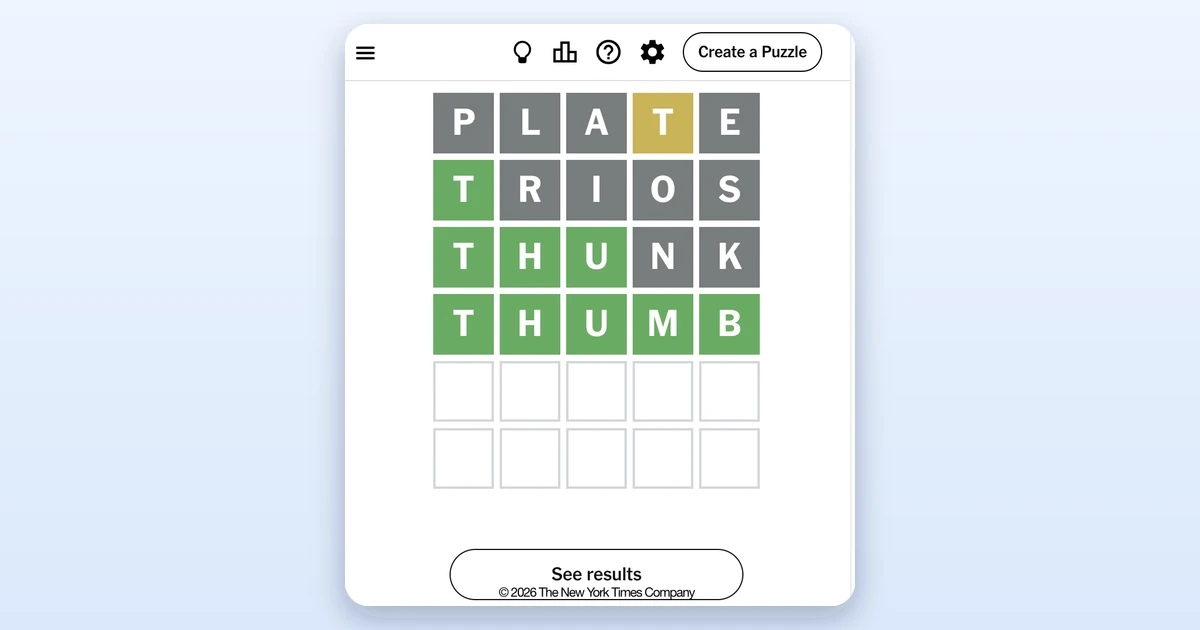
How to Play Wordle: Rules, Tiles & Walkthrough
New to Wordle? Learn the full rules, what green/yellow/gray tiles mean, and follow a complete game walkthrough from the team that builds daily word puzzles.

Most Common 5-Letter Words for Wordle and Word Games
A practical reference to the most common 5-letter words, organized by the patterns that matter in Wordle and word games — from a studio that builds them.
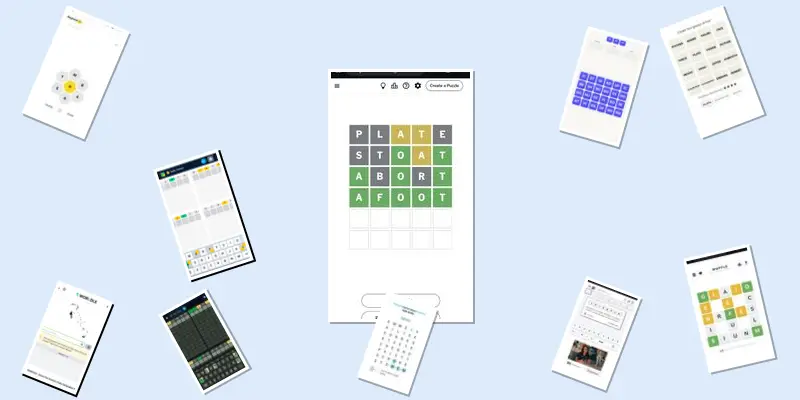
The 10 Best Daily Word Games in 2026 (Ranked by Cultural Impact)
From Wordle to NYT Connections to Pairdle, we rank the 10 best daily word games by cultural impact — with what makes each one worth playing every day.