Logic Loft Blog
Solitaire & Cards
2 articles
Solitaire is the patience genre, and the name is not decoration — it is the whole point. There is no opponent to outwit and no clock forcing your hand, only a shuffled deck and the question of whether this particular shuffle can be beaten at all. That last part is the thing most players never quite realise: a real, meaningful share of solitaire deals are unwinnable no matter how well you play them. Losing is not always a mistake. Sometimes the deck simply did not deal you a solvable hand, and once you accept that, the whole game reads differently — you stop treating every loss as a lesson and start treating it as information about this one shuffle.
Klondike is the version almost everyone means when they say "solitaire," and it earned that default status the hard way, through sheer distribution rather than being the deepest game in the family. Microsoft bundled it with Windows 3.0 in 1990, and the choice was partly practical: it was built, in part, to teach an entire generation of new computer owners how to hold a mouse button down and drag something across a screen, which was not yet an intuitive motion for most people sitting down at a PC for the first time. It worked so well as a teaching tool and a time-filler that it became one of the most-used pieces of software ever written, running quietly in the background of millions of workdays for years.
The part worth knowing before you play seriously is the solvability question itself. Solitaire researchers who have run large numbers of Klondike deals through solving engines put the theoretically solvable share at somewhere around seventy-nine percent, assuming perfect play and full knowledge of every card, including the ones dealt face down. That is an approximate figure from that kind of analysis, not an exact law, and it matters because it describes a best case you never actually get. You cannot see the face-down cards while you are playing, so your real win rate sits well below that number — which means a string of losses is not necessarily you playing badly, it may just be the cards.
Given that, technique is mostly about not wasting the information you do have. Favour moves that turn a face-down card face up over moves that just tidy up an already-visible tableau; the tidy move feels productive and often is not. Be careful about emptying a column unless you actually have a king ready to move into it, because an empty column with nothing to fill it is a wasted resource, not a reward. And slow down before you deal from the stock, since the order those cards come in is fixed the moment you shuffle, and a careless deal can bury a card you needed.
Klondike is not the only shape this genre takes. FreeCell removes the luck almost entirely — every card is dealt face up from the start, nearly every deal is winnable, and losing one is close to admitting the puzzle beat you rather than the shuffle did, which makes it feel more like a logic puzzle than a card game. Spider asks for more patience than either: bigger tableaus, longer games, and a harder climb to a win, for players who found Klondike too quick to finish.
The two articles here take opposite approaches to the same genre. One is a straightforward walkthrough of how to actually play Klondike, move by move, for anyone who has only ever half-remembered the rules. The other looks across the wider field of solitaire and card games worth playing in 2026, for readers who already know Klondike and want to see where else the patience genre goes.
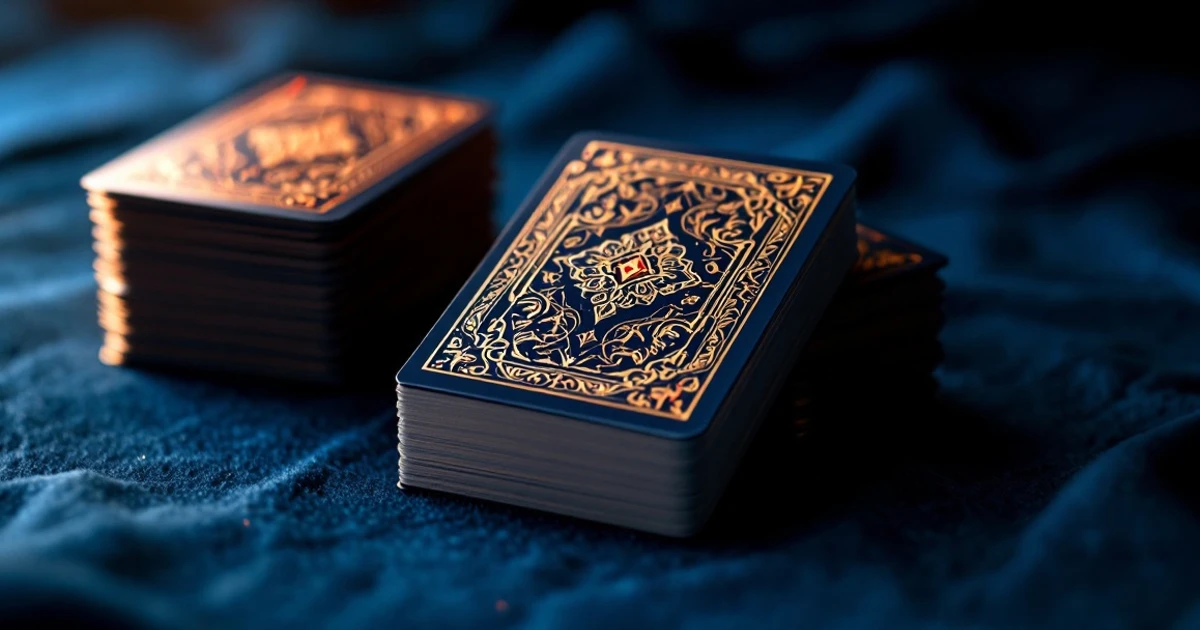
How to Play Klondike Solitaire: The Classic Card Game
Klondike is the solitaire everyone means by 'Solitaire.' Here are the rules, the setup, how to win, and the strategy that turns lost games into wins.
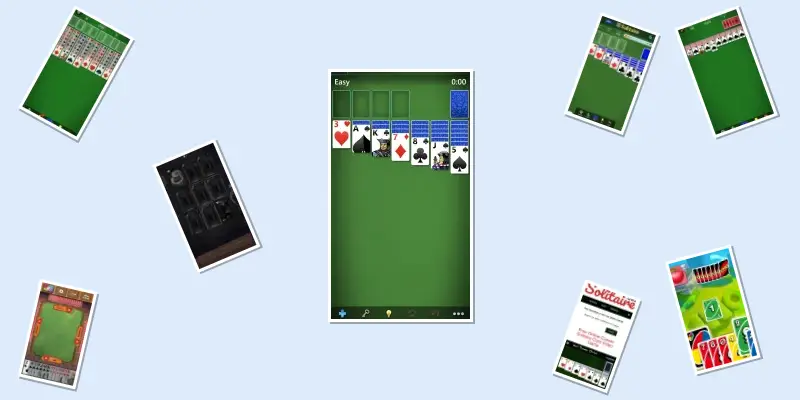
The 10 Best Solitaire and Card Games to Play in 2026 (Digital Editions Ranked)
From Microsoft Solitaire to the viral hit Balatro — our ranked list of the best digital solitaire and card games on PC, mobile, and browser right now.