
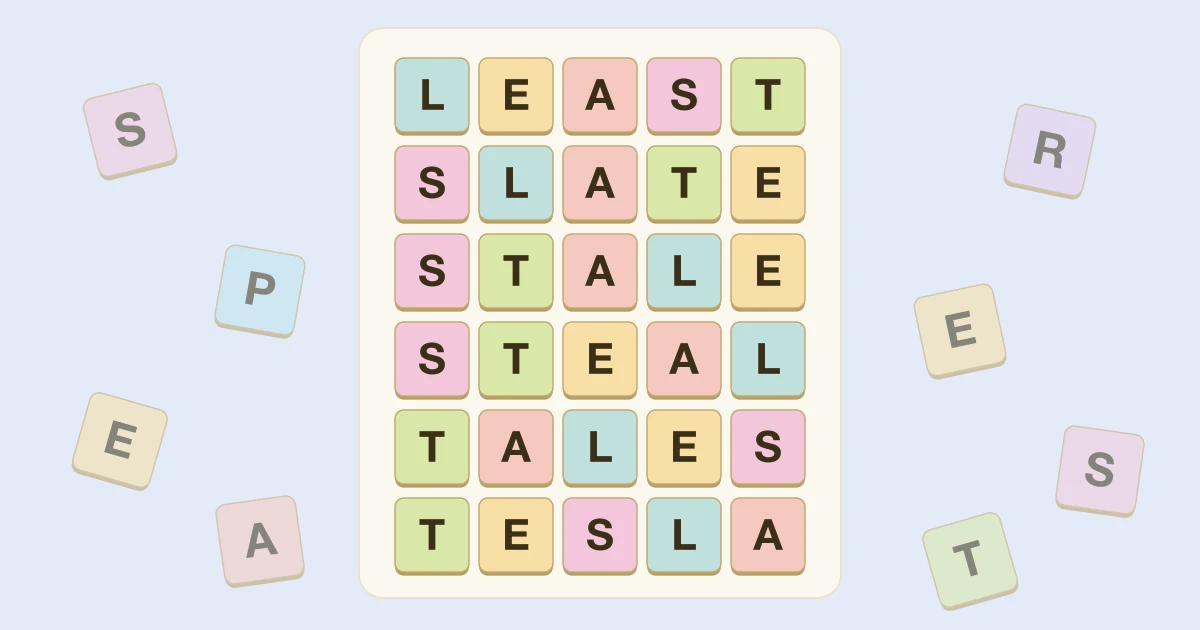
An anagram is a word made by moving the letters of another word around, using every letter once and adding nothing. LISTEN becomes SILENT. HEART becomes EARTH. That part everyone knows.
What most people don't know is how common anagrams are, which words have the most of them, and why some sets of letters spell word after word while others spell only one. We build word games, so we have the word lists on hand. We ran the numbers on the standard list of 172,823 legal game words, and again on the 20,000 of those words people use most. Every number below comes from that count.
Same letters, one family
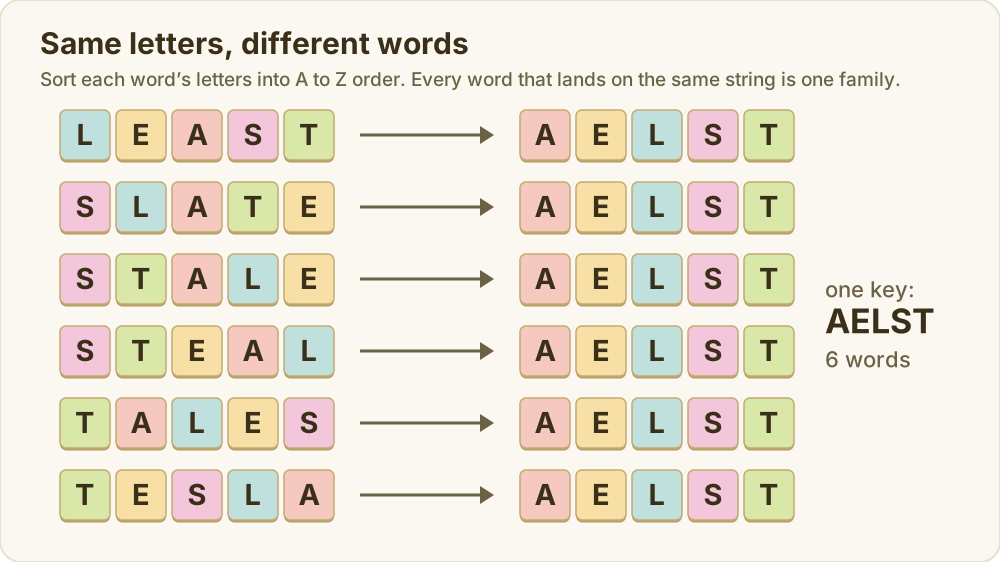
Here is the idea that makes anagrams easy to count. Take a word and put its letters in A to Z order. LEAST becomes AELST. So do SLATE, STALE, STEAL, TALES and TESLA. Any two words that sort to the same string are anagrams of each other, so we call each string a family.
The strict rule is that every letter counts, including repeats. SEAT and TEASE are not anagrams, because TEASE has a second E. A word that uses only some of the letters, like SEAT from SLATE, is a smaller word hiding inside, not an anagram.
Sorting all 172,823 words this way gives 156,476 families. Of those, 144,175 hold just one word. The interesting ones hold many.
The biggest anagram families
The largest family in the whole list has 12 words, and all of them use A, E, P, R and S:
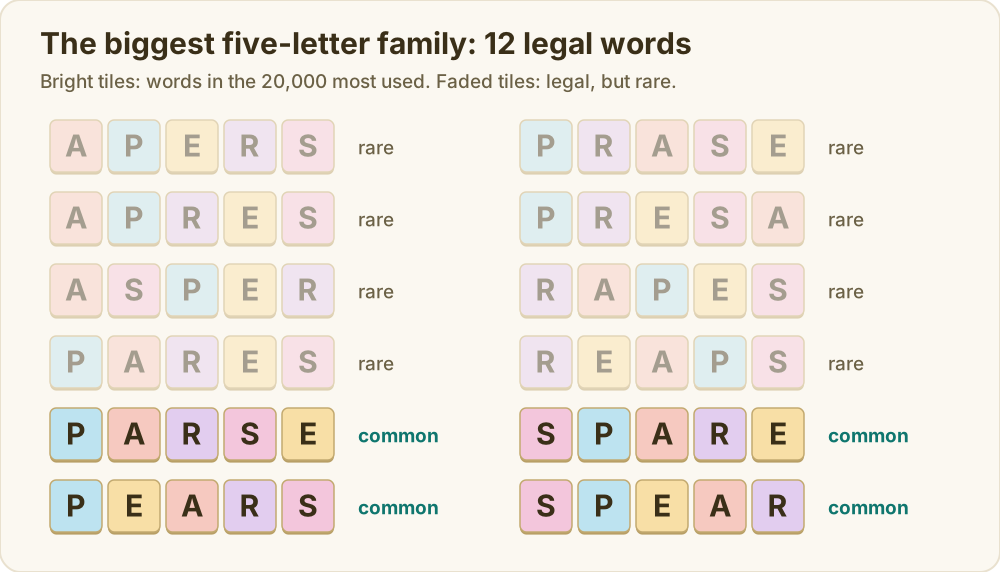
So SPEAR has 11 anagram partners. Only four of the twelve are words you would use on a normal day: PARSE, PEARS, SPARE and SPEAR. The other eight are legal in word games but rare, like PRASE (a green stone) and ASPER (an old coin).
That gap between "legal" and "known" runs through all of these numbers, so we counted both ways. Here is the biggest family at each word length:
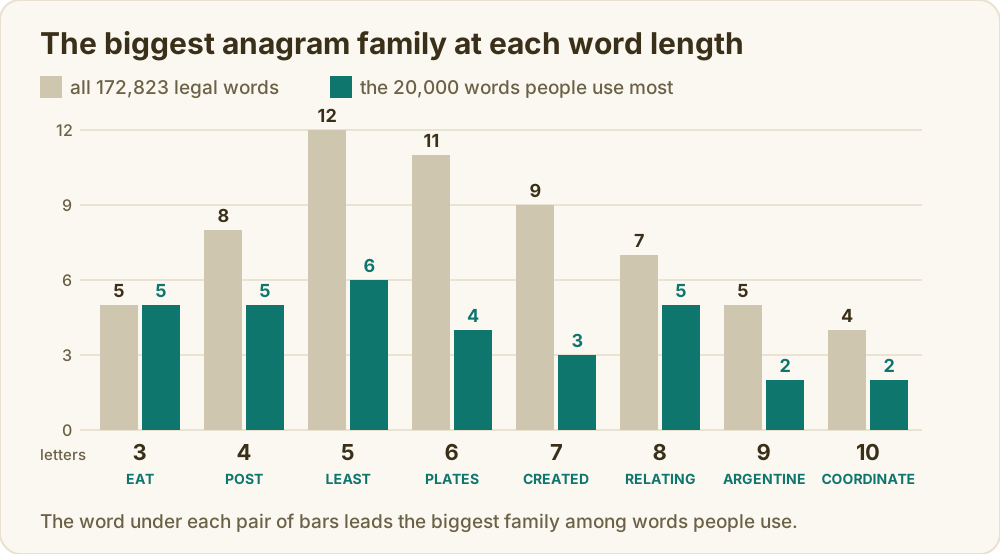
Among all legal words the peak is at five letters. Among the words people use, the family sizes stay small at every length, and five letters still wins with six words: LEAST, SLATE, STALE, STEAL, TALES and TESLA.
These are the biggest families of everyday words at each length. It is a handy list to keep if you set puzzles or play word games with kids:
| Letters | Biggest everyday family |
|---|---|
| 3 | EAT, TEA, ATE, ETA, TAE |
| 4 | POST, STOP, SPOT, TOPS, POTS |
| 5 | LEAST, TALES, STEAL, SLATE, TESLA, STALE |
| 6 | PLATES, PASTEL, STAPLE, PETALS |
| 7 | CREATED, CATERED, REACTED |
| 8 | RELATING, INTEGRAL, TRIANGLE, ALTERING, ALERTING |
| 9 | ARGENTINE, TANGERINE |
| 10 | COORDINATE, DECORATION |
The eight-letter row is the surprise. RELATING, INTEGRAL, TRIANGLE, ALTERING and ALERTING are all ordinary words, and they all use the same eight tiles. No six- or seven-letter set of everyday words does that well.
Among all legal words, the seven-letter record is nine words: ANESTRI, ANTSIER, NASTIER, RATINES, RETAINS, RETINAS, RETSINA, STAINER and STEARIN. Scrabble players learn that one as a group, because those letters come up on the rack all the time.
How many words have an anagram at all
Plenty of words have no partner. Here is the share of words at each length that have at least one anagram:
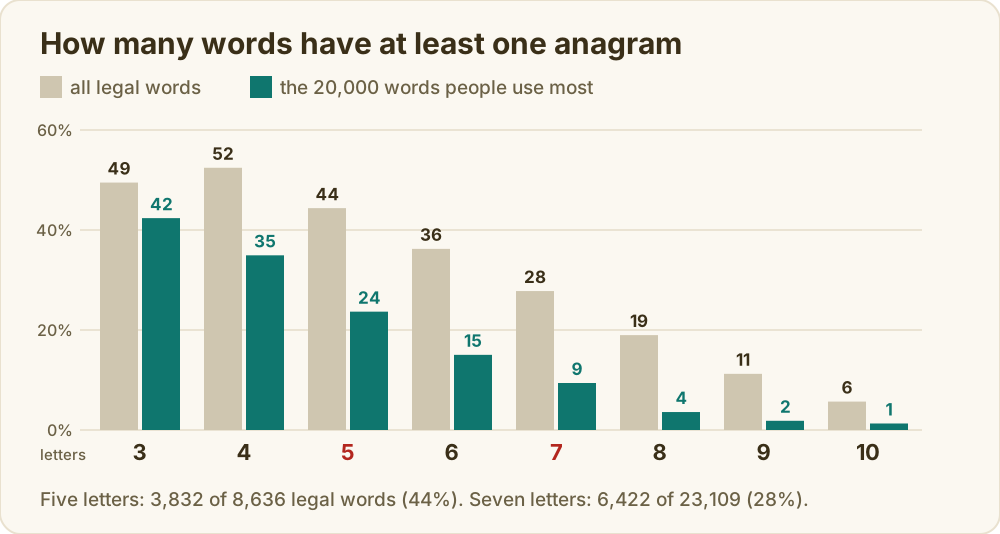
- Five-letter words: 3,832 of the 8,636 legal ones have an anagram, which is 44%. Among everyday five-letter words it is 578 of 2,442, about 24%, or roughly one in four.
- Seven-letter words: 6,422 of 23,109 legal ones, which is 28%. Among everyday seven-letter words it drops to 290 of 3,085, about 9%, or roughly one in eleven.
Four letters is the high point, with 52% of legal four-letter words having a partner. After that the share falls with every extra letter. By ten letters only 6% of legal words have an anagram, and among everyday ten-letter words it is 22 out of 1,689.
The reason is simple once you see it. A short word has few letters, and there are only so many ways to pick them, so lots of words end up sharing the same set. A long word has a set of letters so specific that almost nothing else uses exactly that set. It also explains why so many anagram puzzles use five to seven letters. Shorter ones are over fast. Longer ones mostly have a single answer, and often it is a word few people know.
The seven letters that make the most words
A Scrabble rack holds seven tiles, so the next question is which seven letters spell the most words. Here we counted every word of three letters or more that a set of seven tiles can make, not just the seven-letter ones, and we only counted everyday words.
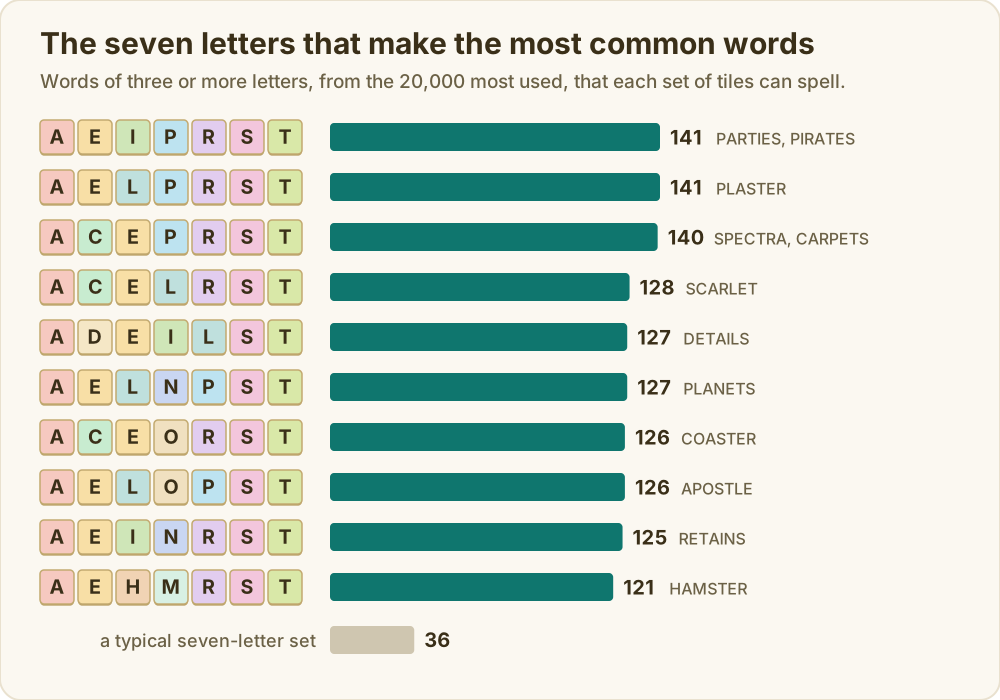
The winners are AEIPRST (PARTIES, PIRATES) and AELPRST (PLASTER), with 141 everyday words each. A typical seven-letter set makes 36. So the best racks make about four times as many words as an ordinary one.
Across all legal words, AELPRST is the leader with 267 words, against a typical 55.
Look at the tiles in that chart. All ten sets hold an S and an E. All ten have two or three vowels. Apart from the H and M in HAMSTER, every other letter comes from a short list: A, R, T, L, P, C, N, D, O and I. There is no J, Q, X, Z, K or Y anywhere in the top ten.
Which letters make anagrams
We took every legal five-letter word and asked, for each letter, what share of the words containing it have an anagram:
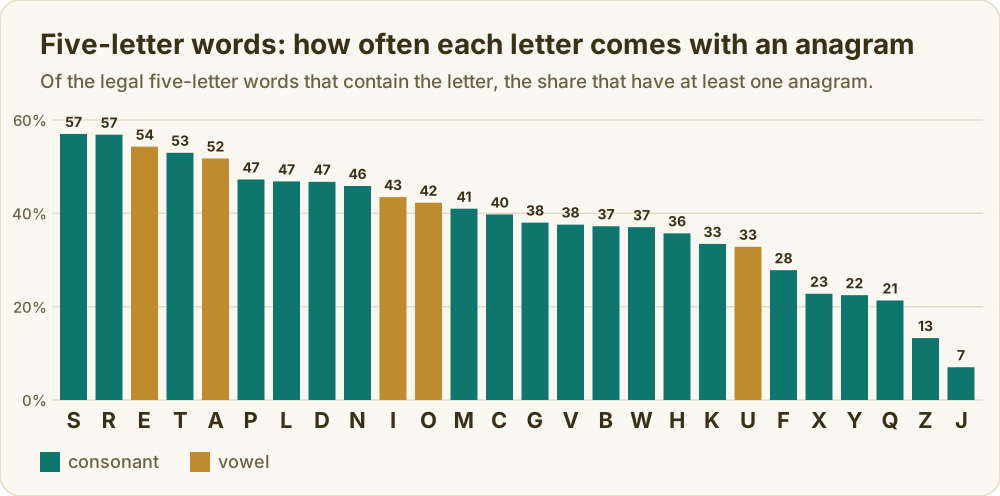
S, R, E, T and A top the list, each above 50%. At the bottom, only 7% of five-letter words with a J have an anagram, and 13% of words with a Z.
Y does worse than you might guess, at 22%. Of the 1,322 legal five-letter words with a Y, 906 put it at the end (HAPPY, EARLY), and a letter that only fits in one spot gives you fewer ways to shuffle. U is the weakest vowel, at 33%.
Why some letter sets are so productive
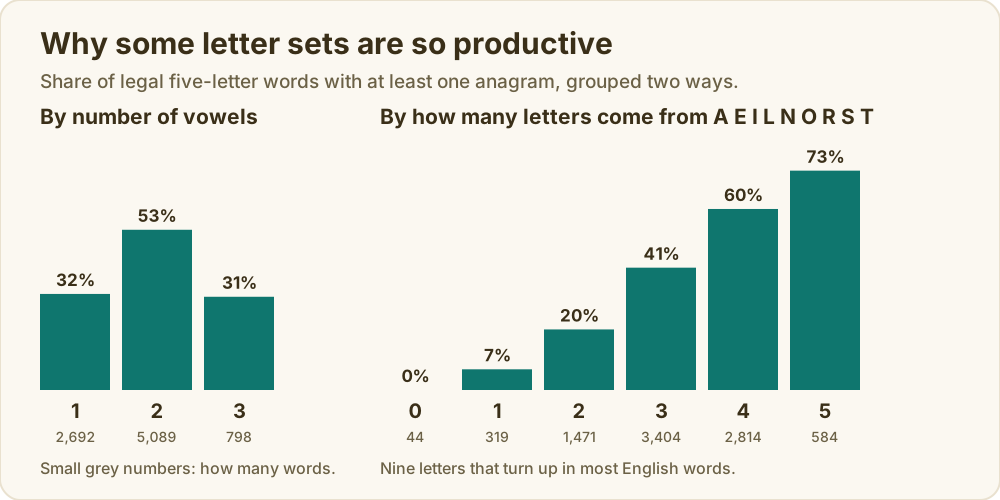
Four things make a set of letters spell lots of words. The chart shows the first two:
The right mix of vowels
Five-letter words with two vowels have an anagram 53% of the time. With one vowel it falls to 32%, and with three to 31%. Two vowels and three consonants is the sweet spot because you can split the vowels up and put a consonant between them in many different ways. With one vowel, most orders give you a cluster of consonants nobody can say. Of the 50 biggest five-letter families, 47 have exactly two vowels.
Common letters
Nine letters, A, E, I, L, N, O, R, S and T, turn up in most English words. When all five letters of a word come from those nine, 73% of those words have an anagram. When none do, not one of the 44 words has a partner. Common letters join up with each other in lots of ways, so every order you try has a good chance of being a real word. (Our post on common letter pairs in English shows which pairs those are and where in a word they sit.)
Letters that can go anywhere
S can start a word (SPEAR) or end one (PEARS). E and R can sit at the front, in the middle, or at the end as -ER and -RE. That freedom is why S and R lead the letter chart. A Q that needs its U, or a Y that wants the last spot, pins the word in place.
No repeated letters
Five-letter words with five different letters have an anagram 51% of the time. Words with a doubled letter, like APPLE, drop to 34%, because swapping two P's gives you the same word back.
Put those together and you get the best racks from the chart above. Two or three vowels, lots of the common nine, an S and an E, and nothing that has to sit in one place.
Anagram pairs you already know
Most anagram lists online are full of rare words. We went the other way and picked pairs where both words are among the 20,000 most used, so a person reading them would know both:
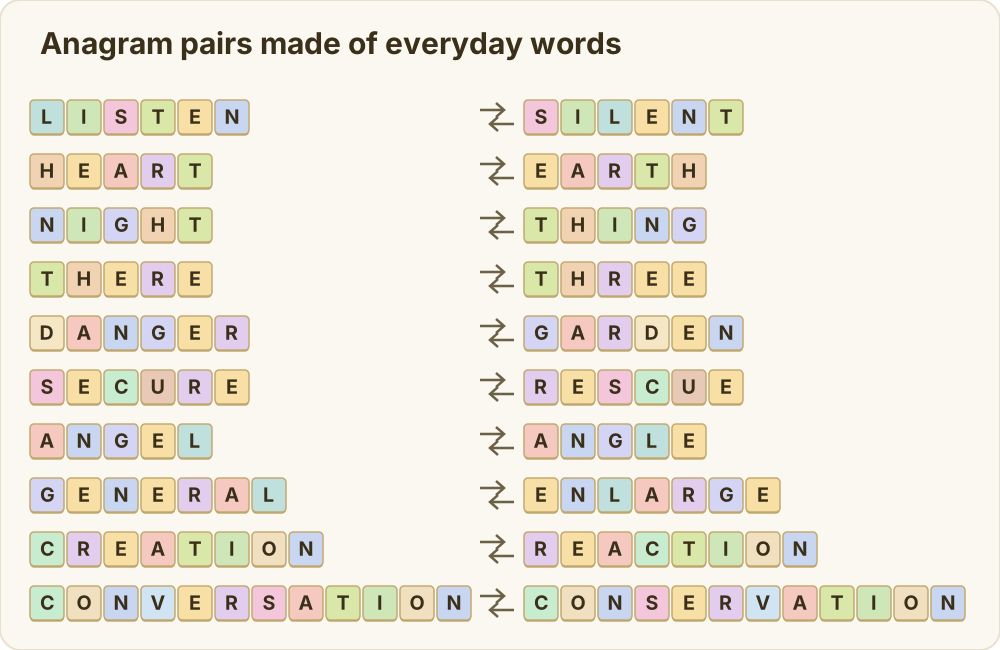
THERE and THREE is the most common pair of five letters or more by our count. THERE is the 61st most used word on our list and THREE is 285th. Go shorter and TIME and ITEM win at four letters, and WHO and HOW at three. Some pairs have a nice twist in meaning. DANGER hides in a GARDEN, SECURE turns into RESCUE, and CONVERSATION and CONSERVATION trade two letters' places across twelve tiles.
Here are eight more. Each word below has an everyday anagram partner. See if you can find them before you open the answers.
- SOURCE
- BRIEF
- WORTH
- EASTERN
- PROTEIN
- SECTION
- REMAINS
- HIGHEST
Show the eight partners
What this means when you play
A few things follow from the numbers.
- In Scrabble, keeping letters like E, S, R, T and A on your rack gives you more words to choose from next turn. A J or a Q gives you far fewer, so it pays to play them when you get a decent score for them. Our list of Scrabble words that win games covers what to do with the awkward tiles.
- In a jumble or a daily anagram puzzle with five letters, there is a real chance of two right answers. Almost half of legal five-letter words have a partner, so if your answer is rejected, try another order of the same letters before you give up on it.
- A set of letters heavy in J, Z, Q, X or Y usually has one answer and only one. That makes it harder to find, but you can stop looking once you have it.
If you are stuck on a puzzle and want a nudge rather than the answer, our guide to using a word unscrambler without spoiling the puzzle covers the method and the tools. For games built around this, see our best anagram and letter games.
How we counted
The legal word list is ENABLE, 172,823 words, the standard free list behind many word games. To work out which words people actually use, we took a public count of how often each word appears across a very large collection of English web pages, kept only words that are also in ENABLE, and took the top 20,000. That is our "everyday words" list. It isn't perfect. TESLA makes the cut because of the car company, even though the legal word is a unit of magnetism.
Two words count as anagrams only if they use exactly the same letters the same number of times. Plurals count as normal words, so PEARS and SPEAR are a real pair. For the rack counts we took every word of three letters or more that a set of seven tiles can spell, using each tile once. The script that does the counting and draws every chart on this page runs on the lists above and gives the same numbers every time.
Related articles
How to Use a Word Unscrambler Without Spoiling the Puzzle
A word unscrambler will hand you 348 words you did not ask for. The skill is narrowing it to the six that fit, without spoiling the answer.
Boggle Got Easier in 1987. It Also Lost 735 Words.
Parker Brothers replaced every Boggle die in 1987 and never said why. We simulated 100,000 boards on both sets: more words per board, 735 words lost.
The Four Ways a Hidden Object Game Hides Things
Almost nothing in a hidden object scene is actually hidden. Four techniques do the work, and each exploits a different documented failure in how looking works.