
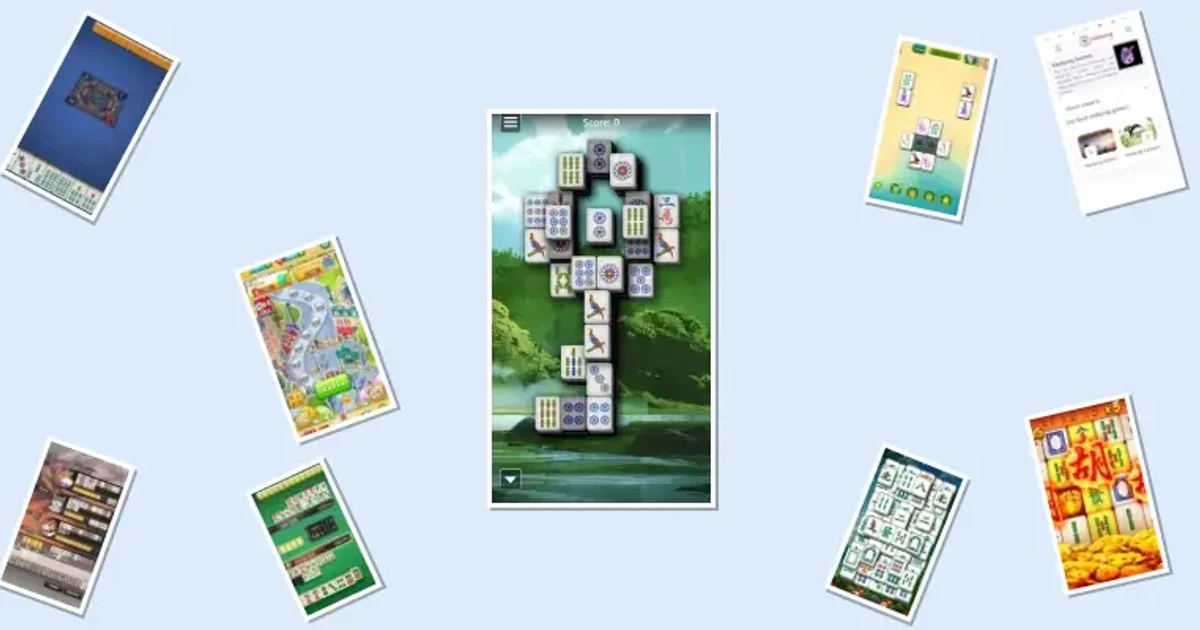
Search for "mahjong games" and you get three games wearing one name. Most lists shuffle them together, which is why so many people download something that turns out to be nothing like the thing they remembered.
So we've sorted this list by what the game actually is, not by rank:
- Mahjong Solitaire: the stacked tile pyramid. One player, match free pairs, clear the board. This is what most Western players mean. (Entries 1–5.)
- Mahjong Connect / Shisen-sho: same tiles, flat grid, and you match pairs by drawing a path between them. A different puzzle. (Entry 6.)
- Four-player mahjong: the real game. Rummy with tiles, four players, deep strategy, several competing rulesets. (Entries 7–10.)
If you only want to relax and clear tiles, everything you need is in the first section. If you want to learn the actual game your relatives play, skip to the third.
Nobody pays to be on this list, and we earn nothing when you click through to a game. Read how we choose and review games.
Mahjong Solitaire: the tile pyramid
One player. Tiles are stacked in a layout. Remove identical pairs, but only tiles that are "free": nothing on top, and one side open. Clear the board to win.
The skill here is move order, not matching. Taking the wrong pair can bury the tile you needed and dead-end an otherwise winnable board. Our Mahjong Solitaire guide breaks down the free-tile rule and the move-order habits that keep a board winnable.
1. Microsoft Mahjong
Developer: Microsoft / Arkadium | Originally released: 2012 (Windows 8 Collection)
Platforms: Windows, iOS, Android, Web
Difficulty: Easy to medium | Price: Free (ads; Microsoft 365 removes them)
Where to play: Website · App Store · Google Play
The most widely installed digital mahjong game in history. The Collection includes daily challenges, themed events, multiple tile sets, and Xbox achievements.
Microsoft has been bundling tile-matching games with Windows since the Microsoft Entertainment Pack in 1990. It was "Taipei" first, then "Shanghai Solitaire," then "Mahjong Titans," and now the current Collection. Like Microsoft Solitaire, it reaches enormous numbers of players through sheer ubiquity rather than through being the best version available.
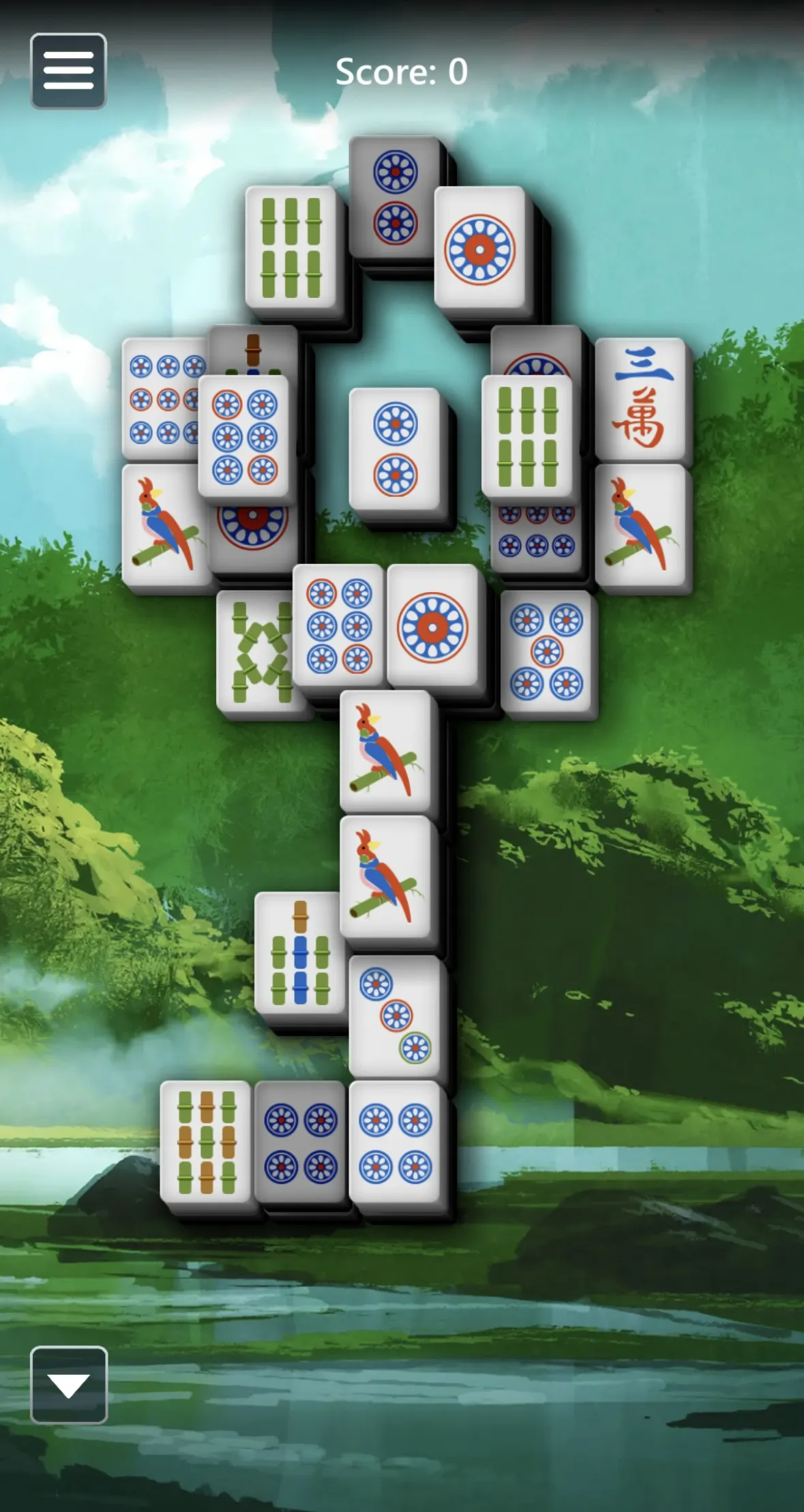
Screenshot: Microsoft Mahjong, Microsoft and Arkadium.
2. Mahjong Titans
Developer: Oberon Games (for Microsoft) | Released: 2007 (Windows Vista)
Platforms: Windows Vista and Windows 7 only (removed from Windows 8 onward)
Difficulty: Easy to medium | Price: Free (pre-installed)
Worth knowing about mostly because so many people are still looking for it. Mahjong Titans shipped with Vista and Windows 7, featured clean 3D-rendered tiles and a handful of layouts, and became the version an entire generation of office workers knew by heart.
Microsoft dropped it in Windows 8 in favour of the Collection, and people were annoyed. It is not available on any current version of Windows. If you're hunting for it, what you actually want is a browser recreation. Several exist for exactly that, and they're a search away.
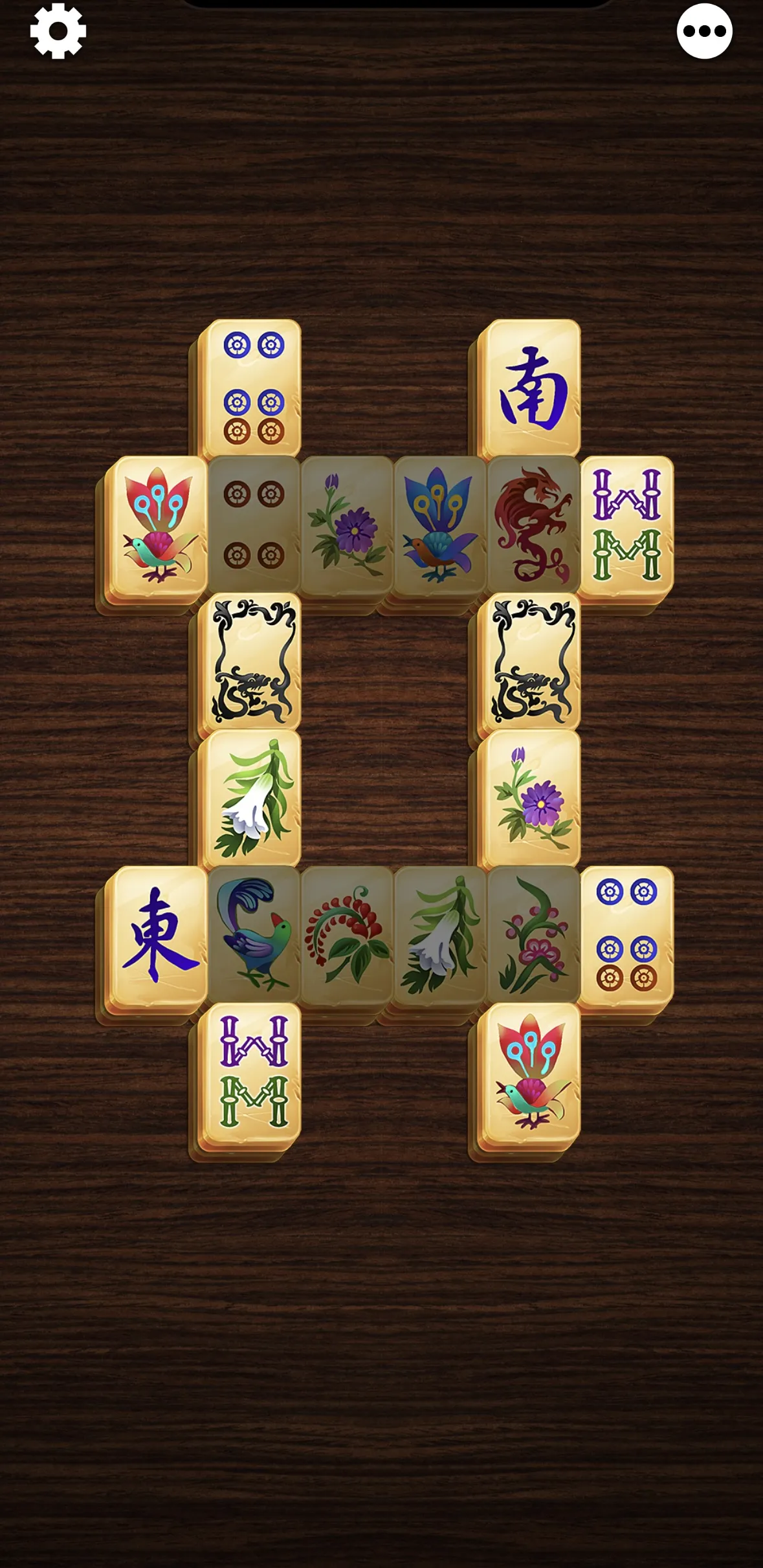
Screenshot: Mahjong Titans, Oberon Games.
3. Browser mahjong solitaire
Developer: Various | Available: Ongoing
Platforms: Any browser, no download, no account
Difficulty: Easy to medium | Price: Free (ad-supported)
An entire category rather than one game. Dozens of free sites offer mahjong solitaire with multiple layouts, themed tile sets and daily challenges, and collectively they pull enormous traffic.
Quality varies a lot. The things worth checking before you settle on one: does it offer undo and shuffle, does it tell you when the board has no legal moves left, and can you pick your layout? A site missing all three will have you replaying dead boards without knowing it. The ad load on the free ones is heavy. That's the trade for zero friction.
Screenshot: a browser mahjong solitaire game.
4. Mahjong City Tours
Developer: Jam City | Released: 2018
Platforms: iOS, Android
Difficulty: Easy to medium | Price: Free (ads + in-app purchases)
Where to play: Website · App Store · Google Play
Tile-matching wrapped in a world-travel theme, with each level set in a different city and a progression system that opens up new destinations. The layouts get tricky in the later cities, and power-ups smooth over the dead ends.
With over 10 million downloads it's one of the most popular mobile options, and a good example of classic mechanics refreshed with modern mobile progression design. If free-to-play pacing irritates you, this is the entry to skip.
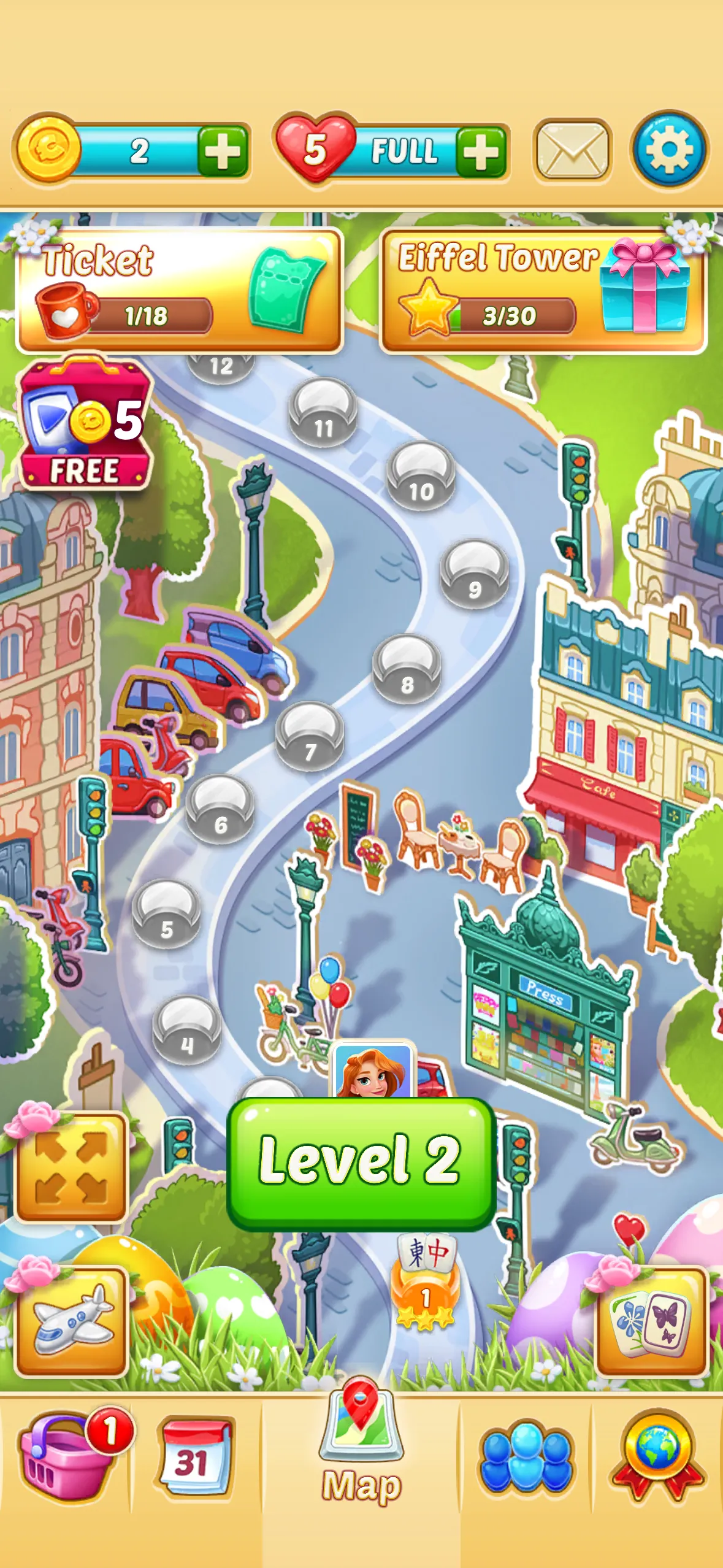
Screenshot: Mahjong City Tours, Jam City.
5. MahJong Quest
Developer: iWin (originally GameHouse) | Released: 2004 (original); sequels through 2008
Platforms: PC, Mac, mobile
Difficulty: Medium | Price: Paid (varies by platform)
Where to play: Website
The original narrative-driven take: tile-matching with a story, power-ups, obstacles and boss levels. It proved solitaire could support a full campaign rather than an endless run of layouts, and a lot of the mobile games above inherited its structure.
A staple of early-2000s casual PC gaming alongside Bejeweled and Bookworm, and it holds up better than most of that era.
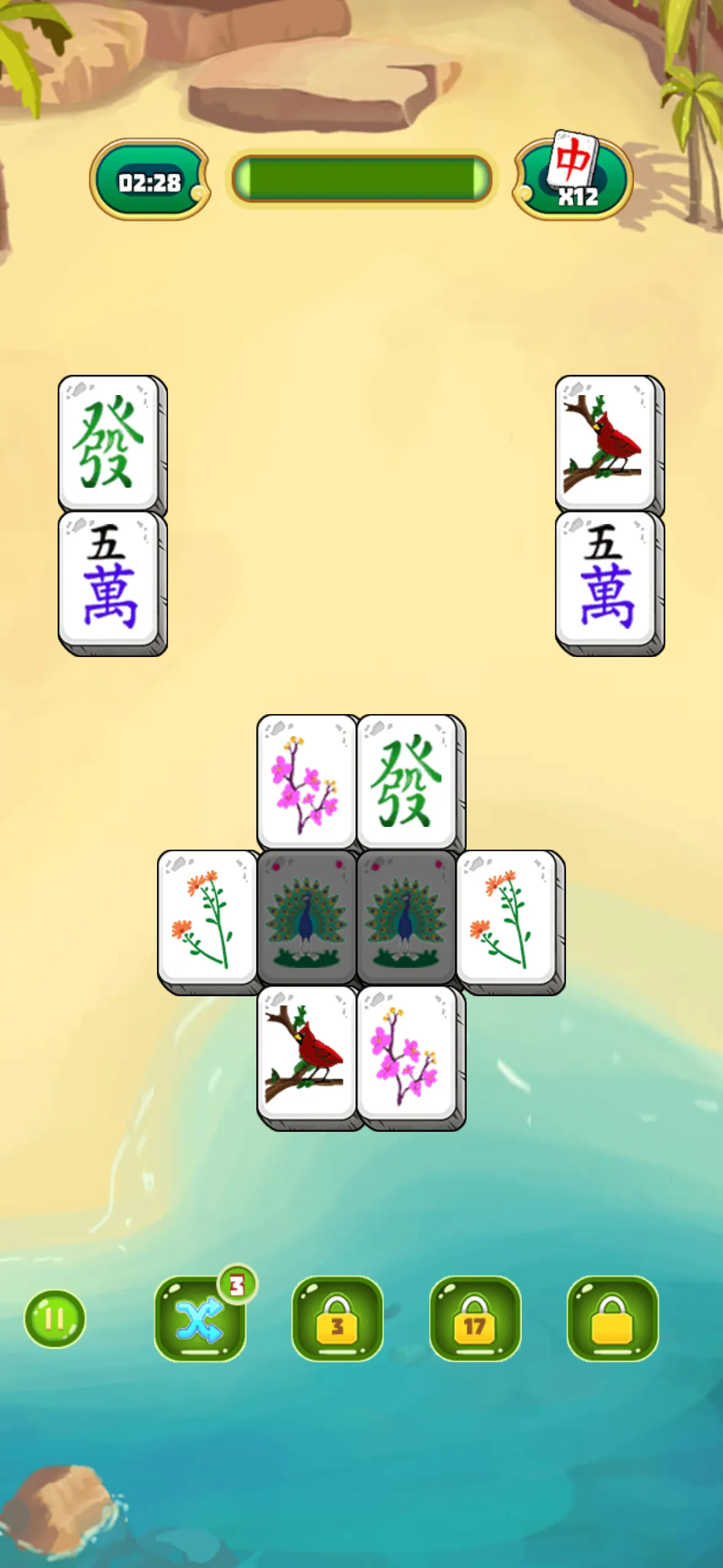
Screenshot: MahJong Quest, iWin.
Mahjong Connect / Shisen-sho: the path puzzle
One player. Tiles lie flat in a single-layer grid, not stacked. You remove identical pairs only if you can connect them with a line that bends no more than twice and passes through no other tile.
This is the section most mahjong lists skip entirely, and it catches people out. You download something called "Mahjong Connect" expecting the pyramid and get a grid instead.
The difference is real. Solitaire is about height: what's buried under what. Connect is about routes: two tiles can be side by side and still unmatchable if they're walled in, while two tiles at opposite corners can pair if the lane is clear. As tiles disappear the board opens up, so it accelerates rather than tightening.
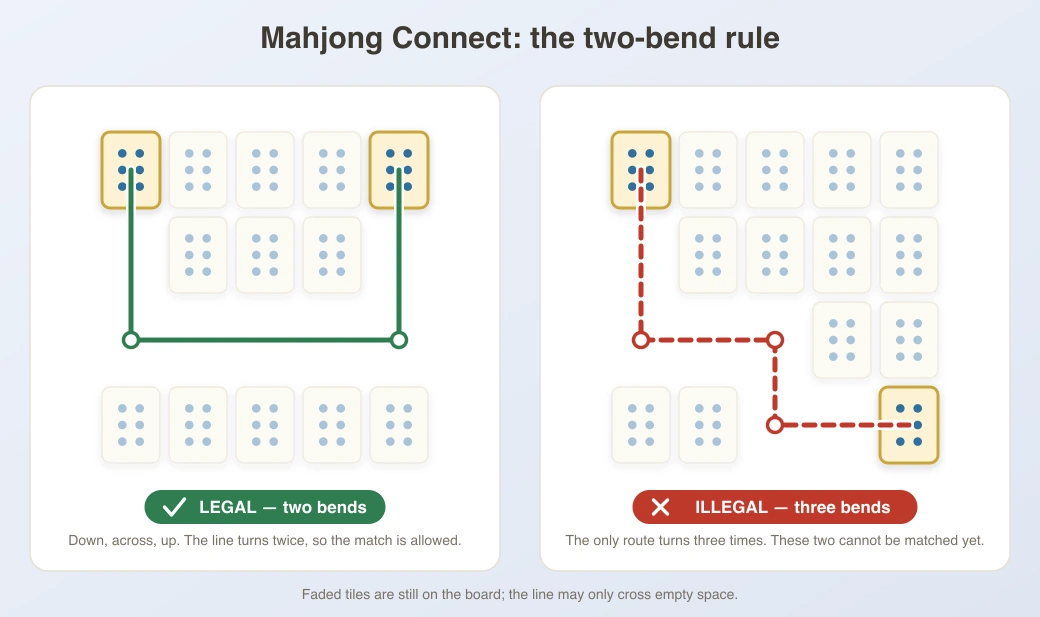
6. Shisen-sho (and its Mahjong Connect descendants)
Developer: Tamtex, published by Irem | Released: 1989 (arcade); PC-9800 port 1990
Platforms: Browser, iOS, Android (as countless "Mahjong Connect" clones)
Difficulty: Medium | Price: Free (ad-supported) to a few dollars
The arcade original was Shisenshō: Joshiryō-hen, released by Irem in 1989. It was fast, timed and solo, and it forced you to spot routes under a clock. Nearly every "Mahjong Connect" game you'll find today is a descendant of it, usually with the timer softened and levels added.
Look for a version with a hint button and a path preview that shows the line before you commit. Without the preview you spend the whole game mentally tracing corners, which is the tedious part rather than the fun part.
Four-player mahjong: the real game
Four players. You hold 13 tiles, draw one and discard one each turn, and race to build four sets plus a pair. Sets are three of a kind or three in a row in one suit.
This is the game that's been played since 19th-century China, and it's closer to poker than to any puzzle: you're reading what opponents discard, judging whether to go fast and cheap or slow and expensive, and avoiding handing someone their winning tile. If you want to learn it properly, start with how to play mahjong.
One honest caveat about this section: every good online option below plays Japanese Riichi. That isn't editorial preference. It's the state of the market. Hong Kong and American mahjong are enormously popular but are still mostly played in person or on smaller, rougher apps, so if that's what your family plays, the guide above will serve you better than any app on this list.
7. Mahjong Soul (Majsoul)
Developer: Cat Food Studio / Yostar | Released: 2019
Platforms: Web, iOS, Android, PC (Steam)
Difficulty: Hard (competitive Riichi) | Price: Free (cosmetic microtransactions)
Where to play: Website · App Store · Google Play
The game that brought Riichi to a global audience: deep four-player strategy wrapped in anime presentation, with ranked ladders, tournaments and a very large active player base. Matches fill instantly at almost any hour, which matters more than it sounds.
It is the default answer to "where do I play real mahjong online." Be warned that it does very little to teach you. It assumes you already know the rules and drops you into ranked play.
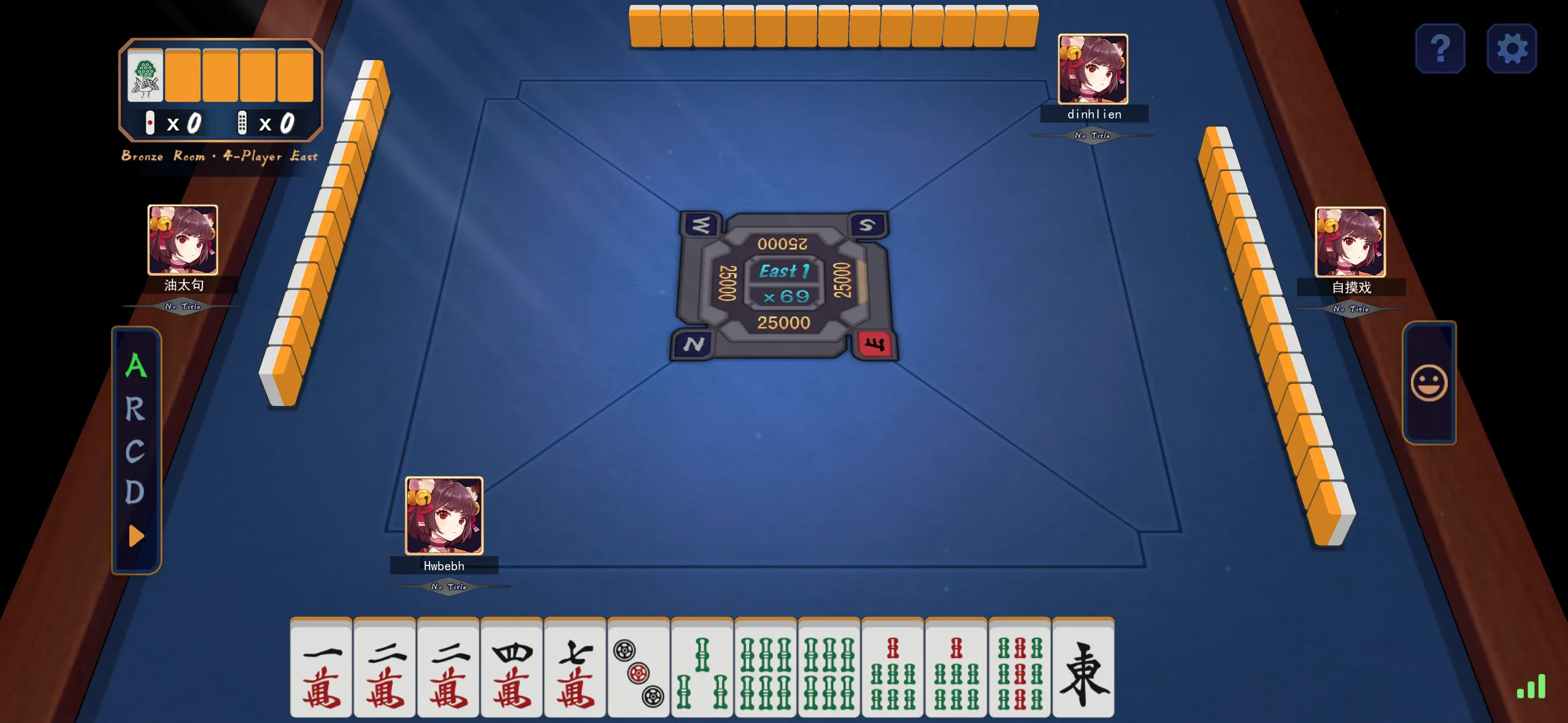
Screenshot: Mahjong Soul, Cat Food Studio and Yostar.
8. Riichi City
Publisher: Formirai (earlier listings credit Lancelot Tech)
Platforms: iOS, Android, PC (Steam)
Difficulty: Medium to hard | Price: Free (cosmetic purchases)
Where to play: App Store · Google Play
The better starting point of the two big Riichi platforms. Riichi City offers 3-player and 4-player ranked matches, tournaments and short single-round modes, but the reason to start here is the built-in lessons and the bot queues that fill instantly. You can practise the flow of a hand without a ranked score riding on it.
If Mahjong Soul's ranked ladder feels like being thrown in at the deep end, learn here first and move across once yaku are second nature.
9. Kemono Mahjong
Developer: Kemono Games | Released: 2021
Platforms: PC (Steam), iOS, Android
Difficulty: Medium to hard | Price: Free (cosmetic purchases)
Where to play: Website · App Store · Google Play
Competitive Riichi with an animal-character theme and a gentler on-ramp. Its tutorial is the standout feature: it introduces yaku (winning hand patterns) progressively instead of dumping the whole list on you at once, which is precisely where most new Riichi players bounce off.
A smaller player base than the two above means longer queues at off-peak hours.
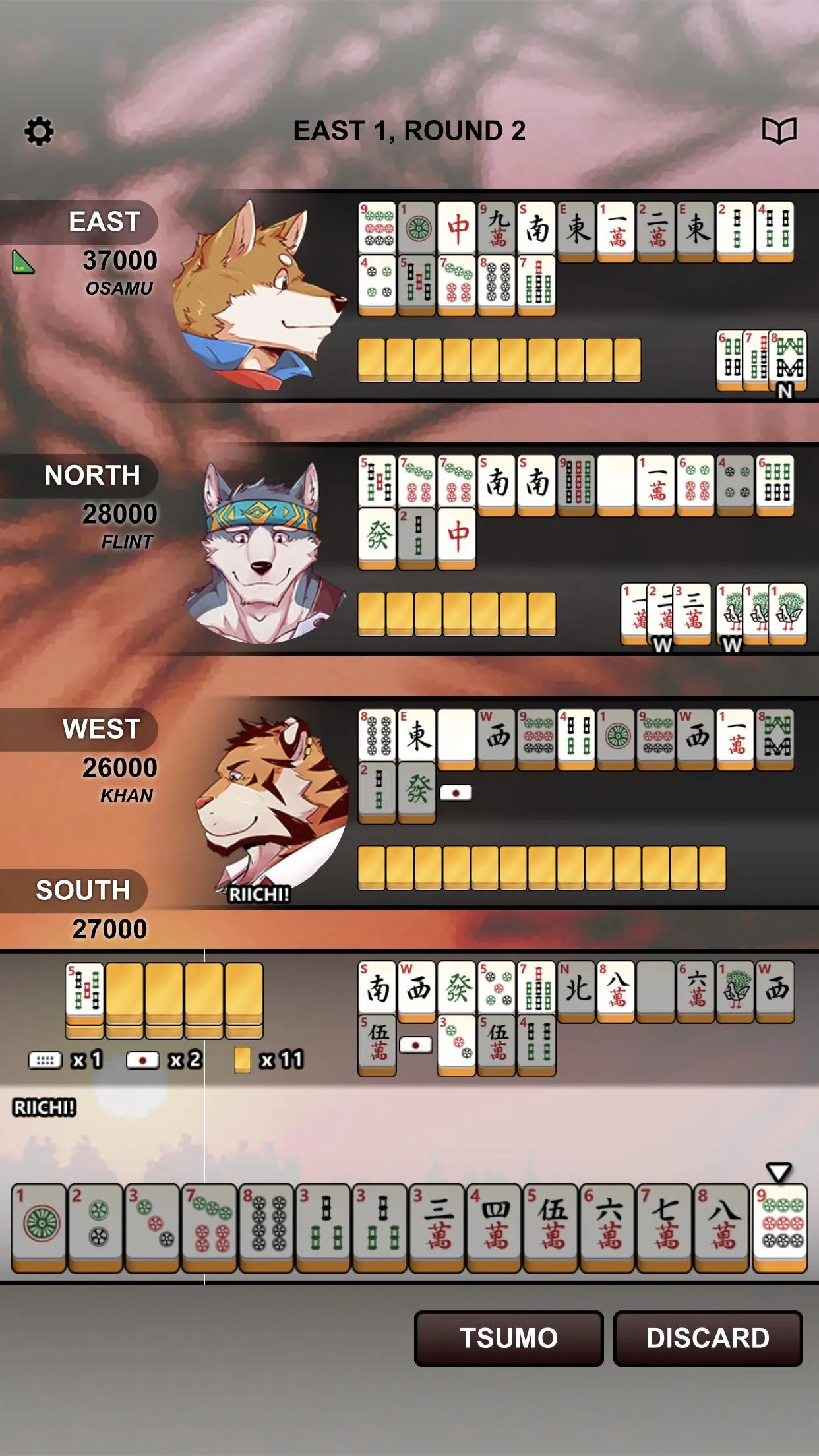
Screenshot: Kemono Mahjong, Kemono Games.
10. Yakuza / Like a Dragon: the mahjong parlor
Developer: Ryu Ga Gotoku Studio / SEGA | Released: 2005–present
Platforms: PC, PlayStation, Xbox
Difficulty: Hard | Price: Part of the full game
Where to play: Website
An unconventional entry that earns its place: the mahjong parlor tucked inside SEGA's crime-drama series is a complete Riichi implementation, and it has taught an improbable number of Western players the real game. You sit down expecting a five-minute diversion and surface two hours later.
It's a strange way to learn. No tutorial, no mercy, and it sits inside a game about something else entirely. The mahjong itself is the real thing.
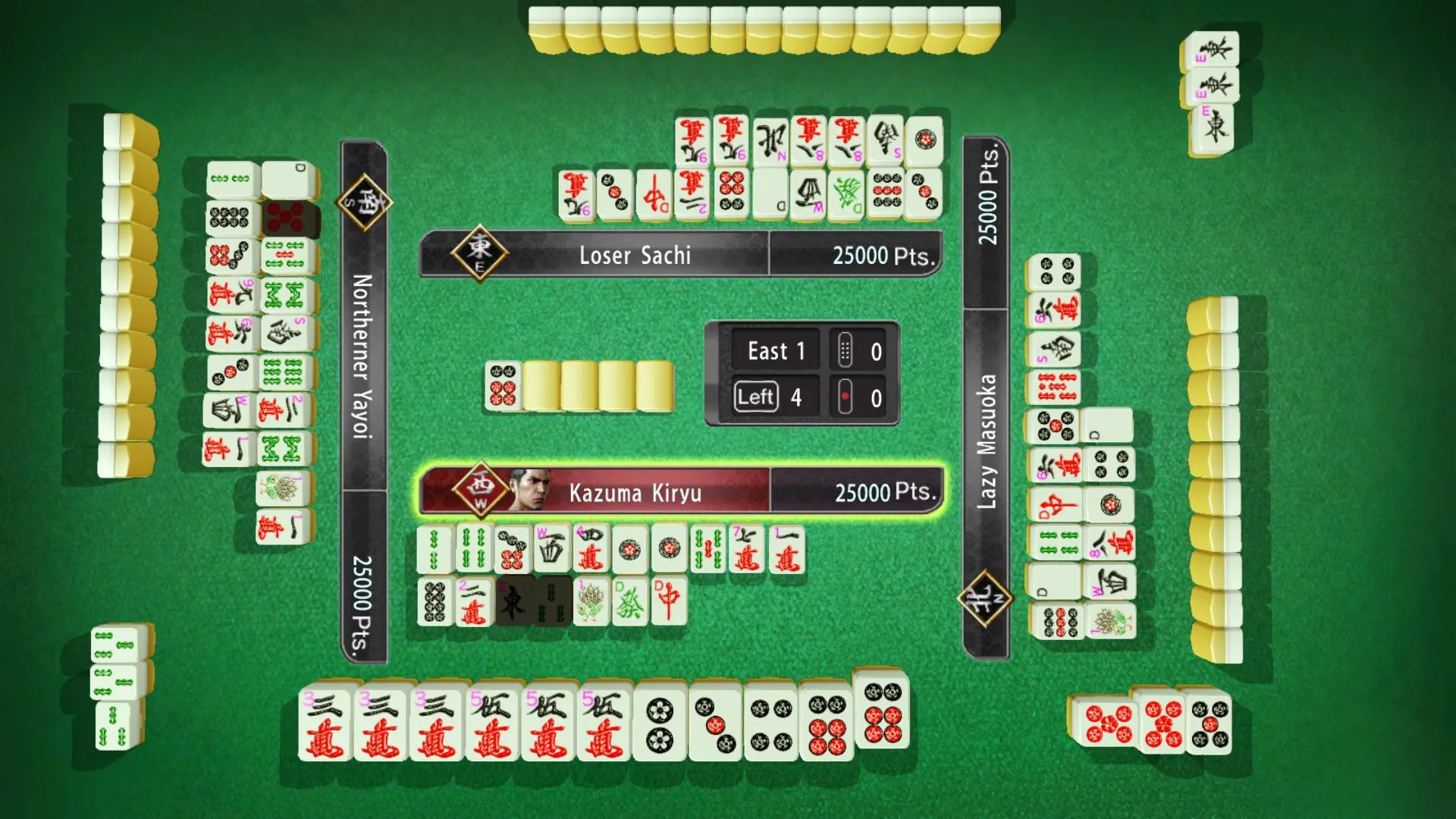
Screenshot: Like a Dragon, Ryu Ga Gotoku Studio and SEGA.
Where the tile pyramid actually came from
Worth clearing up, because almost every site gets it wrong: Mahjong Solitaire is not ancient. It's a computer game from 1981.
It was written by Brodie Lockard, a Stanford student who had been paralysed from the neck down in a gymnastics accident two years earlier. During his recovery he asked for access to a PLATO terminal and coded the game using a mouth stick to type. He called it Mah-Jongg after the tiles it borrowed, and released it free on the PLATO network.
Activision licensed the idea and shipped Shanghai in 1986 for the IBM PC, Amiga, Macintosh, Atari ST and Apple IIgs. It sold enormously and defined the genre. Every game in the first section of this list descends from it. Activision's marketing also described it as based on a centuries-old Chinese game called "the Turtle," which is where the myth started. Lockard never made that claim. The four-player game really is old. The tile pyramid is a 1981 original that borrowed its art.
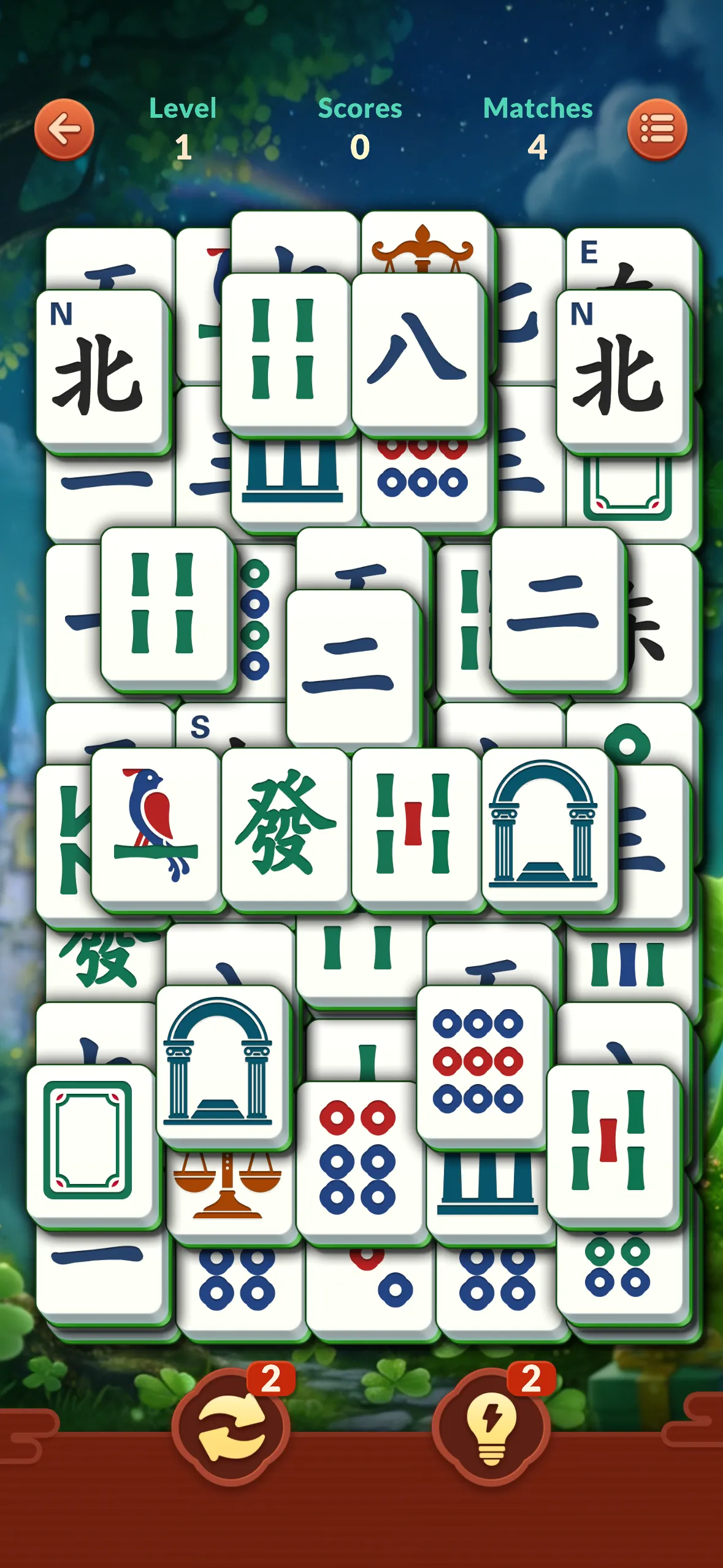
Screenshot: Shanghai, Activision, on a classic Mac.
Which one should you play?
| Mahjong Solitaire | Mahjong Connect / Shisen-sho | Four-player mahjong | |
|---|---|---|---|
| Players | 1 | 1 | 4 |
| Board | Stacked layers | Flat single-layer grid | No board, just a hand of 13 tiles |
| Core rule | Match free identical pairs | Match pairs linkable in ≤2 bends | Build 4 sets + 1 pair |
| Skill | Move order, lookahead | Route-finding under pressure | Probability, reading discards |
| Learn it in | Two minutes | Two minutes | An evening, then years |
| Best for | Unwinding | A faster, punchier solo puzzle | Real competitive depth |
| Start with | Microsoft Mahjong | Any Mahjong Connect with path preview | Riichi City, then Mahjong Soul |
Short version: want to switch your brain off, play solitaire. Want the same thing but quicker and more urgent, play Connect. Want a game you'll still be getting better at in five years, learn the four-player game, and start with our guide rather than an app.
Common questions
Is Mahjong Solitaire real mahjong? No. They share a tile set and a name, nothing else. Solitaire is a one-player matching puzzle from 1981; mahjong is a four-player game from 19th-century China.
Which version of real mahjong should I learn first? Japanese Riichi if you want to play online, because that's where the players are. Hong Kong Old Style if you want the easiest rules and you have three people to play with in person.
Is there a free way to play the four-player game? Yes. Mahjong Soul, Riichi City and Kemono Mahjong are all free, and sell cosmetics rather than advantage.
Why do so many mahjong apps look like slot machines? Because some of them are. Several casino games borrow mahjong tile art without using any mahjong rules. If a game shows you a bet size and a spin button, it's a slot machine with tiles painted on it, and it's not on this list.
Like games that reward pattern recognition and careful move order? Try Pairdle, a daily word puzzle where you build answers from letter pairs using logic and deduction.
By Tim Nye, Logic Loft Games
Related articles
How to Play Mahjong: The Real Four-Player Game Explained
Not the tile pyramid — the real game. Four players, thirteen tiles, draw and discard. How a hand works, and how Riichi, Hong Kong, Chinese and American differ.
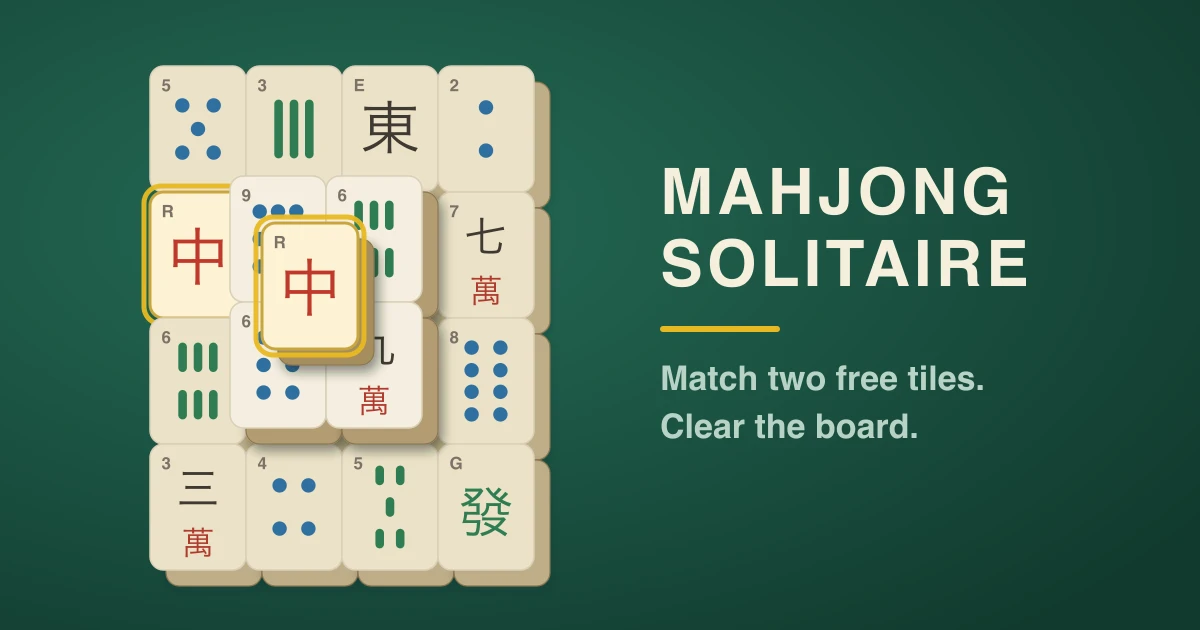
How to Play Mahjong Solitaire: A Beginner's Guide
Mahjong Solitaire is not the four-player game. It is a one-player tile-matching puzzle. Here are the rules, what 'free' means, and how to avoid getting stuck.
The 10 Best Match-3 and Casual Puzzle Games in 2026
From Candy Crush to Bejeweled to indie gems, these are the 10 best match-3 and casual puzzle games, the biggest genre in gaming.