
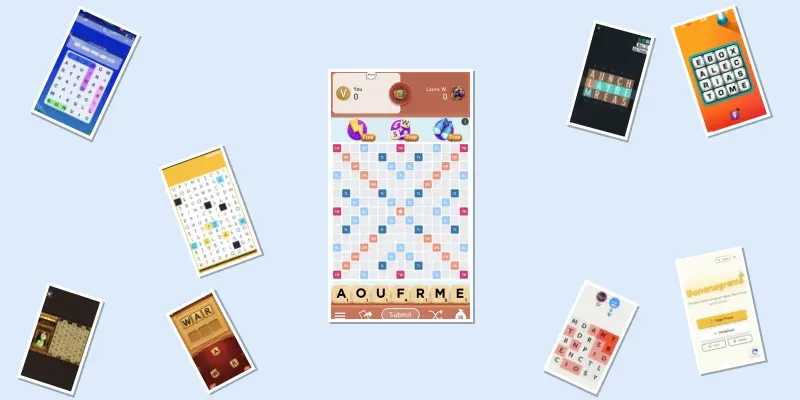
Daily puzzle games get all the attention these days, but the word games that built the genre are still going strong, and nearly all of them have digital versions you can play right now.
This list covers the classics: the games that set the rules for competitive word play and put word games on phones. If Wordle or Pairdle is part of your morning, these are the games that came first. For letter-rearrangement specialists and vocabulary builders, see our roundups of anagram and letter games and vocabulary builders.
Nobody pays to be on this list, and we earn nothing when you click through to a game. Read how we choose and review games.
1. Scrabble
Developer (digital): Scopely (Scrabble GO, 2020) | Original release: 1938
Platforms: iOS, Android, Web
Difficulty: Medium to very hard | Price: Free with ads and in-app purchases
Where to play: App Store · Google Play
The competitive word game every other one is measured against. Players build interlocking words on a 15x15 board, scoring on letter values and premium squares. Scrabble GO added social features and daily challenges and kept the tile laying that has made it the world's most recognized word game for over 85 years.
Scrabble invented the vocabulary of competitive word gaming: rack management, two-letter word lists, triple-word scores. The North American Scrabble Players Association still runs sanctioned tournament play.
Pop culture: Featured in Seinfeld, The Wire, and The Simpsons. The National Scrabble Championship was televised on ESPN. Stefan Fatsis's book Word Freak brought competitive Scrabble culture to a mainstream audience.
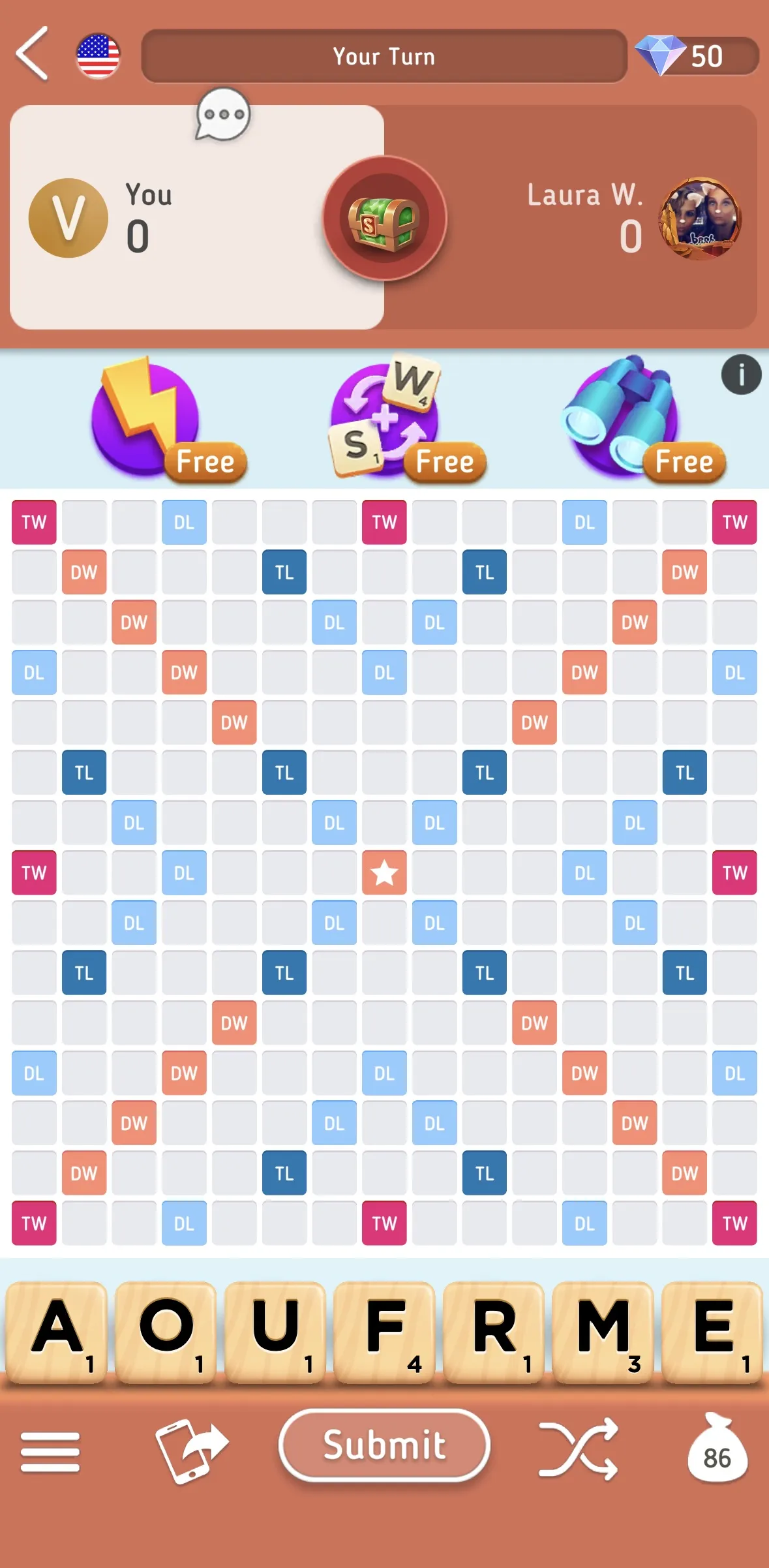
Screenshot: Scrabble, Scopely.
2. Words With Friends
Developer: Zynga (acquired from Newtoy, 2011) | Original release: 2009
Platforms: iOS, Android
Difficulty: Medium | Price: Free with ads; paid ad-free subscription available
Where to play: App Store · Google Play
The take-your-turn-whenever word game that defined smartphone-era gaming. Modeled on Scrabble but with a redesigned board and a social layer built around challenging friends. At its peak, 13 million people played daily.
Words With Friends moved competitive word play onto the phone. You could run 10 games at once across time zones, checking in for 90 seconds at a time.
Pop culture: Alec Baldwin was famously kicked off an American Airlines flight in 2011 for refusing to stop playing. The story went globally viral and became one of the defining smartphone celebrity moments of the decade.
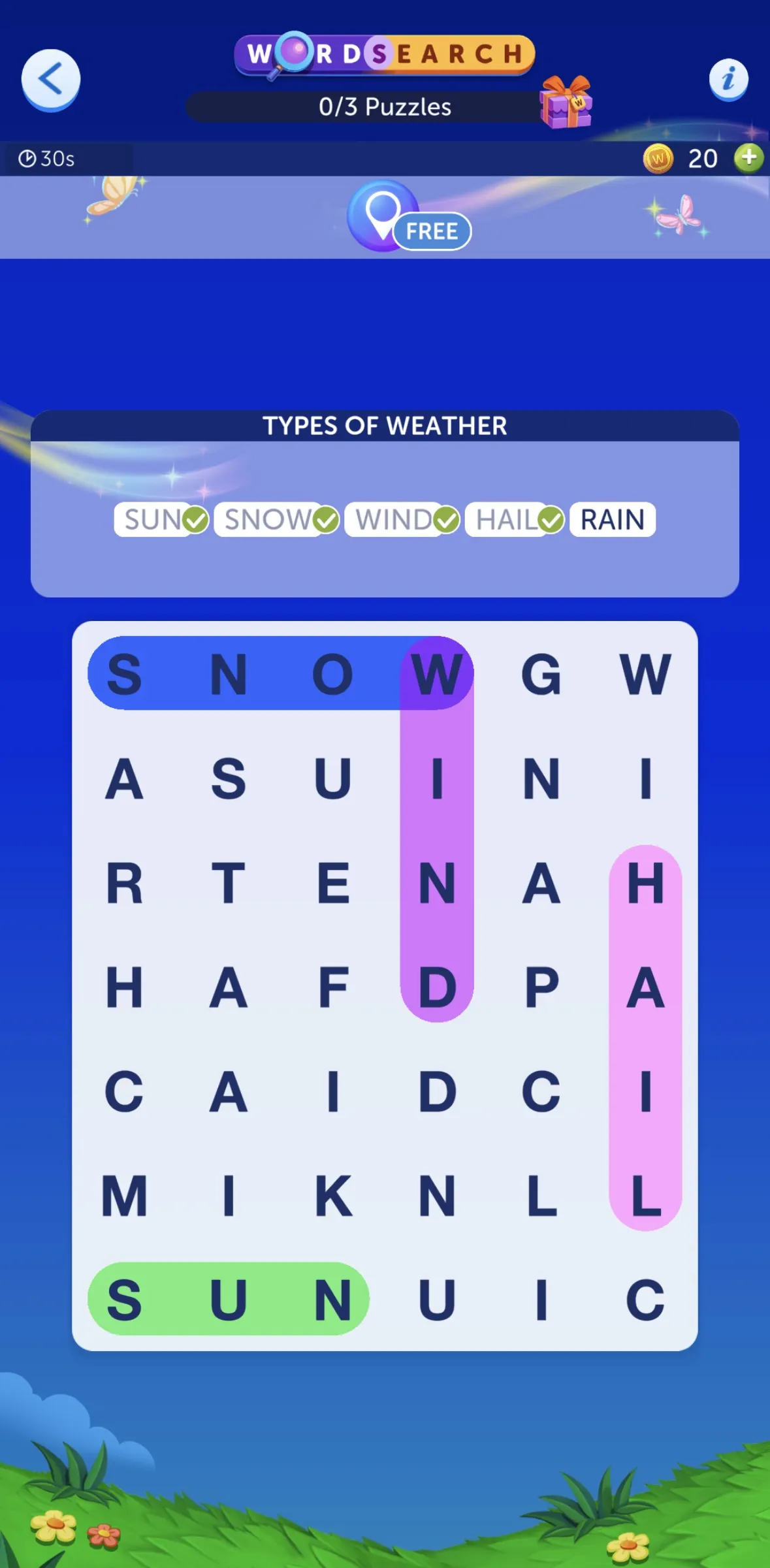
Screenshot: Words With Friends, Zynga.
3. Boggle
Developer (digital): Zynga (Boggle With Friends) | Original release: 1972
Platforms: iOS, Android
Difficulty: Medium | Price: Free with ads and in-app purchases
Where to play: App Store · Google Play
Find as many words as possible in a 4x4 grid of random letters within a three-minute timer. Connect adjacent letters in any direction. The time pressure turns a vocabulary exercise into a frantic visual scan.
Boggle added live searching of a grid to word gaming. The cube of letters became a game night fixture. Boggle With Friends reached over 25 million downloads.
Pop culture: Ellen DeGeneres is a publicly known Boggle enthusiast. The physical cube shaker became shorthand for "nerdy game night" across decades of film and TV.
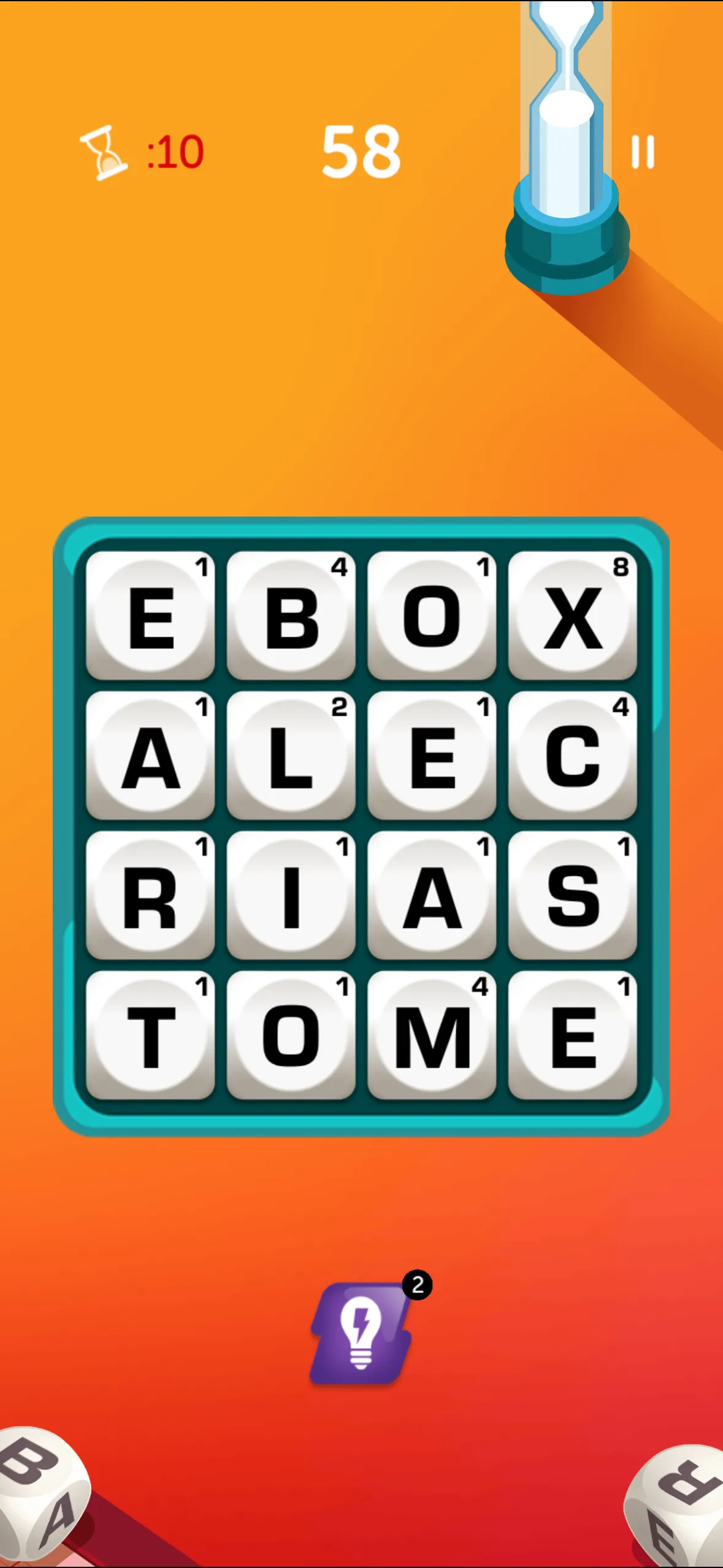
Screenshot: Boggle, Zynga.
4. SpellTower
Developer: Zach Gage (indie) | Original release: 2011 (iOS); SpellTower+ released 2021
Platforms: iOS, Android, Mac, Steam
Difficulty: Variable by mode | Price: $4.99 (no ads, no in-app purchases)
Where to play: App Store
Swipe connected letters to form words in a grid, causing surrounding tiles to fall or cascade. SpellTower+ expanded the original with six modes, from a relaxed daily puzzle to a brutally fast Rush mode.
Zach Gage essentially invented the modern "word tile cascade" genre. The pull between finding long words (which clear more tiles) and staying ahead of the rising grid makes it more than a vocabulary test. SpellTower+ is still the game other indie word games get measured against.
Pop culture: Frequently cited in “best iOS games of all time” lists by Kotaku, IGN, and Touch Arcade.
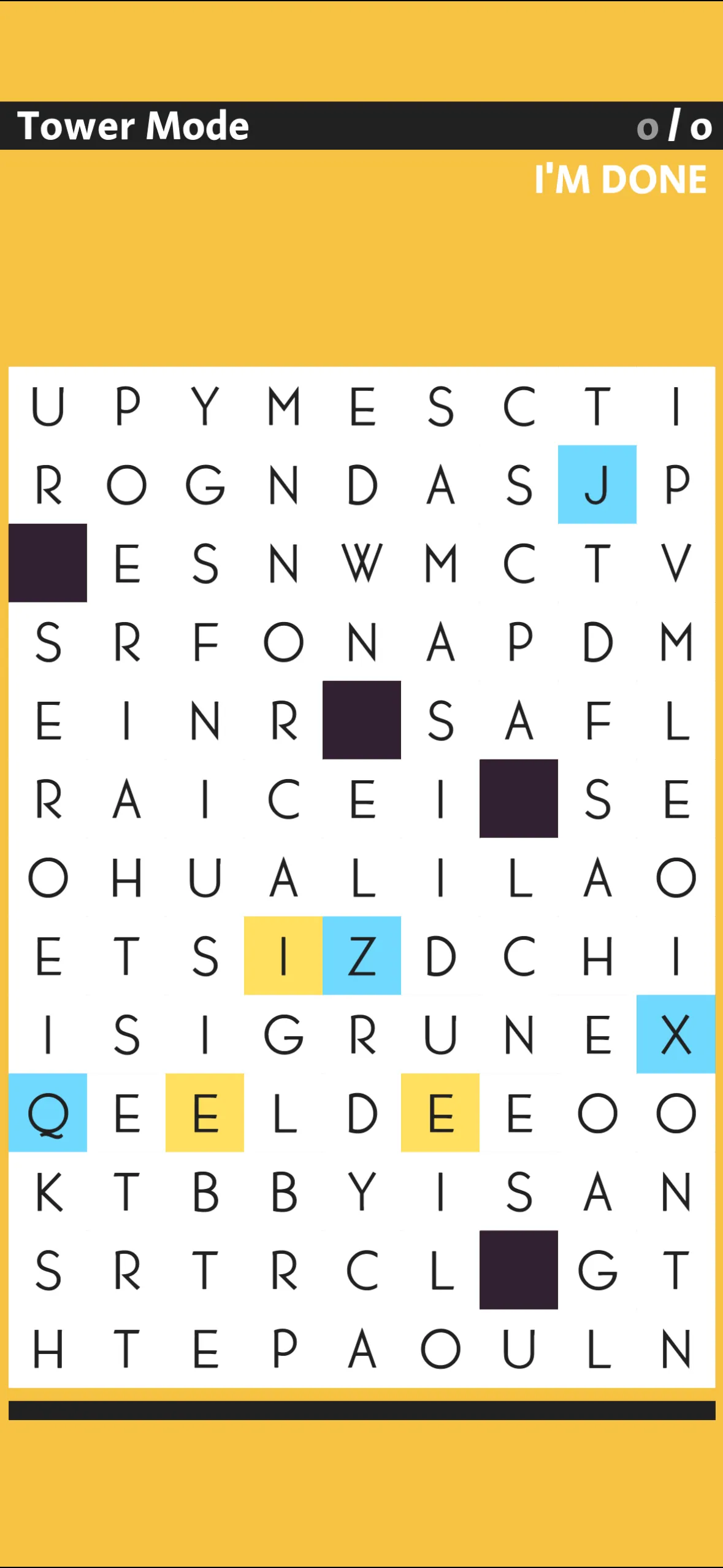
Screenshot: SpellTower, Zach Gage.
5. Typeshift
Developer: Zach Gage (indie) | Original release: 2017
Platforms: iOS, Android
Difficulty: Light to medium | Price: Free with daily puzzles; puzzle packs available as paid purchases
Where to play: App Store · Google Play
Columns of letters that you slide up and down to form words horizontally across the center row. The goal is to use every letter at least once. It sounds simple; it plays like a slow-burn logic puzzle.
Typeshift proved a word game mechanic could still be brand new in 2017. Sliding columns of letters had no real predecessor. The New Yorker publishes regular Typeshift puzzles, which few mobile word games can say.
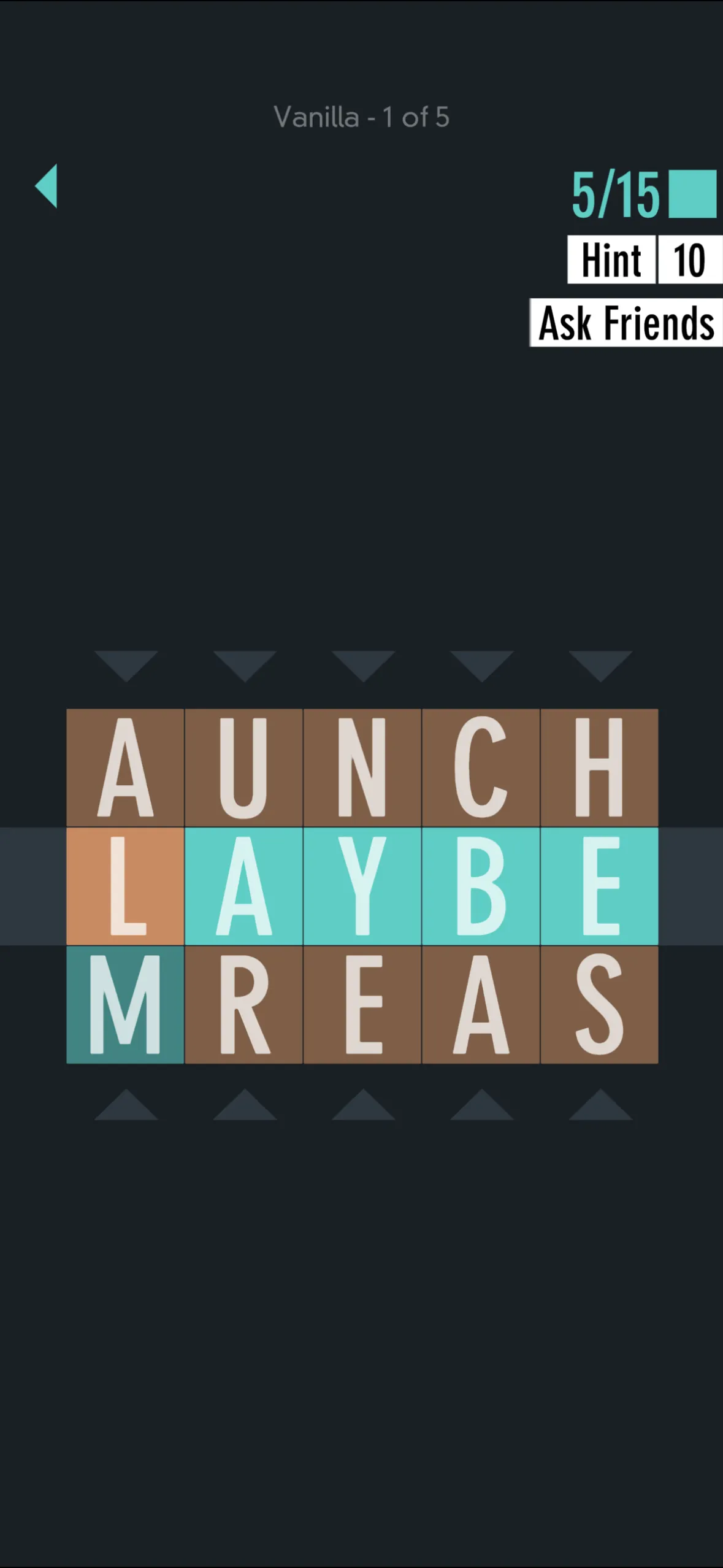
Screenshot: Typeshift, Zach Gage.
6. Bananagrams
Developer (digital): Bananagrams Inc. | Original release: 2006 (physical); digital app ~2013
Platforms: iOS, Android
Difficulty: Easy to medium | Price: Free with ads; paid version available
Race to use all your letter tiles to build your own personal crossword grid. No shared board, no turn-taking. When someone uses all their tiles, they call "Peel!" and everyone draws another. The first to clear the bag wins.
Bananagrams dropped Scrabble's scoring and replaced it with a flat-out race. It sold over 11 million physical sets worldwide and won the Toy of the Year Award from the Toy Industry Association.
Pop culture: Featured on The Today Show and Good Morning America multiple times. The banana-shaped pouch became one of the most recognizable game packaging designs of the 2000s.
Screenshot: Bananagrams, Bananagrams Inc.
7. Bookworm
Developer: PopCap Games (now EA/PopCap) | Original release: 2003 (PC/web)
Platforms: Originally PC/web; mobile ports available
Difficulty: Easy to medium | Price: Free on web portals; mobile versions paid or bundled
Connect adjacent tiles in a letter grid to spell words. Longer and rarer words earn bonus tiles and higher scores. Bookworm sat alongside Bejeweled and Zuma as one of the games that made PopCap's name.
Bookworm reached millions of players on portals like MSN Games and Yahoo Games who had never thought of themselves as "gamers." It was the word game gateway for an entire generation of casual players, many of whom are now playing Wordle and Pairdle.
Pop culture: The character Lex the bookworm became well known in early internet gaming culture. PopCap was the dominant casual game studio of the 2000s.
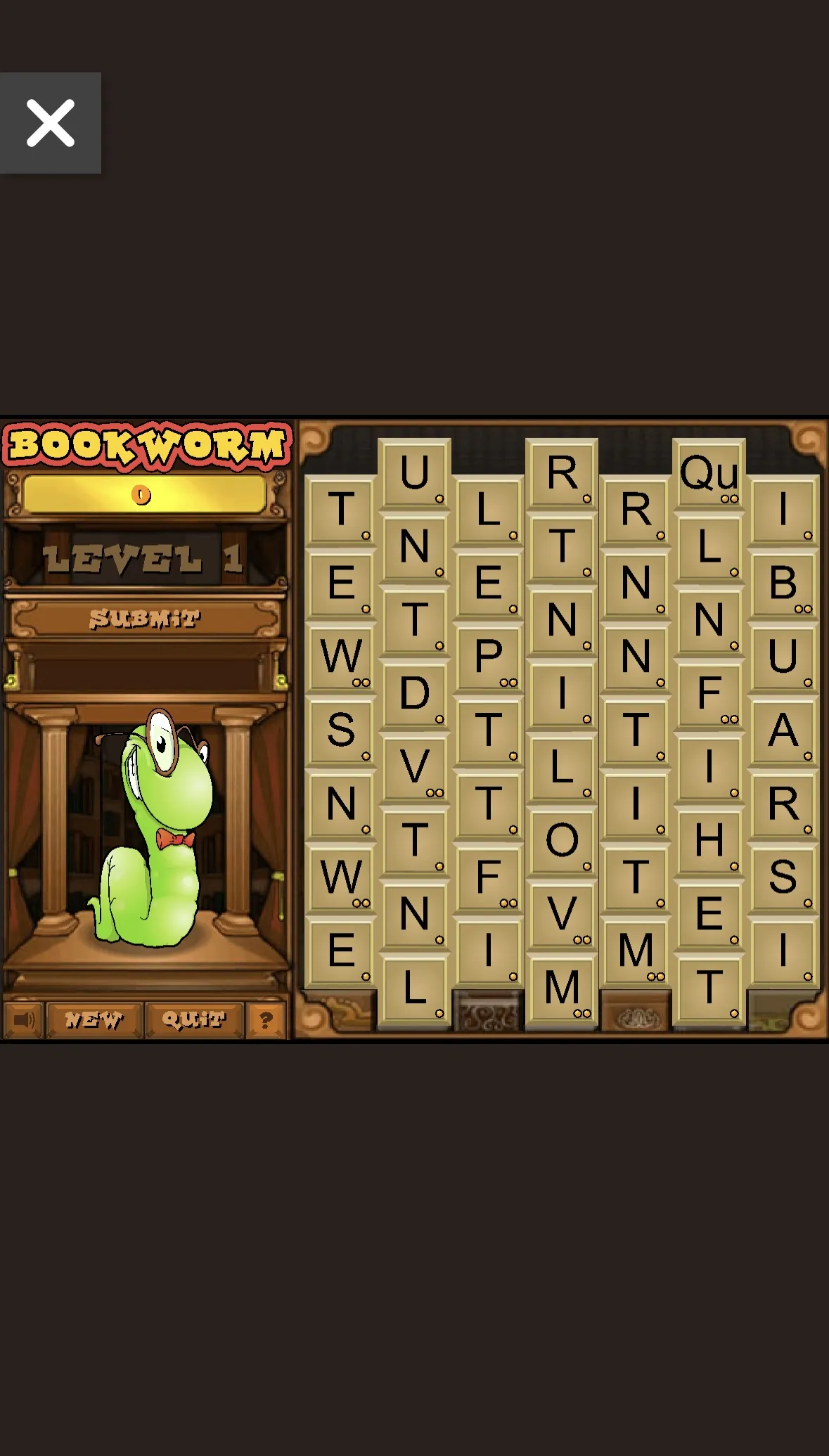
Screenshot: Bookworm, PopCap Games.
8. Letterpress
Developer: Loren Brichter (atebits) | Original release: 2012 (iOS)
Platforms: iOS
Difficulty: Medium to hard | Price: Free with a paid "plus" unlock
Where to play: App Store
A two-player territory-capture word game on a 5x5 letter grid. Spell words to claim letters in your color. Letters are only "locked" when all surrounding letters also belong to you. Word strategy meets Risk-style territorial control.
Loren Brichter (creator of Tweetie, which became the official Twitter app) brought a very high design standard to word gaming. Letterpress proved a solo indie developer could compete with major studios on design alone.
Pop culture: Covered by TechCrunch, The Verge, and Wired at launch. Frequently cited in game design writing about "elegant constraint."
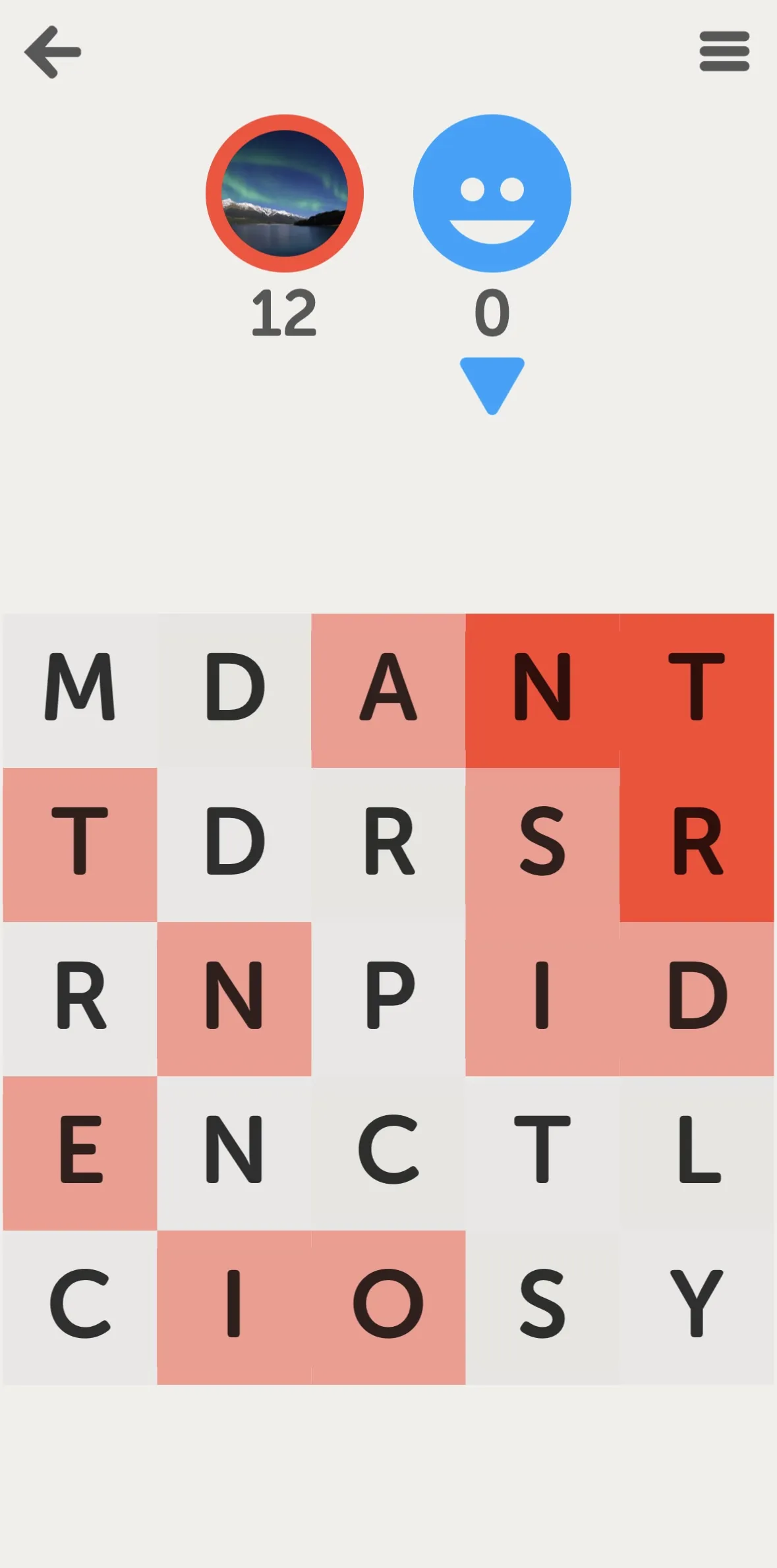
Screenshot: Letterpress, Loren Brichter.
9. Word Connect / Word Cookies
Developers: Zentertain (Word Connect), BitMango (Word Cookies) | Released: 2016
Platforms: iOS, Android
Difficulty: Easy | Price: Free with ads and in-app purchases
Where to play: Word Connect App Store · Google Play · Word Cookies App Store · Google Play
Swipe through scrambled letters to find all possible words and fill in a crossword-like grid. No timer pressure. Simple enough for first-time mobile word game players. Both have accumulated 50 million+ downloads.
This genre opened mobile word games up to everyone. Short sessions (one puzzle in 90 seconds), no timer and a clean finish made it the way in for tens of millions of players who now form the core word game audience. Word Connect reached #1 word game in over 50 countries.
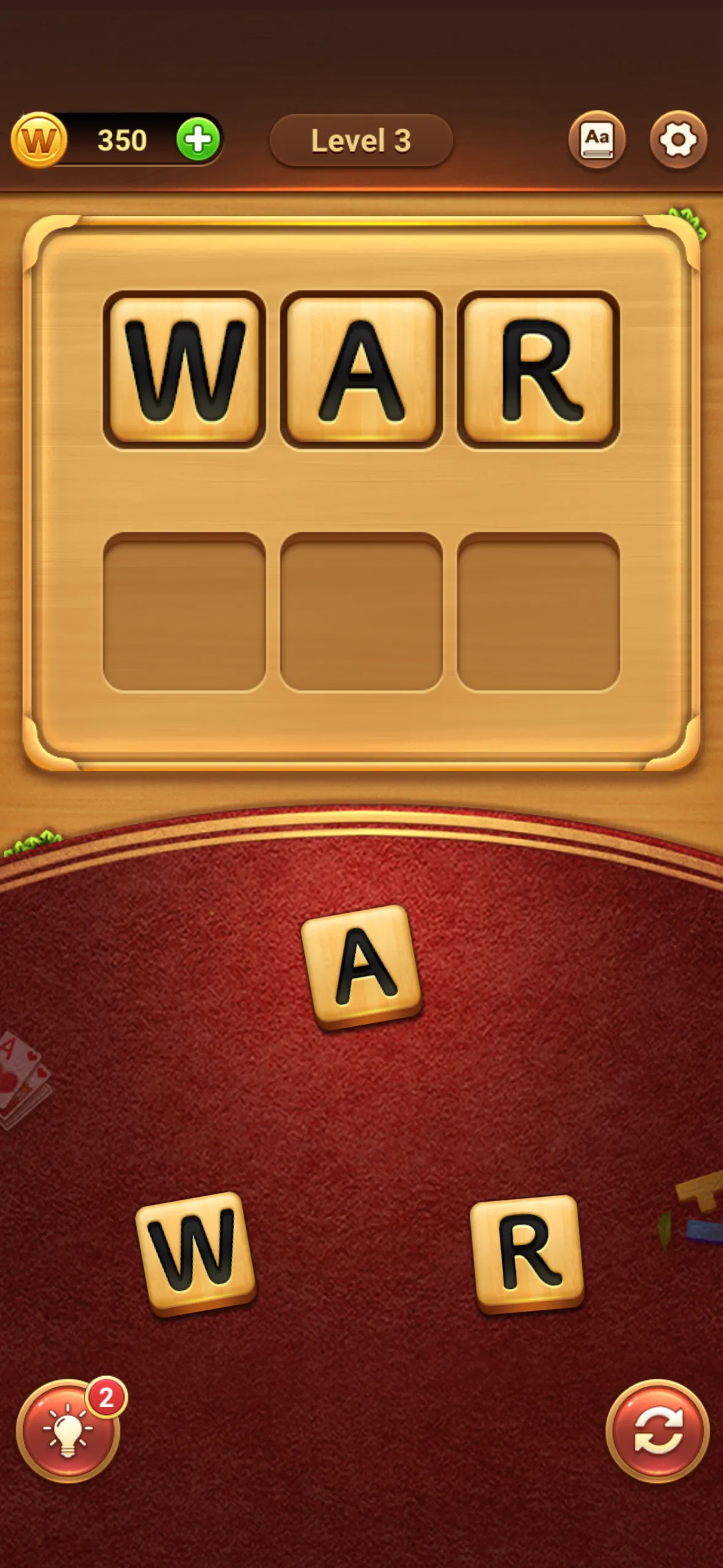
Screenshot: Word Connect and Word Cookies, Zentertain and BitMango.
10. Wordle (The Original)
Developer: Josh Wardle (independent); acquired by The New York Times in 2022
Released: October 2021
Platforms: Web, iOS, Android (NYT Games app)
Difficulty: Medium | Price: Free
Where to play: Website · App Store · Google Play
Wordle earns a spot on both the "daily" and "classic" lists because it has already become a classic. Five letters, six guesses, one puzzle per day. The colored result grid, which you can share without spoiling the answer, created one of the most viral social mechanics in game history.
Wordle went from a private Valentine’s Day gift to a global cultural moment in about 60 days. At peak, 300,000 people were playing daily before any marketing existed. The NYT acquisition validated the entire daily word puzzle category and launched at least 100 variants, including Pairdle, which moved every level onto a single row in its 1.5 update.
Which Classic Word Game Should You Start With?
| If you like... | Start with... |
|---|---|
| Head-to-head competition | Scrabble or Words With Friends |
| Speed and pressure | Boggle or Bananagrams |
| Beautiful indie design | SpellTower or Typeshift |
| Casual, no-stress play | Word Connect / Word Cookies |
| Strategy and territory | Letterpress |
| Daily puzzles | Wordle or Pairdle |
Want to try a word game that tests logic instead of vocabulary? Play Pairdle free. New puzzle every day.
By Tim Nye, Logic Loft Games
Related articles
Scrabble Words That Win: 2-Letter Words, Q Without U, Bingos
All 107 two-letter Scrabble words, the Q words with no U, vowel dumps, where J, X and Z score most, and how to set up a 50-point bingo.
How to Play Scrabble: Rules, Scoring & Board Bonuses
A clear, complete guide to Scrabble: setup, the 100-tile bag, how scoring and premium squares work, and the rules most people get wrong.
The 10 Best Crossword Puzzle Games and Apps in 2026
From the NYT Crossword to free daily apps and cryptics, the 10 best crossword games, with a plain note on which to start with.