
Most Scrabble games between friends are decided by a small set of odd little words. There are the two-letter words that let you lay one word beside another. There are the Q words that need no U. There is a short list of words that are nearly all vowels, for the turns when your rack is too. And there are the short words that get a J, X or Z onto a coloured square.
This page puts all four lists in one place. We looked up every word here in the Merriam-Webster Scrabble dictionary, which is the book most home games in the United States and Canada use. Where the Collins list used in the rest of the world is different, we say so. The scores in the pictures were worked out by a script on the real board layout, so you can lay the tiles out at home and count them yourself.
If you are still learning the rules, start with how to play Scrabble and come back.
The two-letter words
There are 107 two-letter words in the North American list. Collins has the same 107 and 20 more: CH, DI, EA, EE, FY, GU, IO, JA, KO, KY, NY, OB, OO, OU, ST, UG, UR, YU, ZE and ZO. The list of 20 comes from NASPA, the North American players' association, on its page about how Collins differs. If you play on an app, check which list it uses before you try ZO.
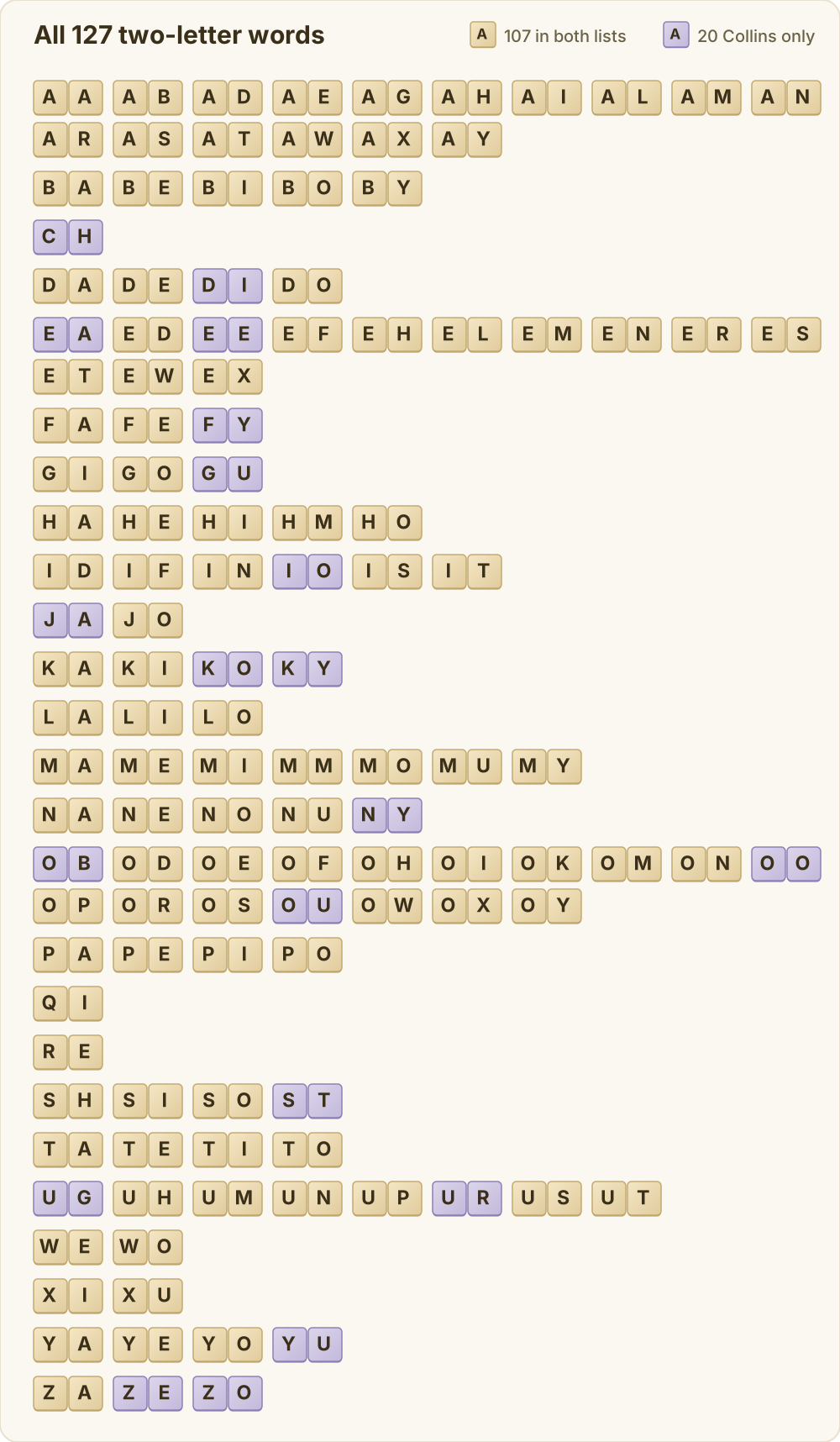
You need these words because of one rule. When you lay a word beside another word, every pair of touching letters has to be a word too. You score each of those small words as well as your main one. A player who knows the two-letter list sees places to play that other players walk past.
Here is that rule at work. HUMAN and AXE are already on the board. You hold a Q and an I and no U.
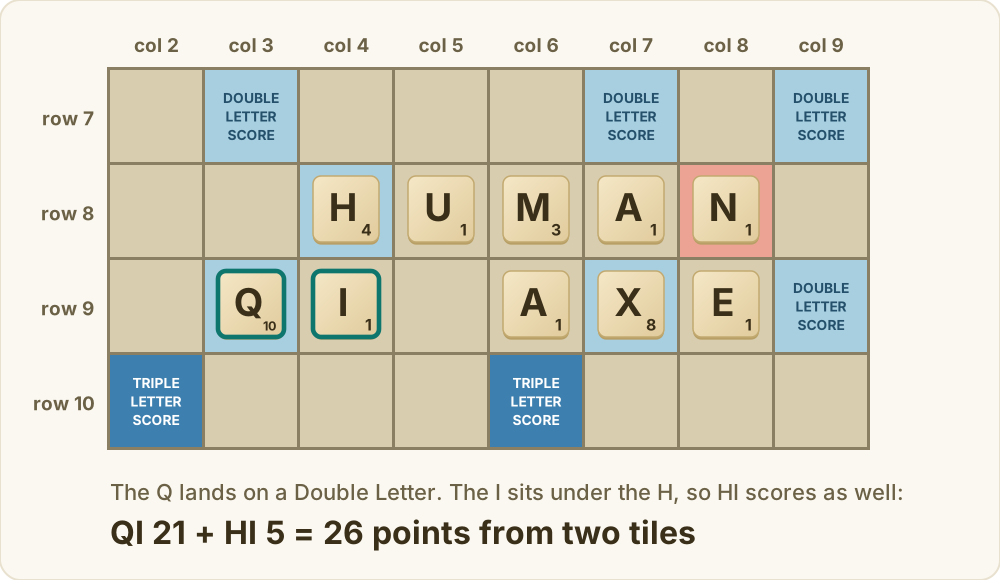
The Q goes on a Double Letter square, so QI scores 21. The I sits under the H, which spells HI for 5 more. That is 26 points from two tiles, and the Q is off your rack.
You already know a lot of the list: AM, AN, AS, AT, BE, BY, DO, GO, HE, HI, IF, IN, IS, IT, ME, MY, NO, OF, ON, OR, SO, TO, UP, US, WE. The points are in the ones you do not know. Here are the 52 that get challenged most, with what they mean.
| Word | Meaning | Word | Meaning |
|---|---|---|---|
| AA | rough lava | MO | a moment |
| AE | one | NA | no |
| AG | farming | NE | born with the name of |
| AI | a three-toed sloth | NU | a Greek letter |
| AL | a tree of southeast Asia | OD | a force once thought to exist in nature |
| AR | the letter R | OE | a whirlwind off the Faroe Islands |
| BA | the soul, in ancient Egypt | OI | the same as OY |
| BO | a pal | OM | a sound chanted over and over in prayer |
| DA | dad | OP | a style of art |
| DE | of, used in names | OS | a bone |
| ED | education | OW | a cry of pain |
| EF | the letter F | OY | a cry of dismay |
| EL | a raised railway | PE | a Hebrew letter |
| EM | the letter M | PO | a chamber pot |
| EN | the letter N | QI | the life force, in Chinese thought |
| ES | the letter S | SH | be quiet |
| ET | an old past tense of eat | TA | thanks |
| EW | a sound of disgust | TE | a note of the scale, the same as TI |
| FE | a Hebrew letter | UT | an old name for the note DO |
| GI | a white suit worn for judo or karate | WO | woe |
| HM | a thinking sound | XI | a Greek letter |
| JO | a sweetheart | XU | a coin of Vietnam |
| KA | the spirit, in ancient Egypt | YA | an Asian pear |
| KI | the same as QI | YE | you |
| LI | a Chinese unit of distance | YO | a call to get attention |
| MM | a sound of agreement | ZA | pizza |
The other 30 are short everyday words (AD, AX, HA, MA, OK, OX, PA), Greek letters (MU, PI) and notes of the scale (RE, MI, FA, LA, TI, and SI, which is another name for TI). A few plain-looking words have a meaning you would not guess. AT is a verb now, and it means to reply to or challenge someone. IN is a verb that means to harvest. OR is the gold colour on a coat of arms. UN means one, as in a good un.
Older lists get some of this wrong, and ours did too. LI, PO, KI and OI are often marked as Collins only. All four are good in North America. QA turns up on some lists as well. It is not a word in either book.
Which letters the two-letter words help most
We counted how many of the 107 words each letter appears in. The more words a letter is in, the easier it is to slide that tile in beside something.
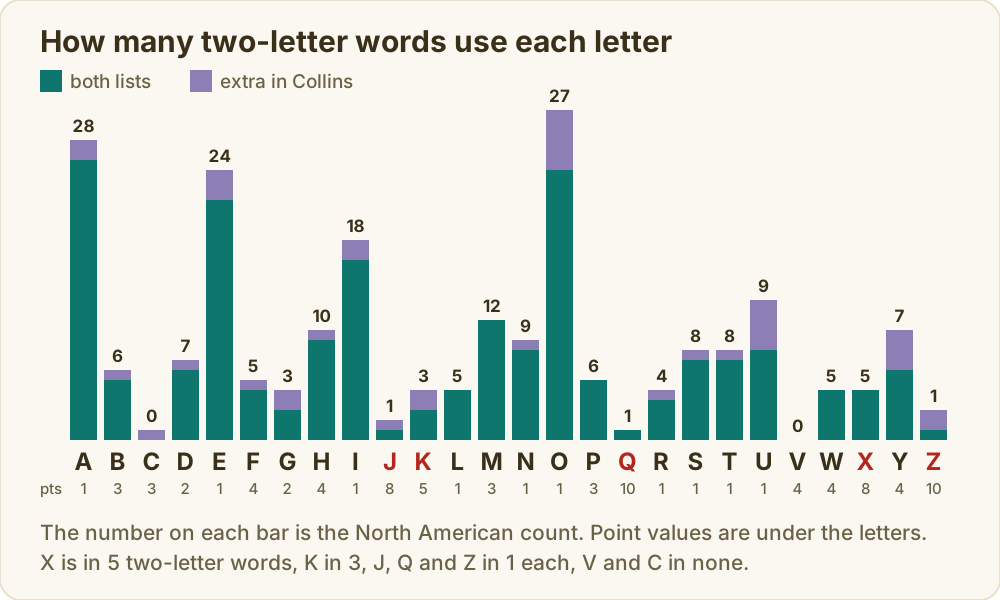
A is in 28 of them and O is in 27. At the other end, J, Q and Z are in one each (JO, QI and ZA), and V and C are in none. X is in five: AX, EX, OX, XI and XU. That is why the X, at 8 points, is so much easier to score with than the J at the same value. It is also why a V is a poor tile to hold late in a game. There is nowhere small to put it.
Collins players get a little more room. JA gives the J a second home, ZE and ZO give the Z three in all, and CH gives the C its only one.
The Q without a U
There is one Q in the bag and four U tiles. If the Q is among your first seven tiles, the other six hold no U and no blank about 68 times in 100. So most of the time the Q arrives alone.
It matters because tiles left on your rack at the end count against you. The Scrabble guide walks through how the end of the game is scored. The short version is that a Q you never play is a 20-point swing.
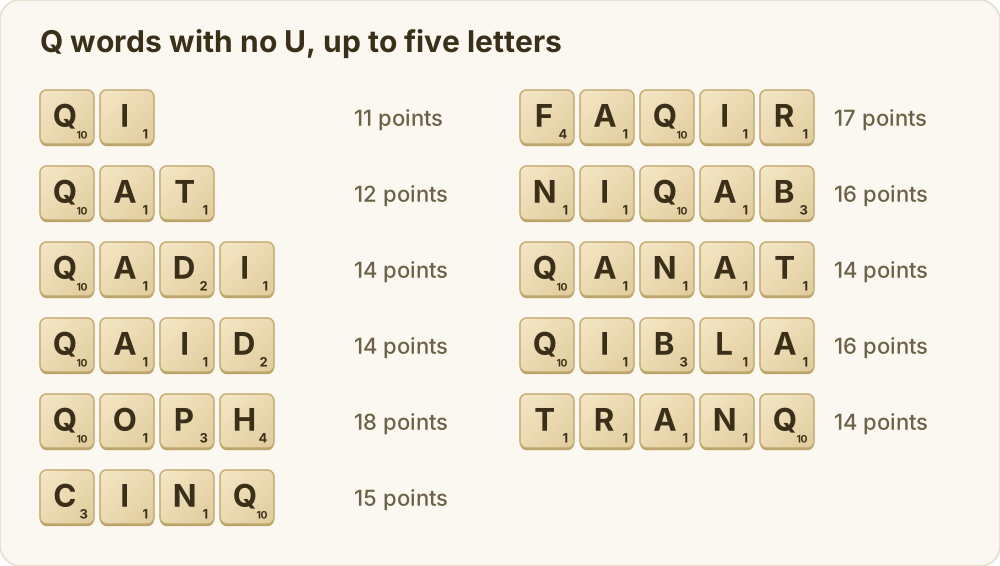
These are the Q words with no U that the North American book allows, up to five letters.
| Word | Meaning |
|---|---|
| QI | the life force, in Chinese thought |
| QAT | a shrub whose leaves are chewed, also spelled KAT |
| QADI | a Muslim judge |
| QAID | a local leader in North Africa |
| QOPH | a Hebrew letter |
| CINQ | the number five on dice |
| FAQIR | a holy man who lives by begging |
| NIQAB | a veil worn by some Muslim women |
| QAJAQ | a kayak |
| QANAT | tunnels and wells that carry water, in the Middle East |
| QAPIK | a coin of Azerbaijan |
| QIBLA | the direction Muslims face to pray |
| TRANQ | a drug that calms you, short for tranquilizer |
QIS, QATS, QADIS, QAIDS and the other plain plurals are fine too. QAJAQ needs a blank, because there is only one Q. The six-letter words are QABALA, QIGONG, QINDAR, QINTAR, QWERTY, SHEQEL and NIQAAB. The long shot is MBAQANGA, a kind of South African dance music.
Collins adds a few more, and the most useful is QIN, a Chinese instrument with strings. WAQF, TALAQ and TZADDIQ show up on many lists online. None of the three is in the North American book.
If you learn only two, learn QI and QAT. Between them they get rid of the Q in most games.
Too many vowels
Of the 100 tiles, 42 are vowels.
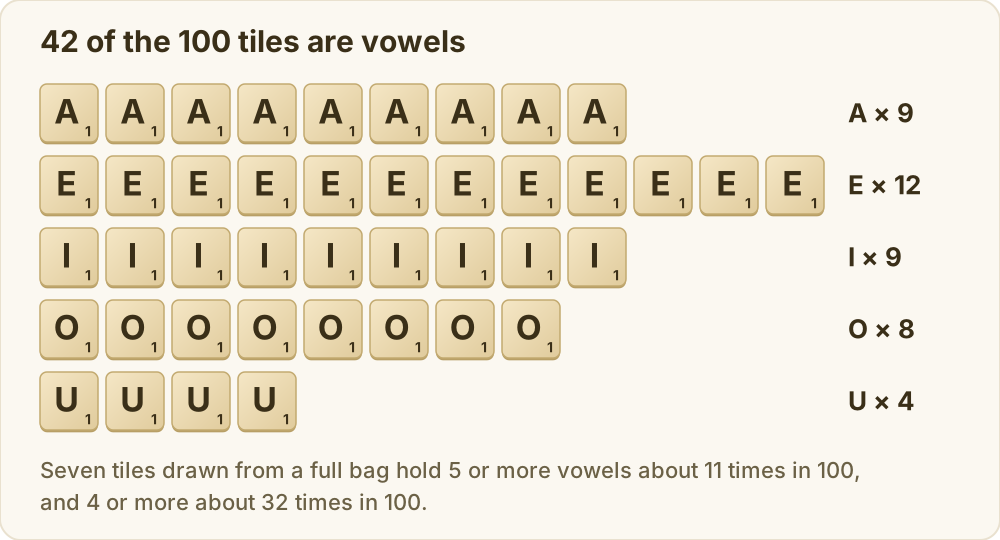
Draw seven tiles from a full bag and you will hold five or more vowels about 11 times in 100. Four or more comes up about a third of the time. So a rack full of vowels is an ordinary turn, and it helps to have a plan for it.
The plan is to get rid of the extra vowels, even for a small score, so that your next draw has room to fix the rack. Most players aim to keep about three vowels and four consonants.
The smallest vowel dumps are the two-letter words that are all vowels: AA, AE, AI, OE and OI. Collins adds EA, EE, IO, OO and OU. After that, these are the words to know. Every one is in the North American book.
| Length | Words |
|---|---|
| 3 letters, 3 vowels | EAU |
| 4 letters, 3 vowels | AEON, AIDE, AJEE, AKEE, ALAE, ALOE, AQUA, AREA, AURA, AWEE, CIAO, EAUX, EIDE, EPEE, ETUI, IDEA, ILIA, IOTA, IXIA, JIAO, LUAU, MEOU, MOUE, NAOI, OBOE, ODEA, OGEE, OLEA, OLIO, TOEA, UNAI, UREA |
| 5 letters, 4 vowels | AALII, ADIEU, AECIA, AERIE, AIOLI, AUDIO, AUREI, COOEE, EERIE, LOOIE, MIAOU, OIDIA, OORIE, OURIE, QUEUE, ZOEAE |
| Longer | MIAOUED (5 vowels), SEQUOIA (5 vowels), AUREOLAE (6 vowels) |
A few meanings, since these get challenged. EAU is water, and EAUX is more than one. AALII is a tree. AUREI are Roman gold coins. OURIE means shivering with cold, and OORIE is the same word. MIAOU is what a cat says, so MIAOUED is what the cat did. COOEE is a loud call. LOOIE is a lieutenant.
Here is a rack with five vowels, and one play that fixes it.
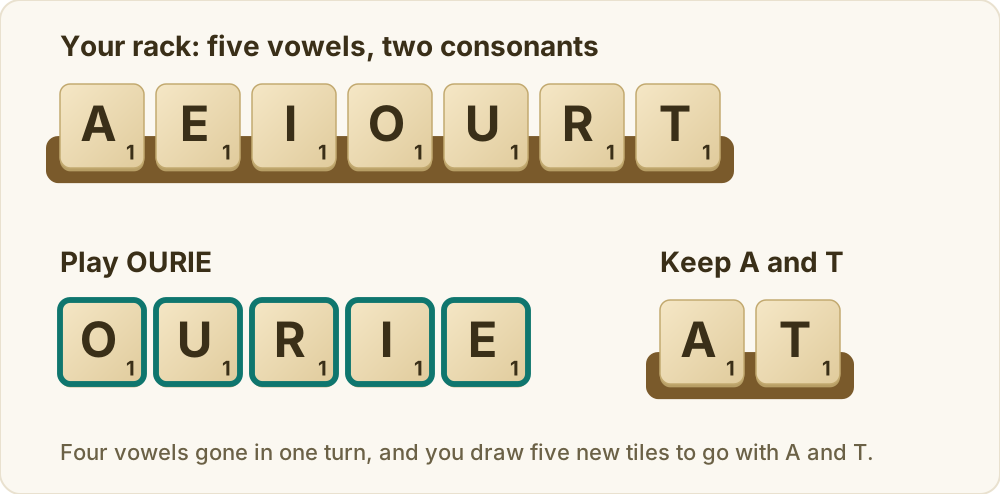
OURIE uses O, U, I and E in one turn. You keep A and T and draw five new tiles.
Four words that show up on older vowel lists are not in the North American book: AIA, EUOI, EUOUAE and OUIJA. OUIJA is a brand name, so it is not allowed at all. If you cannot find a play that sheds at least three vowels, swapping tiles is a fair move. You score nothing that turn, and you get a rack you can use.
Where to put the J, X, Z and K
A coloured square changes what a big tile is worth.
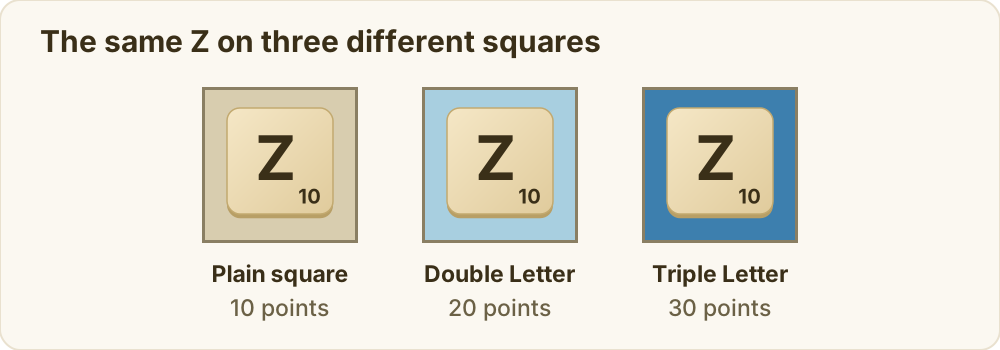
The best case is a big tile on a Triple Letter square where it is part of two words at once. Then the tripled tile is counted twice. Here ALONE and AHA are on the board, and you hold a Z and an A.
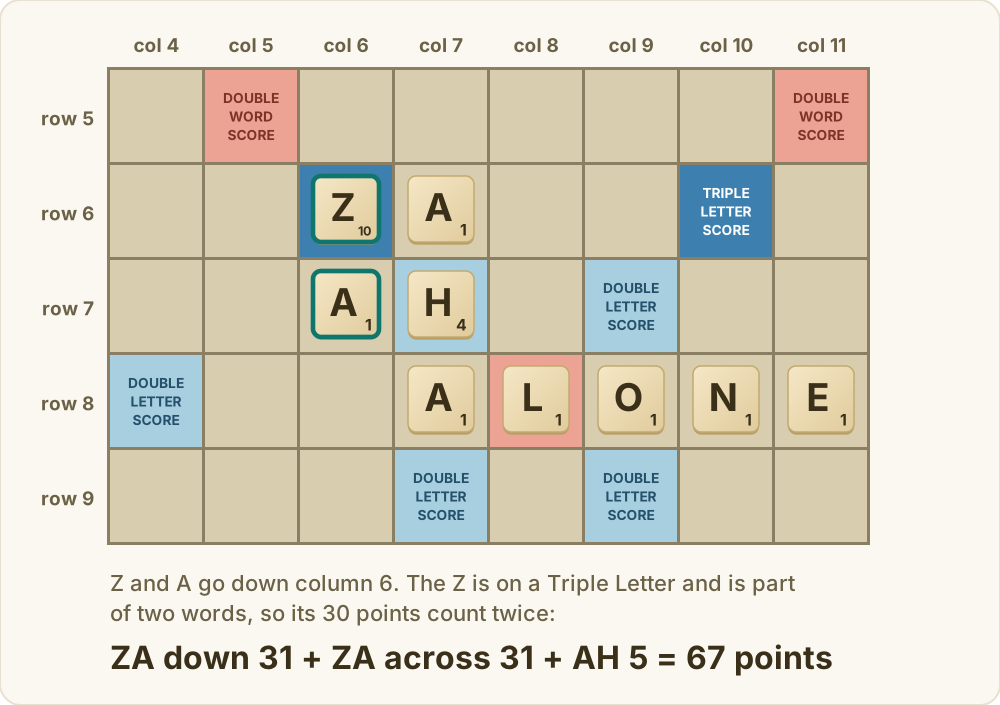
ZA down is 31. The Z also makes ZA across with the A that was already there, for 31 more. The new A makes AH for 5. That is 67 points from two tiles. Plays this good are rare. A Z or an X on a Double Letter square that counts in two words is common, and it is usually worth 30 points or more. The X in the AXE play in the Scrabble guide is one of those, and it scores 41.
To make these plays you need short words for each tile. All of these are in the North American book.
| Tile | Short words |
|---|---|
| Z | ZA, ADZ, AZO, BIZ, COZ, FEZ, WIZ, ZAP, ZAS, ZAX, ZED, ZEK, ZIP, ZIT, ZOA, ZOO |
| X | AX, EX, OX, XI, XU, AXE, DEX, FIX, FOX, HEX, KEX, OXO, OXY, PYX, SIX, TAX, VEX, WAX, ZAX |
| J | JO, HAJ, JAB, JAM, JAR, JAW, JAY, JEE, JET, JEU, JIG, JIN, JOB, JOG, JOT, JOW, JOY, JUG, JUN, JUS, RAJ, TAJ |
| K | KA, KI, OK, KAB, KAF, KAT, KEA, KEF, KHI, KIP, KIR, KOA, KOP, KOR, KOS, KUE |
| Q with a U | QUA, SUQ, AQUA, QUAD, QUAY, QUIZ |
Some meanings. ZAX is a tool for cutting roof slates, and it uses the Z and the X together. ZEK is a prisoner in a Soviet labour camp. KEX is a dry, hollow stalk. PYX is a box that holds the bread at a church service. JEU is a game and JOW means to ring a bell. KUE is the letter Q spelled out, and KHI is a Greek letter. SUQ is a market. It has a U, but the U comes first.
The J is the hard one. JO is its only two-letter word in North America, so find a place for the J early. The X is easy, and you should almost never be stuck with it. The K is easy too, so play it for a fair score when you can and do not save it.
It is fine to hold a big tile for a turn or two when a good square is open. When the bag is nearly empty, play it for whatever you can get.
How to learn them
Learn the lists in the groups used on this page. Start with the five vowel dumps. Then the one-word homes for the big tiles: JO, QI, ZA, and AX, EX, OX, XI, XU. Then the letter names (AR, EF, EL, EM, EN, ES) and the sounds (HM, MM, SH, UH, UM, EW, OW, OY). After that, only about twenty odd ones are left.
In your next game, look for one side-by-side play every turn, even if you do not make it. After a few games you start to see them without looking.
The longer plays are a different skill. Our guide to bingo strategy covers using all seven tiles. If you like spotting letter pairs, that is the whole game in Pairdle, and we counted the most common letter pairs in English too.
Related articles
How to Play Scrabble: Rules, Scoring & Board Bonuses
A clear, complete guide to Scrabble: setup, the 100-tile bag, how scoring and premium squares work, and the rules most people get wrong.
How to Get a Bingo in Scrabble (7-Tile Plays)
A bingo — using all seven tiles in one turn — is worth a 50-point bonus. Here's how to set them up, the endings that unlock them, and how to train your eye.
Smash Fest: Much More Fun Than I Expected
A cannon, a limited supply of balls and a pile of blocks balanced on a beach platform — a game that looked like pure hit-and-hope turned out to have real aim to it.