
First impressions
Amaze Go is one of those games that I find addictive and frustrating in almost equal quantities. The idea is very simple: the board is filled with arrows, and you need to clear them by sending each one in the direction it is pointing. If its path is clear, it flies off the board. If it hits another arrow, however, you lose one of your lives.
Where to play: Website · App Store · Google Play
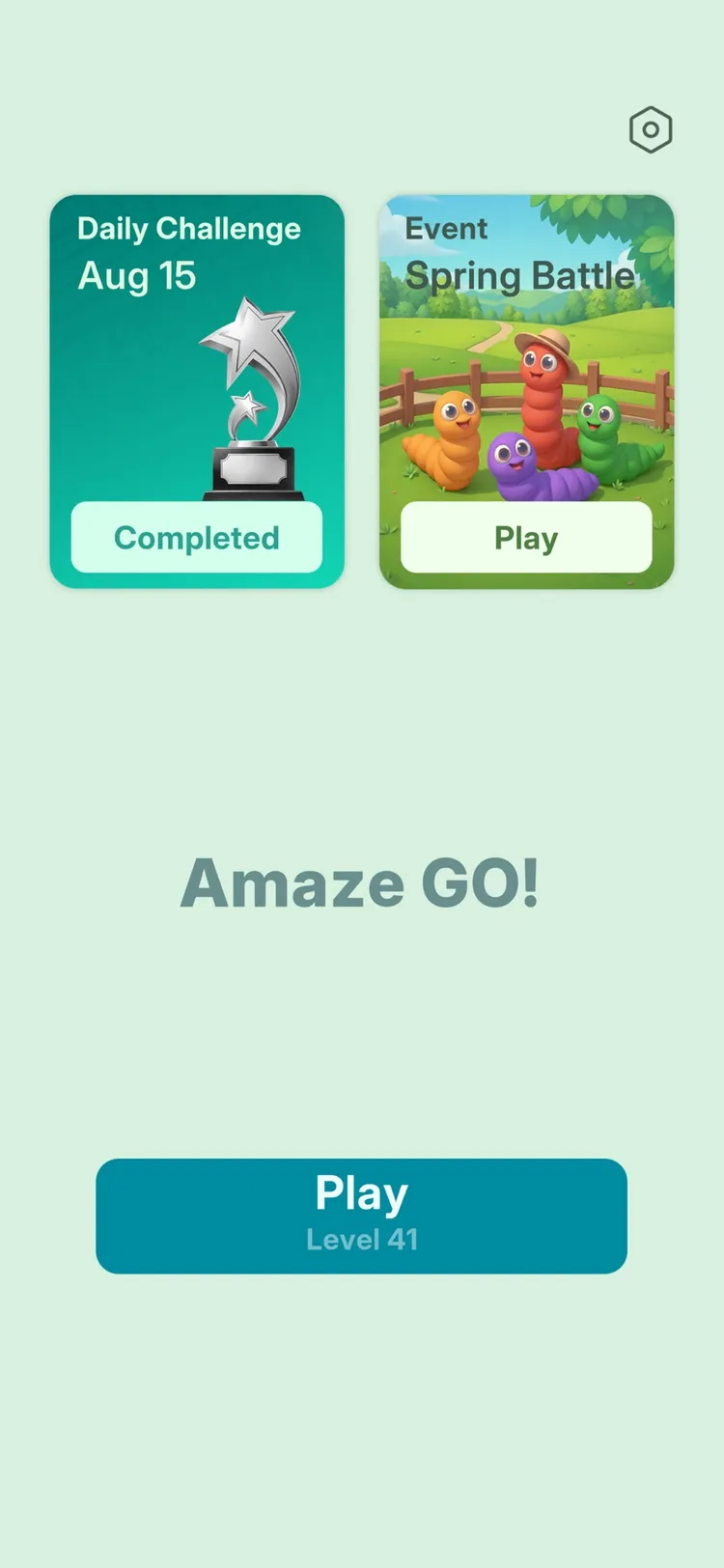
It doesn't require a great deal of brainpower or complicated logic. It is mainly a visual puzzle: looking carefully at the board, finding an arrow with a clear route, and gradually creating space for the others. That makes it quite relaxing to play, although it can quickly become frustrating when you overlook something and lose a life.
Clearing the board
At the beginning of each level, the mass of arrows can look rather overwhelming. Once you start removing the obvious ones around the edges, however, more routes gradually open up.
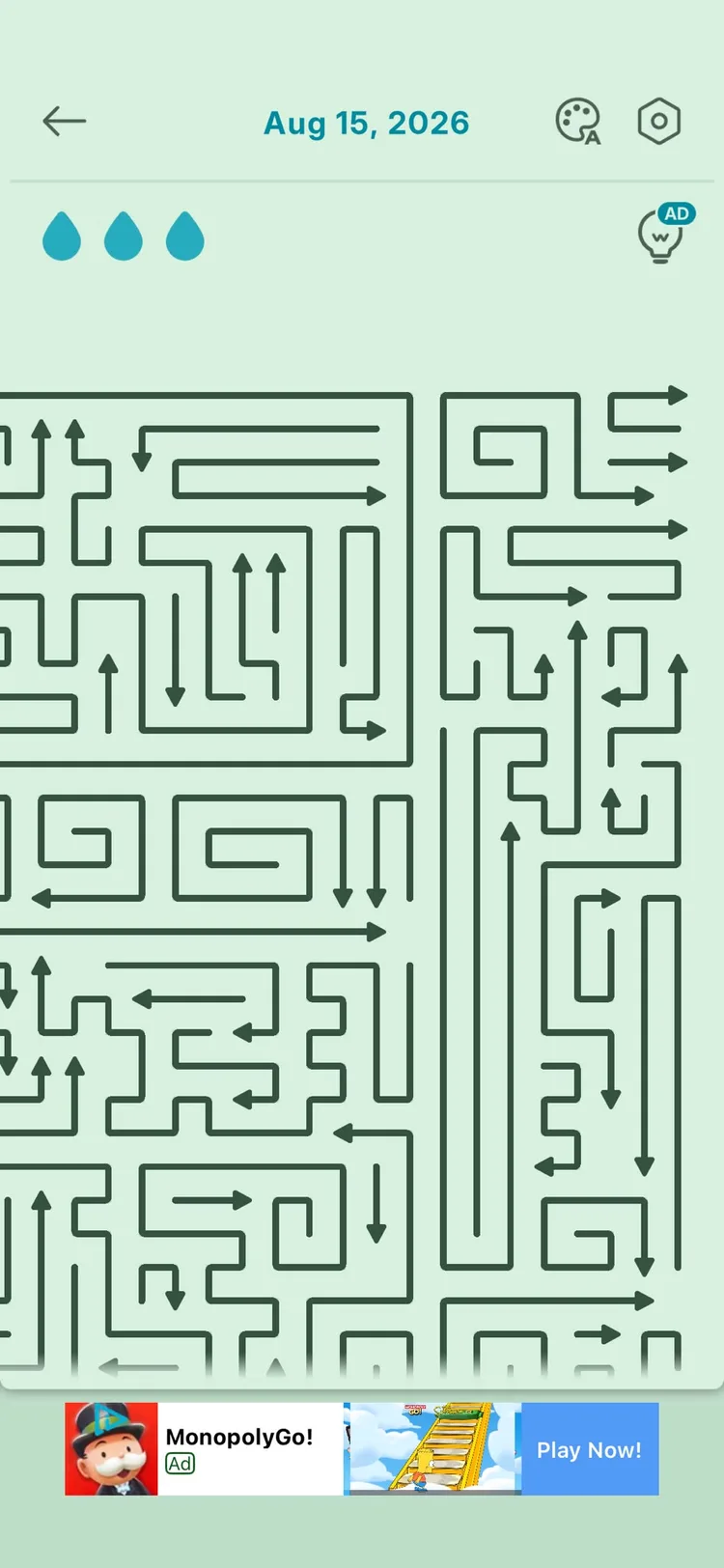
You need to pay attention to the entire length of each arrow because they twist and turn around the board. An arrow may appear to have a clear exit, but one small section can still be blocked by another line. It is very easy to tap too quickly and realise (usually a second too late) that you have missed something.
A useful addition to the game is the ability to press and hold an arrow before releasing it. This highlights its route, allowing you to check where it will travel and whether it is likely to hit anything else. I use this quite often on the more crowded boards, and it certainly helps to prevent some avoidable mistakes.
The main frustration
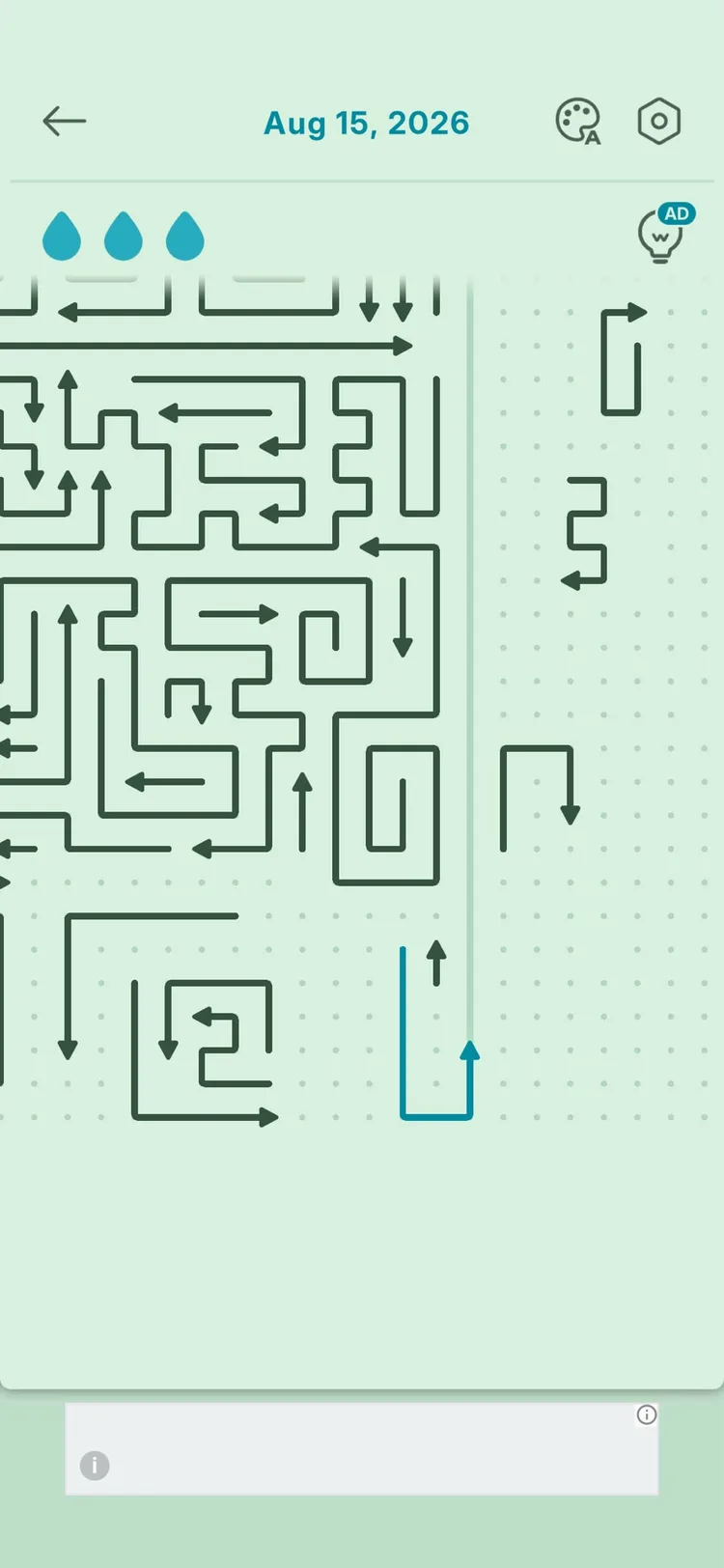
My biggest criticism is that the main puzzle does not fit onto a single screen. Even when I make the board as small as possible, I still cannot see all of it at once.
This means I am constantly moving the screen around to find the end of an arrow, work out which direction it is facing, or check whether its route off the board is clear. With so many arrows twisting around one another, it can be difficult to remember what is happening elsewhere on the board when you cannot see the whole puzzle.
It doesn't make the game impossible, but it does make it more awkward than it needs to be. I would much prefer an option that allowed the complete board to fit on the screen, even if everything had to appear slightly smaller.
A colourful alternative
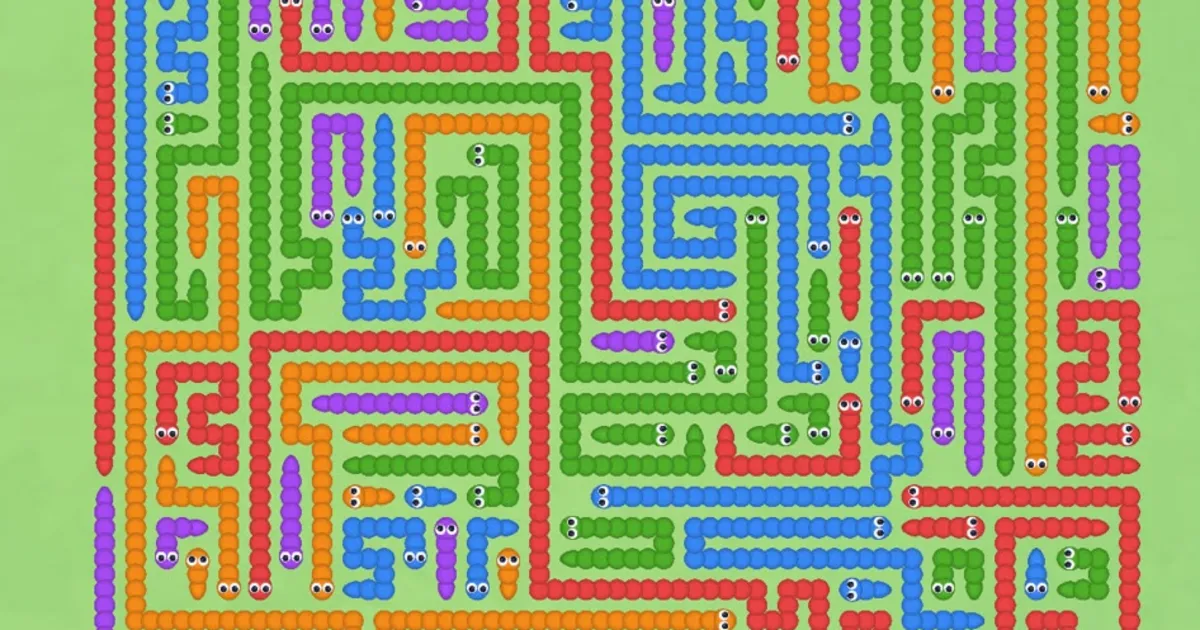
There is also a colourful version featuring what look like long caterpillars or worms. The principle is similar, but the bright colours and little faces give it a completely different feel.
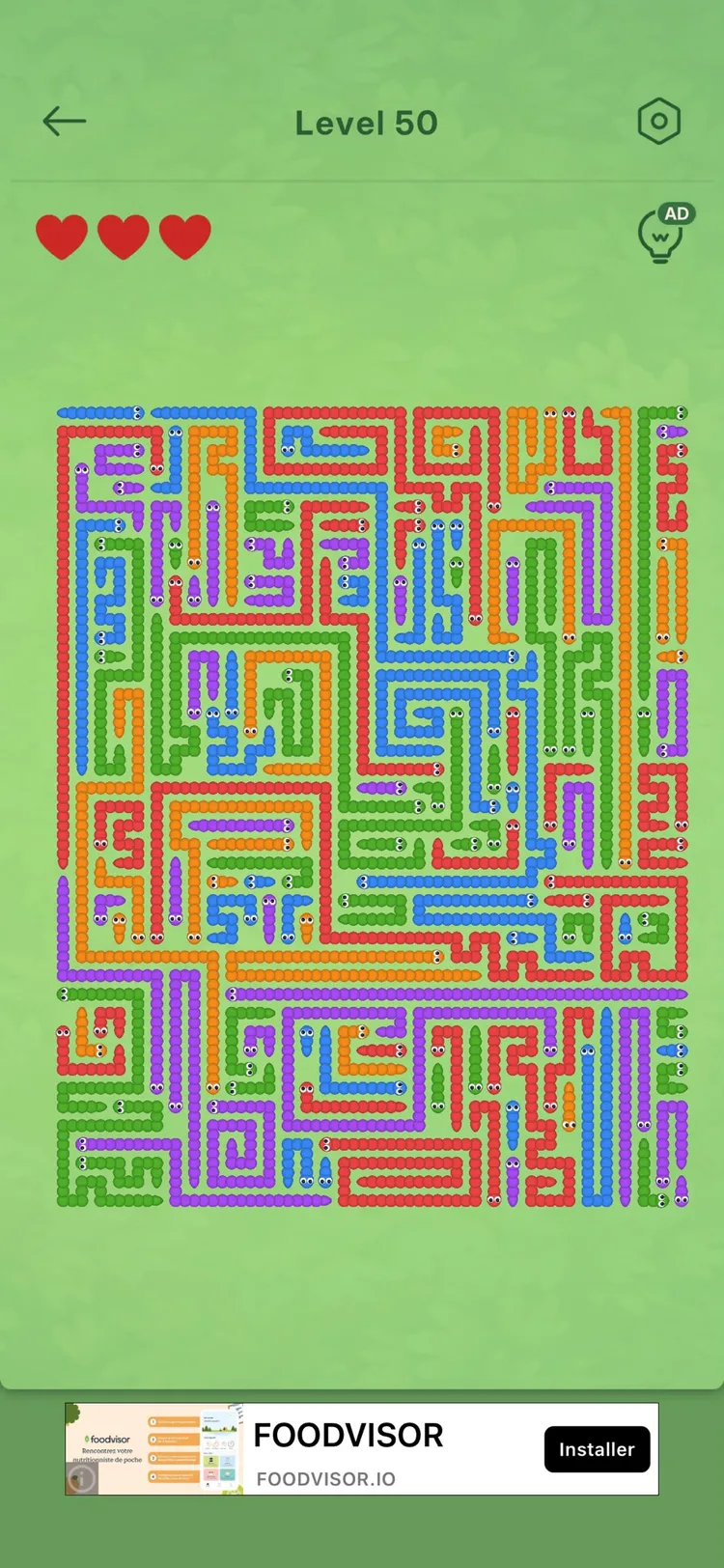
I particularly enjoy these puzzles because I can make the board small enough to see everything on one screen. This immediately makes the game easier to follow and much more enjoyable to play. It is still satisfying to work out which creature can escape first and then watch the puzzle gradually untangle as more space becomes available.
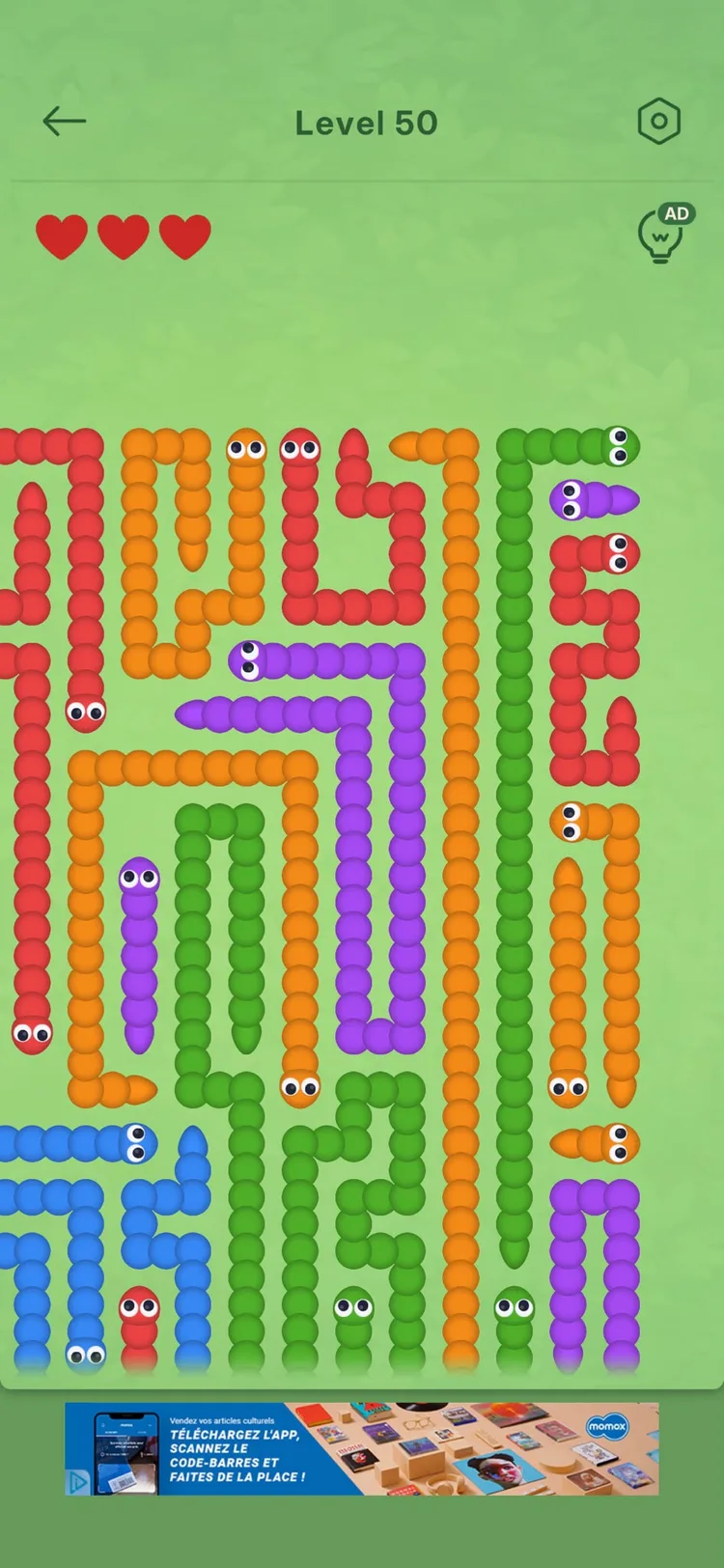
It is probably my favourite part of Amaze Go, and although I don't necessarily play it every day, it is a mode I regularly return to.
Why I keep coming back
I have tried several other arrow games, but this is one I have returned to more than once. It is easy to understand, requires no lengthy instructions and can be played for just a few minutes at a time, or much longer than intended.
There is something very satisfying about watching a crowded, tangled board gradually empty. Each successful move opens another route, and once you get into a rhythm, the game can be surprisingly calming.
Of course, that calm feeling can disappear quite quickly when an arrow hits something you were certain it would miss. Having only a limited number of lives adds a little pressure, but it also stops the game from becoming completely mindless.
One thing I would improve
The obvious improvement for me would be a proper "fit to screen" option for the main arrow puzzles. Being able to see the entire board would make it much easier to plan moves and would reduce the need to keep dragging the puzzle from side to side.
The press-and-hold route preview is useful, but it does not completely solve the problem when part of the arrow or its exit is beyond the visible area.
Final thoughts
Amaze Go is simple, colourful and surprisingly addictive. It does not demand complicated strategies, which makes it a good choice when you want something relaxing that still gives you a small challenge.
The oversized main boards can be frustrating, but the game remains perfectly playable, and the route-preview feature has made it easier to avoid mistakes. The colourful caterpillar puzzles are especially enjoyable and show how much better the game feels when the entire board is visible.
Despite my frustrations with it, I keep coming back, and that is probably the clearest sign that Amaze Go is doing something right.
If you like this kind of puzzle
Amaze Go belongs to the untangle family of puzzles. The challenge is never a single move, but spotting which move is safe to make first. Our roundup of the best brain training and logic games covers more games built on that kind of visual deduction. If the caterpillars are the part that won you over, I recently wrote about Fluffy Drop, another cheerful casual puzzler with the same soft, friendly look and a little more counting behind it.
The deeper idea, that the order of your moves matters more than any individual move, goes all the way back to the sliding puzzle we all grew up with. And if you fancy that same "notice, don't guess" satisfaction built around words instead of arrows, Pairdle is our own daily puzzle: one board a day, no timer pressure, and no lives to lose when you tap too quickly.
By Suzette Simons, Logic Loft Games
Related articles
The 10 Best Brain Training and Logic Puzzle Games of All Time
From Portal's mind-bending physics to Lumosity's daily workouts, the 10 most influential brain training and logic puzzle games, ranked by cultural impact.
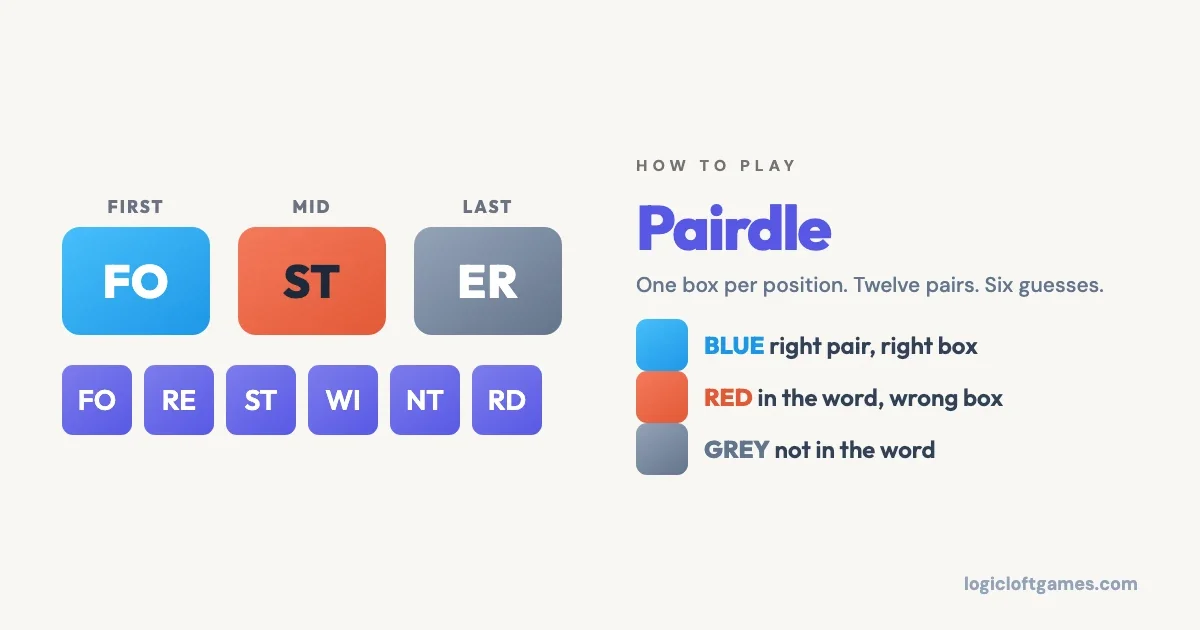
Pairdle 1.5: What's New, What's the Same, and an Exciting New Level
Pairdle 1.5 puts every level on one row, unlocks Pro, adds Expert and endless Practice, and introduces Olly the owl. Plus what a 12-tile board really holds.
The 10 Best Anagram and Letter Rearrangement Games in 2026
From classic anagram solvers to modern letter-shuffling puzzles, these are the 10 best games that challenge you to rearrange letters into words.