
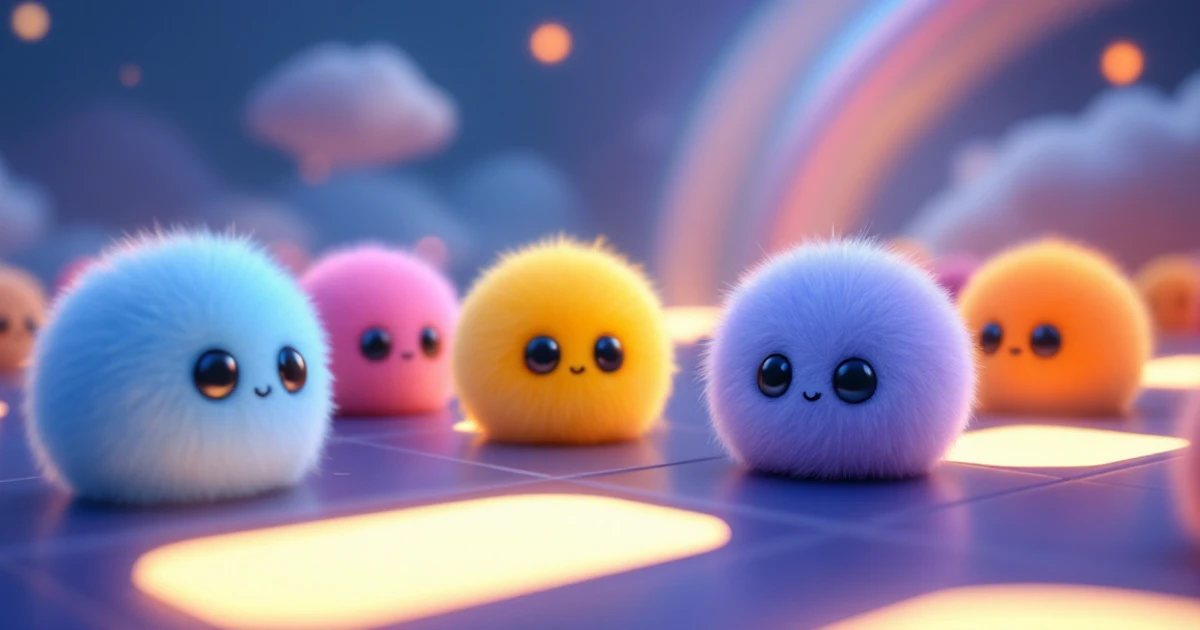
Fluffy Drop is another game I discovered through an advert while playing something else. The little characters and maze-like board immediately reminded me of Pac-Man, which I used to play on the Atari when I was a teenager.
It isn't actually Pac-Man, of course, but it has a similar feeling in a colourful, modern format. Instead of being chased around a maze by ghosts, you are working your way around a board collecting small, brightly coloured fluffy balls.
Where to play: App Store · Google Play
How it works
Each level contains a mixture of fluffy characters and coloured spaces in various shapes and sizes. The numbered spaces need to be filled with the correct number of matching fluffy balls. A blue space marked with a 2 wants two blue fluffies, an orange space marked with a 3 wants three orange ones, and so on.
You have to look at the layout and work out how to collect or guide the different colours without blocking the ones you will need later. It has a little strategy to it, particularly when the board becomes more crowded and the spaces are arranged in less convenient positions.
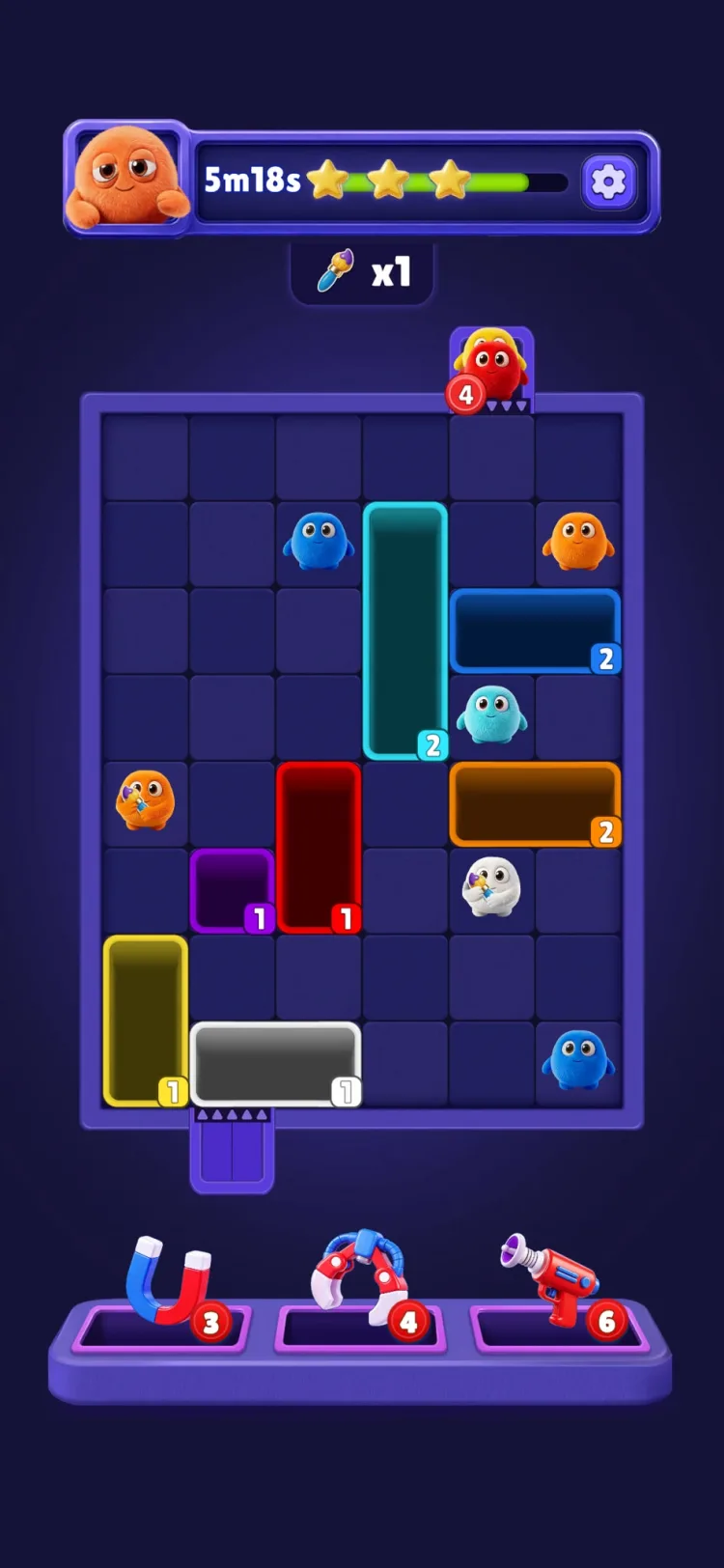
What makes the numbered spaces such a good design choice is that they turn a colour-matching game into a counting one. You are not just asking "where does this blue one go?" You are asking "do I have enough blue ones left to finish that space after I move this one?" That is a much more interesting question, and it is the thing that stops the game being purely mechanical.
The levels are fairly short, and you progress along a winding path towards treasure chests and other rewards. You can also earn up to three stars as you complete each stage, which are tracked against a bar at the top of the map.
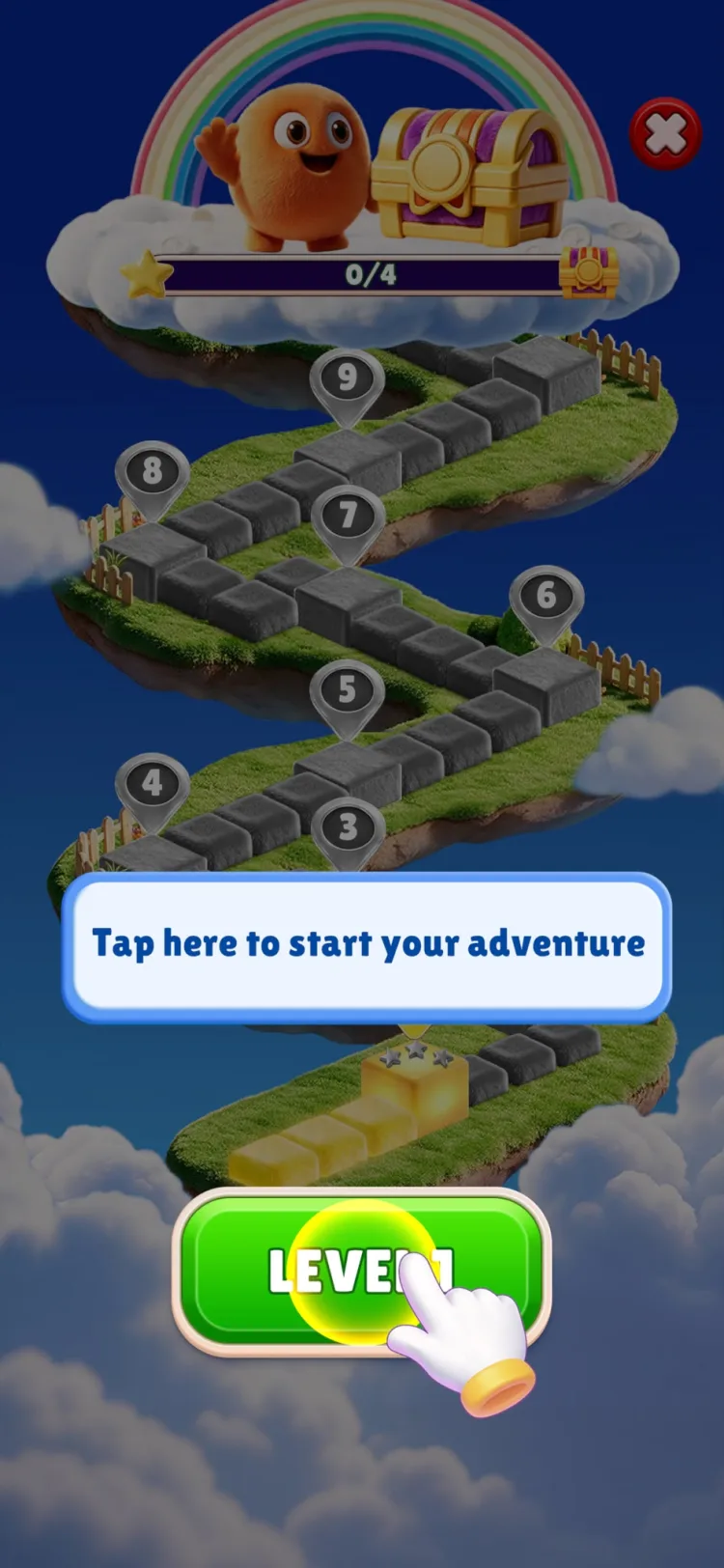
The map is the familiar casual-puzzle furniture that games like Candy Crush made standard, and it does the job it is meant to do: each level is a small, obviously finishable unit, and the chest a few nodes ahead gives you a reason to play one more.
Simple but strategic
Some boards are more difficult than others, but overall, I have found Fluffy Drop rather easy. There is enough strategy to make you pause and consider your next move, but it doesn't require a great deal of concentration or brainpower.
You sometimes need to think about the order in which you collect the different colours. An obvious move may not necessarily be the most helpful one if it leaves another group of fluffy balls trapped or difficult to reach. That is the whole puzzle, really. The board rarely stops you from making a move, it just lets you make one that costs you later. In that sense it belongs to the same family as sliding-block puzzles, where the difficulty is never in the individual move but in the order you make them.
The numbered spaces make it easy to see how many fluffy balls are still needed, so the board remains quite straightforward to follow even when there are several colours in play. I appreciate that more than it might sound. Plenty of casual puzzle games become visually noisy as they add mechanics, and you end up losing track of the objective rather than being challenged by it. Fluffy Drop never made me squint at the screen trying to work out what it wanted.
A little help when you need it
The game gives you several tools to help clear more difficult levels. These include a magnet that can fill one of the coloured spaces with fluffy balls, along with other tools that help rearrange or remove items from the board.
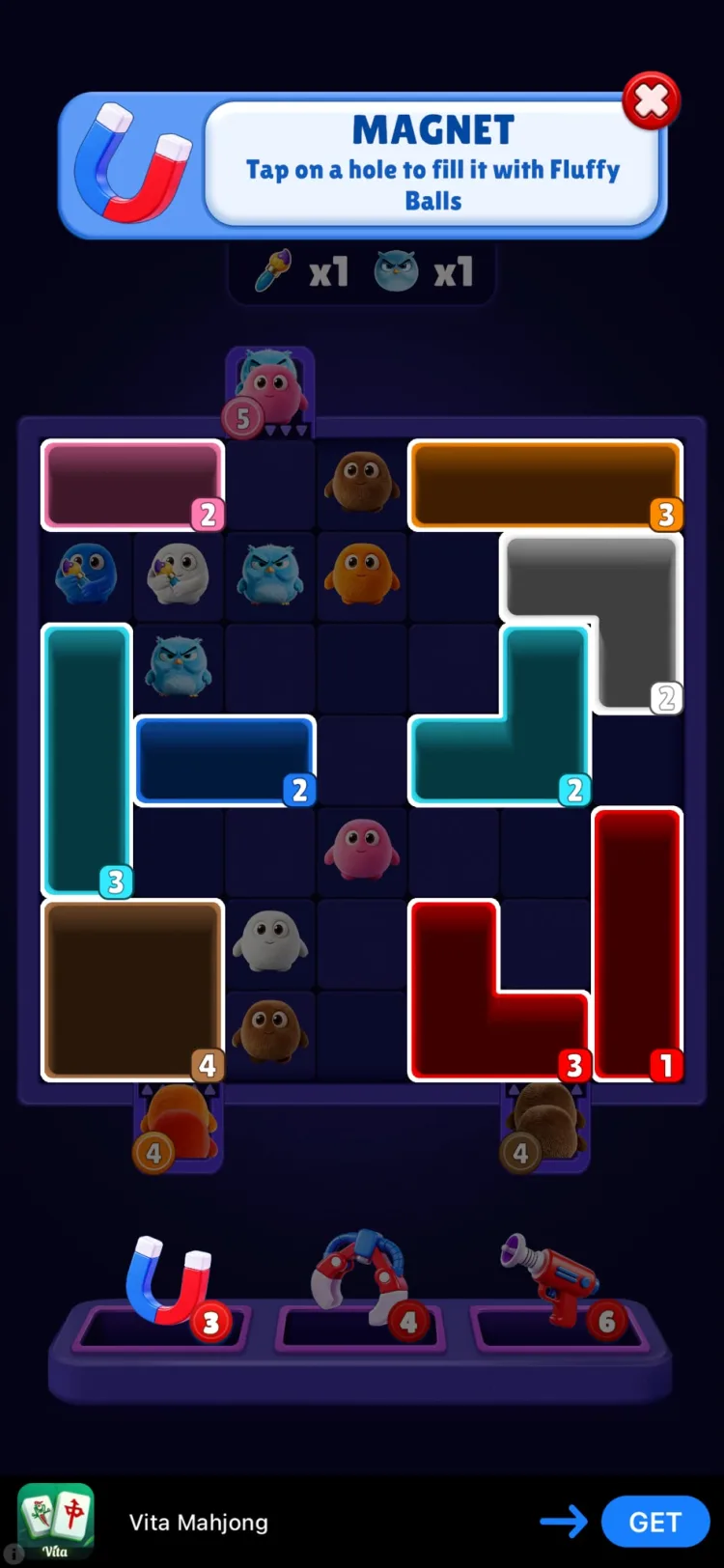
You receive some of these at the beginning of the game. Once they have been used, you can usually obtain more by watching an advert or purchasing packs from the shop.
Because I haven't found the game especially difficult, I haven't felt a great need to use many of the tools. However, they could be useful on the more crowded boards, or for anyone who becomes stuck and wants to continue without repeatedly attempting the same level. The monetisation is the standard free-to-play arrangement (watch an advert or buy a pack), and there are banner adverts for other games at the bottom of some screens, but I never felt pushed towards spending.
Cute and colourful
The fluffy characters are definitely the main attraction. They come in a range of bright colours, with large eyes and different little expressions. Some look cheerful, some rather worried, and others appear thoroughly unimpressed by the whole situation.
The graphics are colourful and polished without making the board difficult to read. Each coloured space is clearly outlined, and the numbers show exactly how many fluffy balls it needs. That distinction matters more than it gets credit for: "colourful" and "readable" are often in tension, and a puzzle game that gets the second one wrong is unplayable no matter how nice it looks.
The characters, floating pathway and treasure chests give the game a light, dreamlike quality. It is cheerful enough to be appealing but calm enough not to feel overstimulating.
A relaxing game before bed
Fluffy Drop promotes itself as a game that can help you relax and sleep better. The loading screen greets you with "Play 30 minutes a day, sleep better at night!" from a fluffy friend called Bloop. I'm not sure I would make quite such a bold claim, but it is certainly a gentle game to play when you want to wind down.
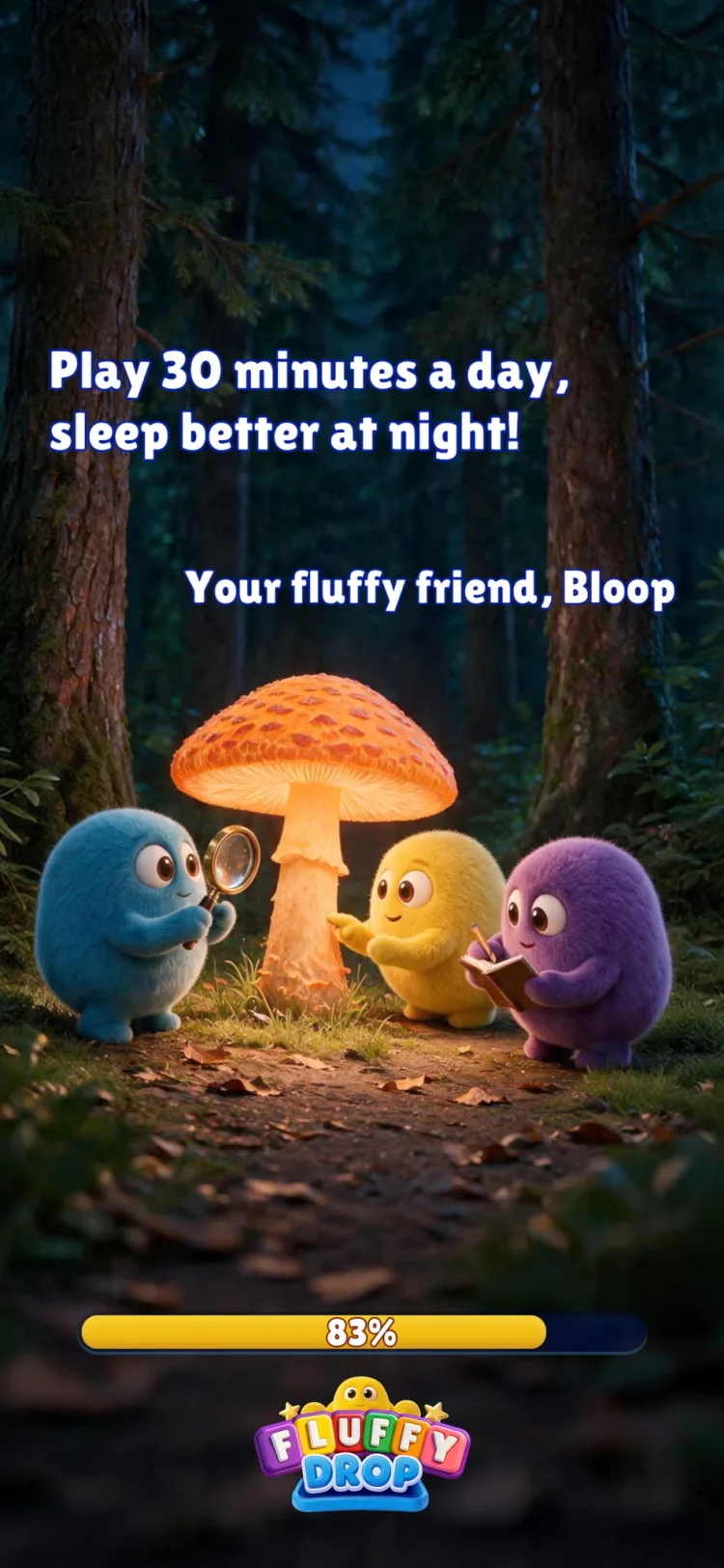
It doesn't have the frantic pace or pressure of many mobile games. There is a timer running at the top of the screen, but it feeds the star rating rather than ending the level, so you can take your time, study the board and make your moves without needing to concentrate too intensely.
I don't play it very often because I usually prefer something a little more challenging. However, every now and again, when I fancy a game that is slightly strategic but doesn't require too much brainpower (and might even help make me sleepy), I pick it up and play a few levels.
One thing I would improve
Personally, I would like the difficulty to increase a little more quickly. The levels do vary, and some boards require more thought than others, but I haven't yet found them particularly challenging.
A choice of difficulty levels might make the game appeal to a wider range of players. Those looking for a calming experience could continue with the gentler levels, while players wanting more of a puzzle could choose something slightly more demanding. It is a small thing to ask for, but it is the difference between a game I open occasionally and one I would open every evening.
Final thoughts
Fluffy Drop is a cute, colourful and relaxing puzzle game with just enough strategy to keep it interesting. Its maze-like layout gives it a hint of the Pac-Man games I remember from my teenage years, although the gameplay and presentation are very much brought up to date.
It isn't a game I feel compelled to play every day, largely because I find it a little too easy. Nevertheless, it is pleasant to return to when I want something gentle that doesn't require too much concentration.
If you enjoy cheerful characters, simple strategy and puzzles that help you slow down rather than speed up, Fluffy Drop could be a good game to try.
If you like this kind of puzzle
If Fluffy Drop's mixture of colour-matching and light planning appeals to you, our roundup of the best match-3 and casual puzzle games covers the genre it belongs to and where it came from. For a similarly cheerful game with rather more deduction behind it, I wrote about Meowdoku recently. It looks just as friendly but asks a great deal more of you.
If it is the ordering problem you enjoy (working out which move to make first so you don't trap yourself later) then the sliding puzzle we all grew up with is the ancestor of that whole idea. And if you would like something in the same relaxing register but built around words, Pairdle is our own daily puzzle: one board a day, no timer pressure, and the same "notice, don't guess" satisfaction.
By Suzette Simons, Logic Loft Games
Related articles
Smash Fest: Much More Fun Than I Expected
A cannon, a limited supply of balls and a pile of blocks on a beach platform. A game that looked like pure hit-and-hope turned out to have real aim to it.
The 10 Best Match-3 and Casual Puzzle Games in 2026
From Candy Crush to Bejeweled to indie gems, these are the 10 best match-3 and casual puzzle games, the biggest genre in gaming.
Four Years of Threes!: Why I Can't Get Past 1536
Four years, one 1536 card, and an all-time best of 69,222, of which a single card is 85%. The wall in Threes!, and why the game keeps me playing anyway.