
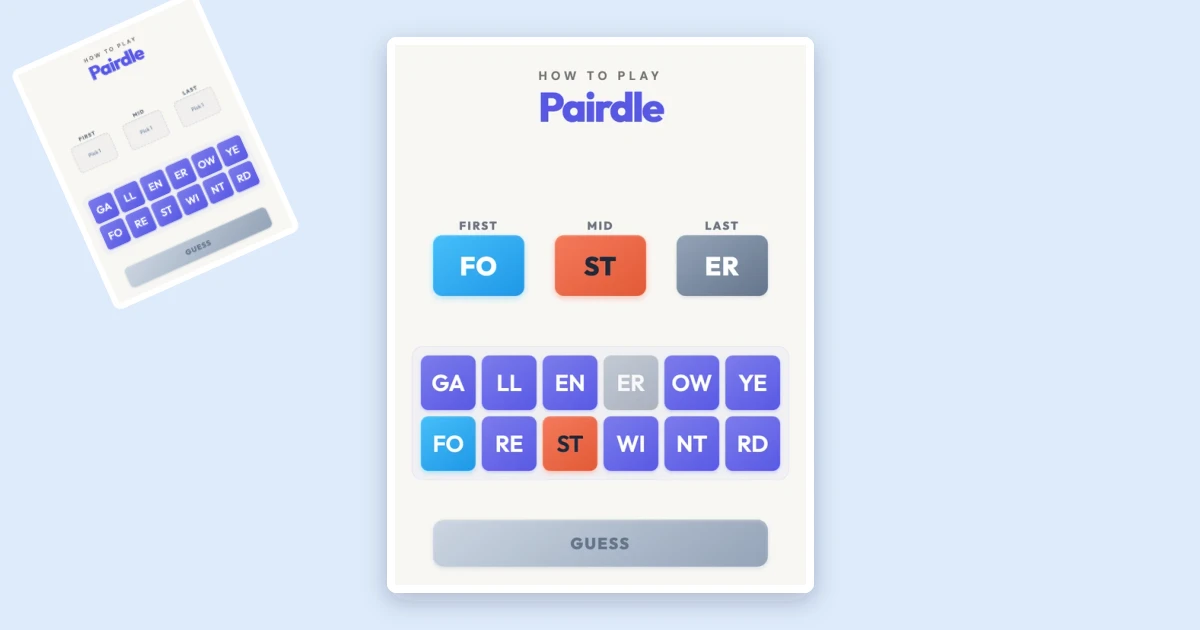
Pairdle is a daily word puzzle played with two-letter tiles. On the daily Pairdle board there are 12 tiles and one row of three boxes: FIRST, MID and LAST. Put one tile in each box to spell a six-letter word, press GUESS, and the tiles tell you how close you were. You get six guesses.
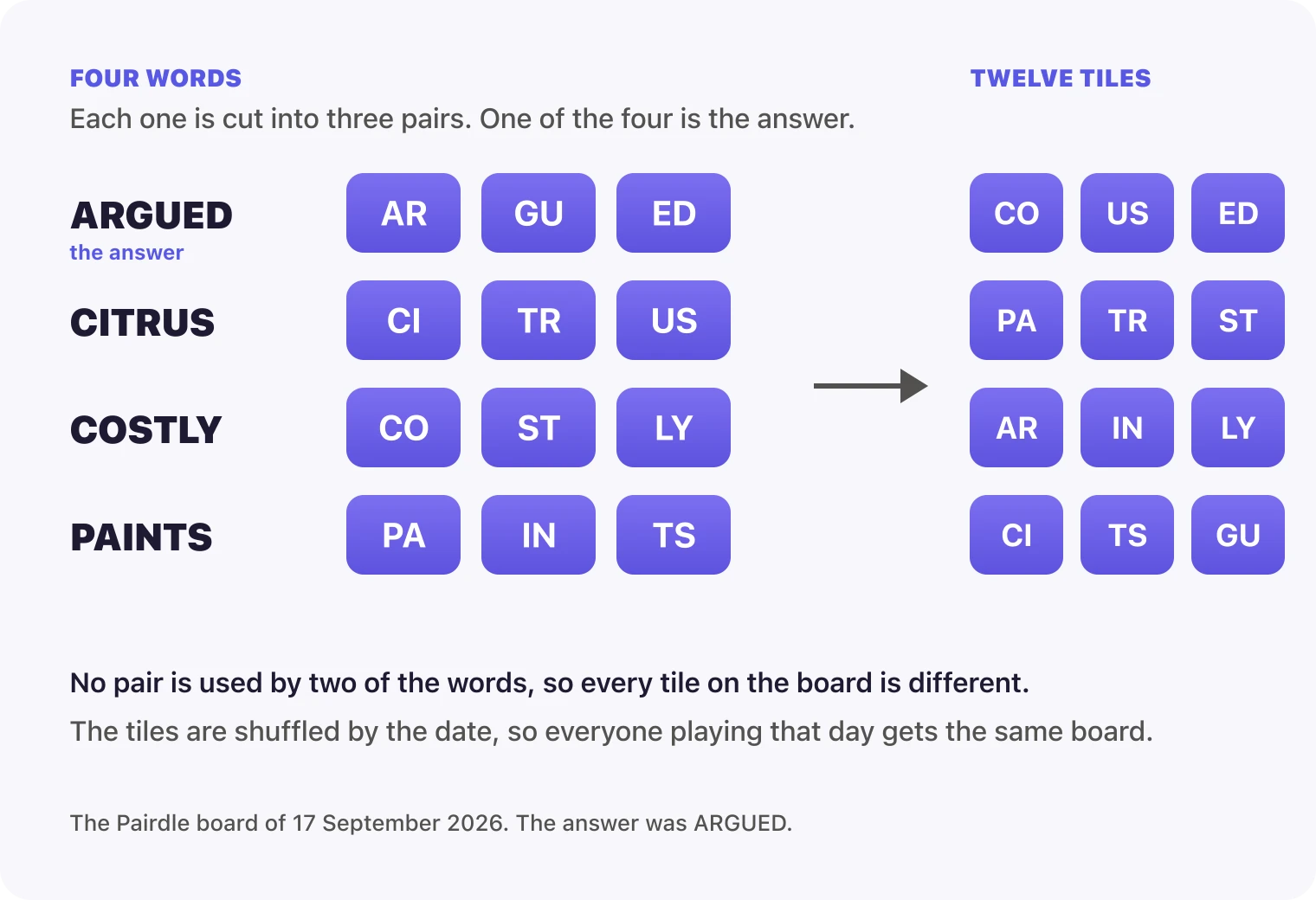
The 12 tiles come from four real six-letter words, each cut into three pairs. No pair is used by two of the words. One of the four is the answer. The other three are there to fool you. Everyone gets the same board on the same day, and a new one arrives at midnight Pacific time.
An App Store reviewer, KLead4D, wrote: "It was more challenging than expected (in a good way), so that was a great surprise."
Pairdle is a logic game more than a vocabulary test. You get better by reading the colours well, not by knowing more words. Here are five things we do when we play, and yes, the people who build the game still get stuck.
1. Stop Trying to Spell Words on Your First Guess
This is the most common mistake new players make, and it comes from Wordle habits.
In Wordle, your first guess is a real word with common letters, something like CRANE or SLATE. In Pairdle, your first guess works better as a test. If you're coming straight from Wordle, here's how the two games differ beyond that first move.
The 12 tiles spell more words than the four they came from. On an average daily board you can find about six real words, and the answer is only one of them. So a word that looks right on guess one is often a decoy, or a word made by mixing tiles from two different decoys.
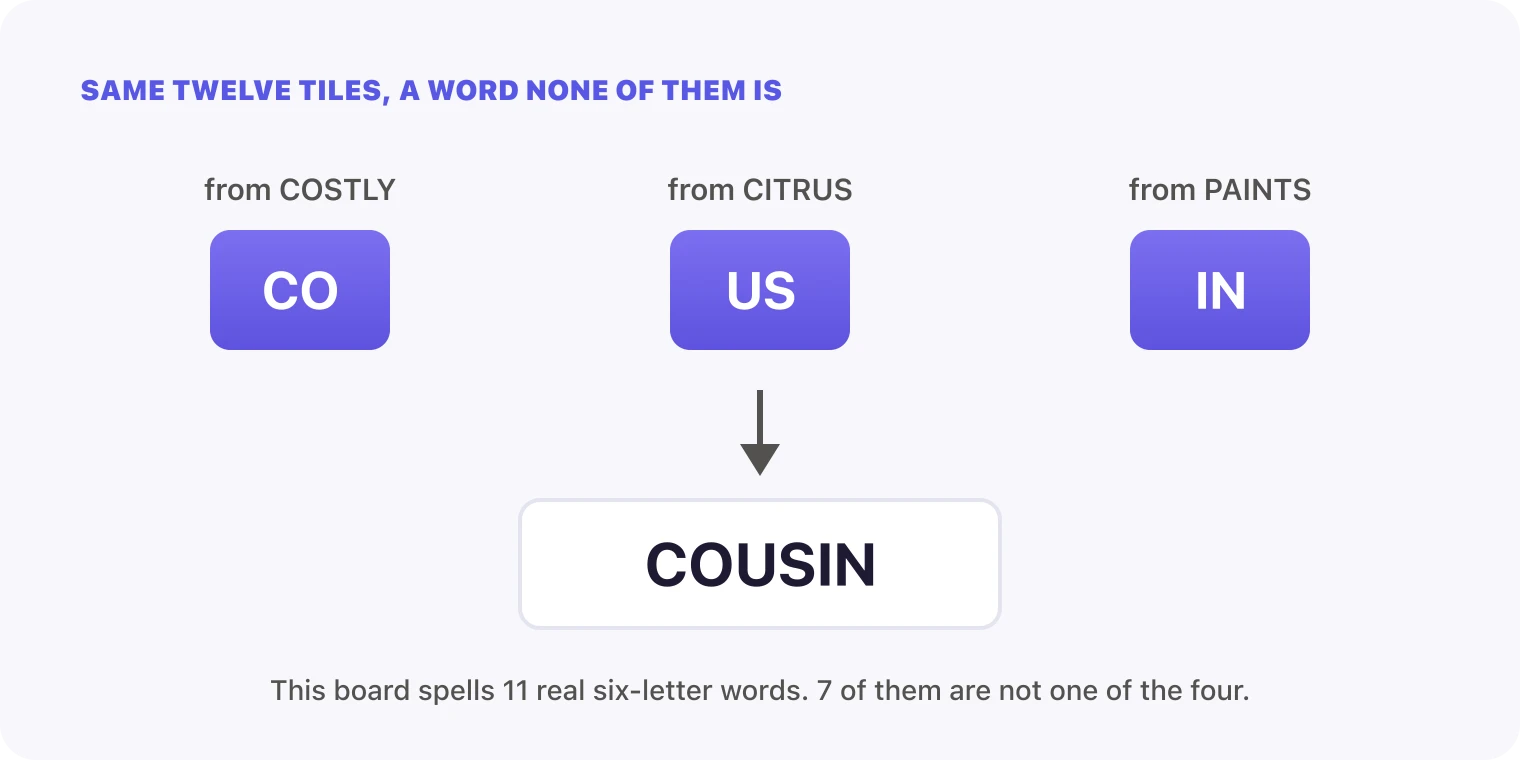
Use guess one to learn which tiles are in the answer and which are not. Pick three tiles that could start, sit in the middle of, and end a word, and press GUESS. You're not trying to win on guess one. You're trying to find out as much as you can.
If you've played Wordle for two years, some of those habits will work against you here, and that's normal. Wordle rewards knowing words. Pairdle rewards working things out.
2. Learn to Read Position Patterns
This is where Pairdle starts to feel like Sudoku.
Some letter pairs nearly always show up in the same place in English words:
- Common FIRST pairs: CH, BE, CO, RE, DE, MA, BA, PR, ST, TR
- Common LAST pairs: EN, ER, ED, LE, AL, NG, LY, ES, NT, TH
- Common MID pairs: RR, LL, MM, AT, AN, AR, OR, IT
You don't need to learn these lists. After a week of play you start to spot them without trying. Knowing they exist is enough to get you going. The same patterns across all of English are in our list of common letter pairs.
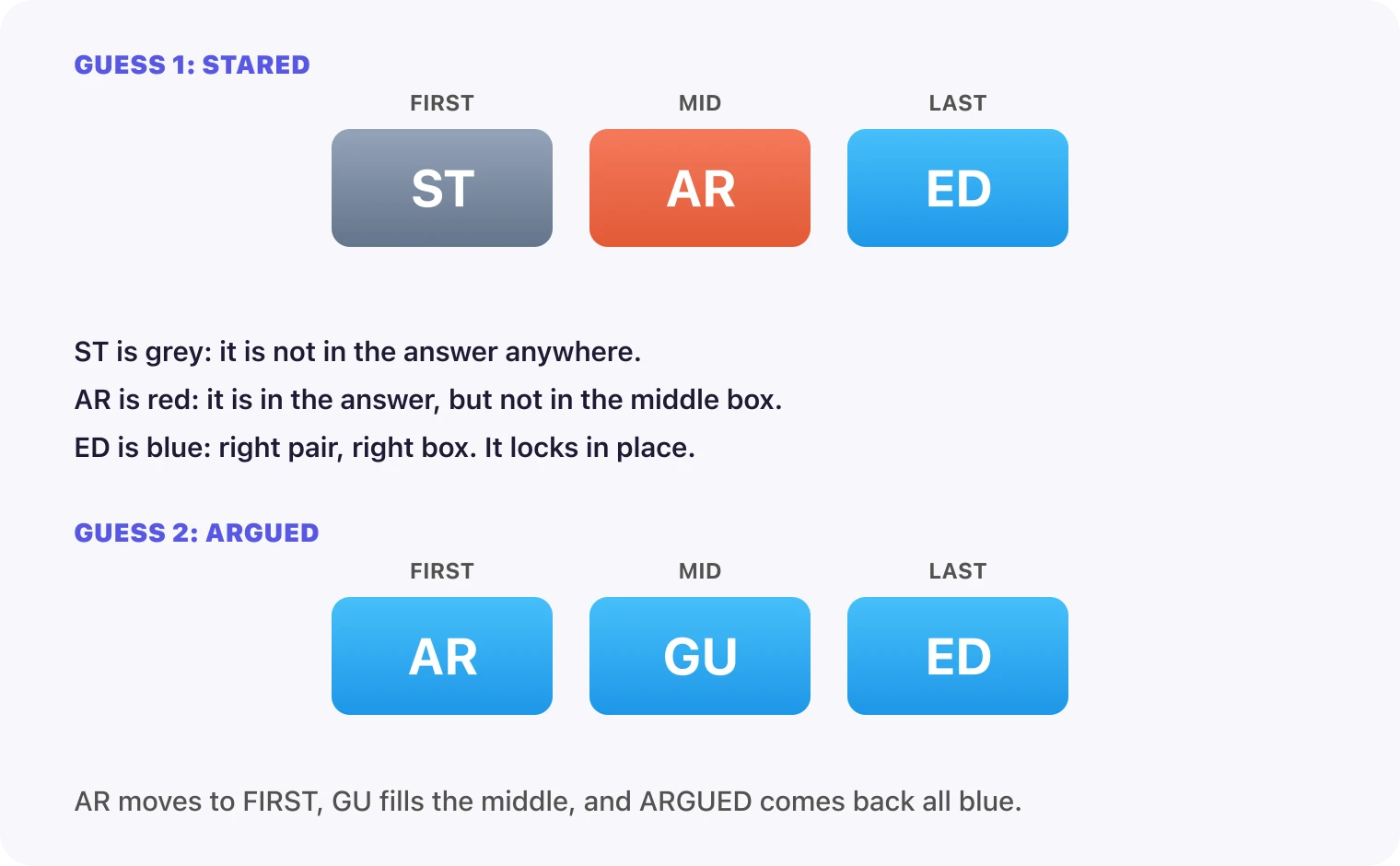
Here is how it helps. On the 17 September board, a guess of STARED came back with AR red in the MID box. Red means the pair is in the answer but in a different box. ED came back blue in LAST on the same guess, so AR had only one place left to go: FIRST. AR is a common way to start a word, and AR + GU + ED spelled ARGUED, the answer.
3. Use Grey Tiles as Your Best Weapon
New players look at the blue and red tiles. Players who have been at it a while look hard at the grey ones.
Grey means the pair is not in the answer anywhere. That tile is out for the rest of the game. But a grey tile tells you more than that. Every tile came from one of the four words, and the answer is one of those four. So when a tile goes grey, the word it came from is not the answer. If you can spot that word, its other two tiles are out as well.
Take the very first board new players see. A first guess of FO + ST + ER spells FOSTER. FO comes back blue, ST red and ER grey. The other word on this board that uses ER is WINTER (WI + NT + ER). WINTER can't be the answer now, so WI and NT are very likely decoys too. One grey tile has taken up to three tiles off a board of 12.
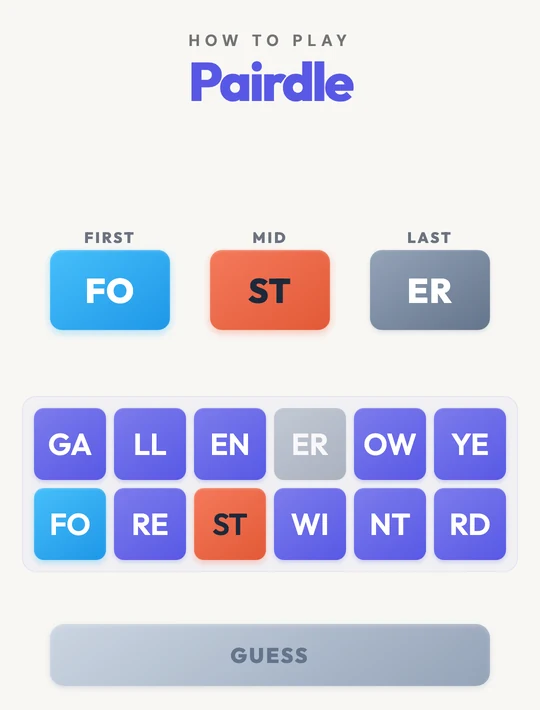
That is the same trick Sudoku uses. You rule out what can't go in a box until one choice is left.
4. Work Backwards from Locked Pairs
A blue tile is the right pair in the right box. It locks in place, and your next guesses get much easier.
Stay with that first board. FO is locked in FIRST. Now look at what's left and ask which two tiles could finish a word that starts with FO.
FO + LL + OW = FOLLOW?
FO + RE + ST = FOREST?
Both are real words, and both can be made from these tiles. But ST came back red, so ST is in the answer and not in MID. With FO in FIRST, ST has to go in LAST. That leaves one box to fill, and RE is the tile that makes a word. FOLLOW is out without spending a guess on it.
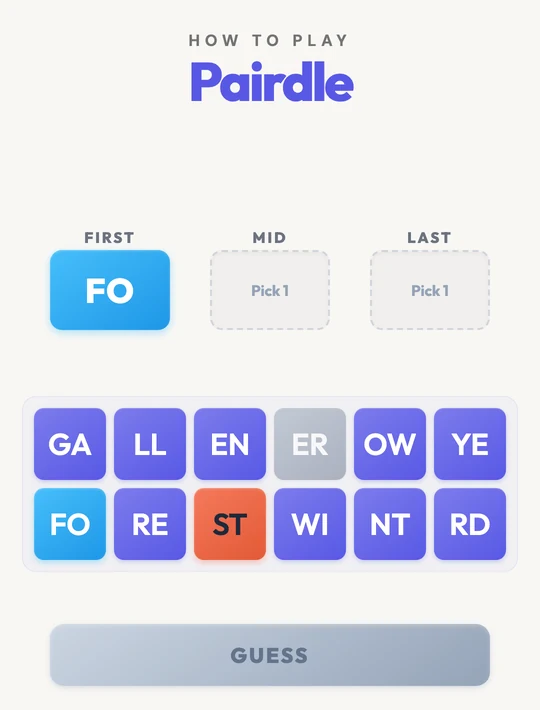
You're not searching the whole board any more. You're checking a few tiles against the one you've locked. On the bigger boards, where there are more boxes to fill, a locked tile or two saves even more.
5. Move Up to Pro and Expert, and Use Practice to Test Ideas
The daily Pairdle board teaches you the basics. There are two more boards every day, and both are free for everyone, in the app and on the web.
- Pairdle Pro: an eight-letter word, four boxes, 16 tiles.
- Pairdle Expert: a ten-letter word, five boxes (1ST to 5TH), 20 tiles.
Each one is still four real words cut into pairs, with one of them the answer and six guesses to find it. The words get longer and there are more tiles to sort.

The bigger boards also spell fewer extra words. You can find about five real words on an average Pro board and fewer than five on Expert, against about six on the daily Pairdle board. There are never fewer than four, because the four source words are always there. Fewer extras means fewer false leads, but a ten-letter word is much harder to see from twenty loose tiles.

The skills from the first four strategies are the same on every board. What changes is how much you have to hold in your head. After a week on Pro and Expert, the daily Pairdle board starts to feel small.
When you want to try a risky guess, like a first guess made only of tiles you think are decoys, do it in Practice. Practice gives you as many random boards as you like at all three sizes. Nothing is recorded, so your streak and stats are never touched.

Bonus: Track Your Two-Guess Hypothesis
Here is a simple way to see if you're getting better. Count how often you have a strong guess at the answer after only two guesses.
After guess one you have raw colours: some blue, some red, some grey. If it's mostly grey, that's fine. Each grey tile rules out its word. By guess two those colours should point to one word. On the FOREST board from strategy 4, one guess plus a little thinking was enough: FO locked, ST pushed to LAST, WINTER crossed out, and FOREST came back all blue on guess two.
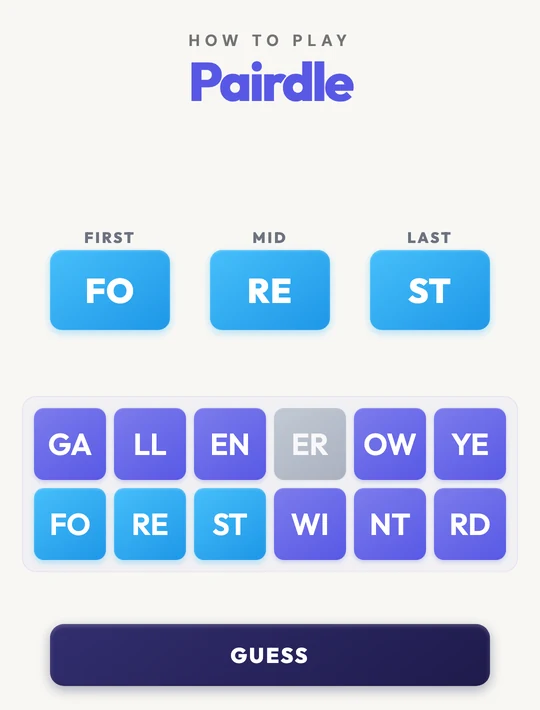
Strong players can often name the answer after two guesses. They may use a third to be sure, but by then the working out is done.
Ready to Practice?
Today's board is waiting at logicloftgames.com/pairdle. Try one of these strategies and see if it changes how you read the tiles.
If you solve Expert in three guesses or fewer, come find us on X @LogicLoftGames. We'd like to hear about it.
One reader kept a pen-and-paper Pairdle solve diary back when the game used the older 24-tile board, with a three-column notebook for FIRST, MID and LAST. The way she tracked each box still works on today's board.
New to Pairdle? Your first board comes with Olly the owl, who explains each colour as you go. Our How to Play guide covers the rest.

Related articles
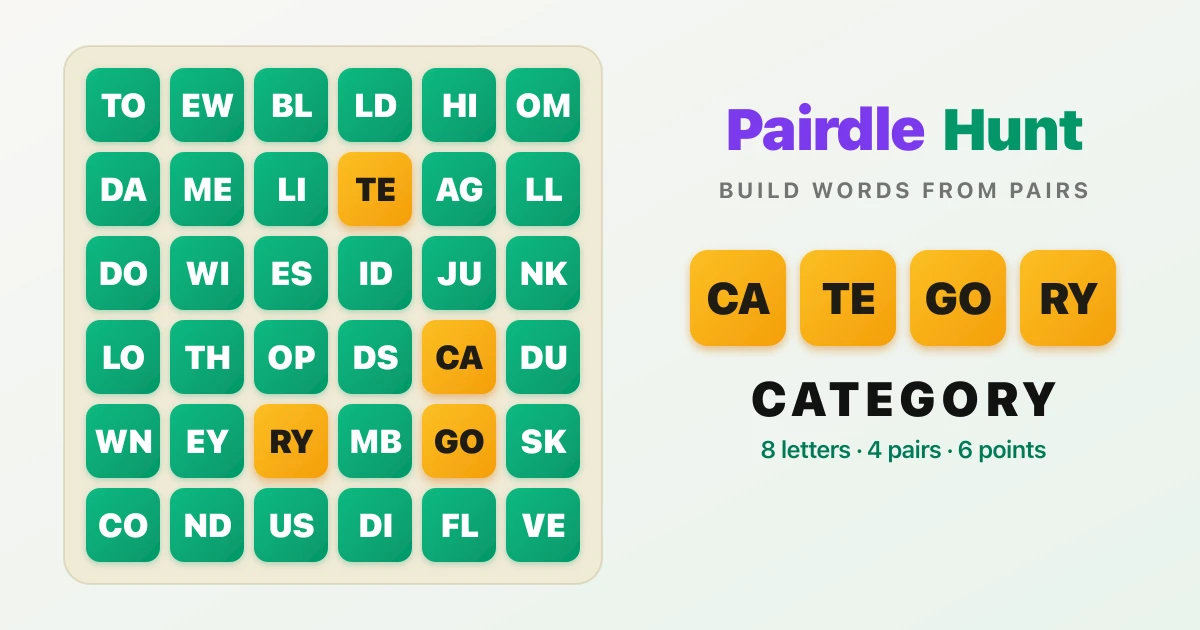
Pairdle Hunt: How to Play and the Math of Hidden Words
Pairdle Hunt is Logic Loft's new word-hunt game, coming soon to iOS and Android. How to play, how scoring works, and how many words hide in one grid.
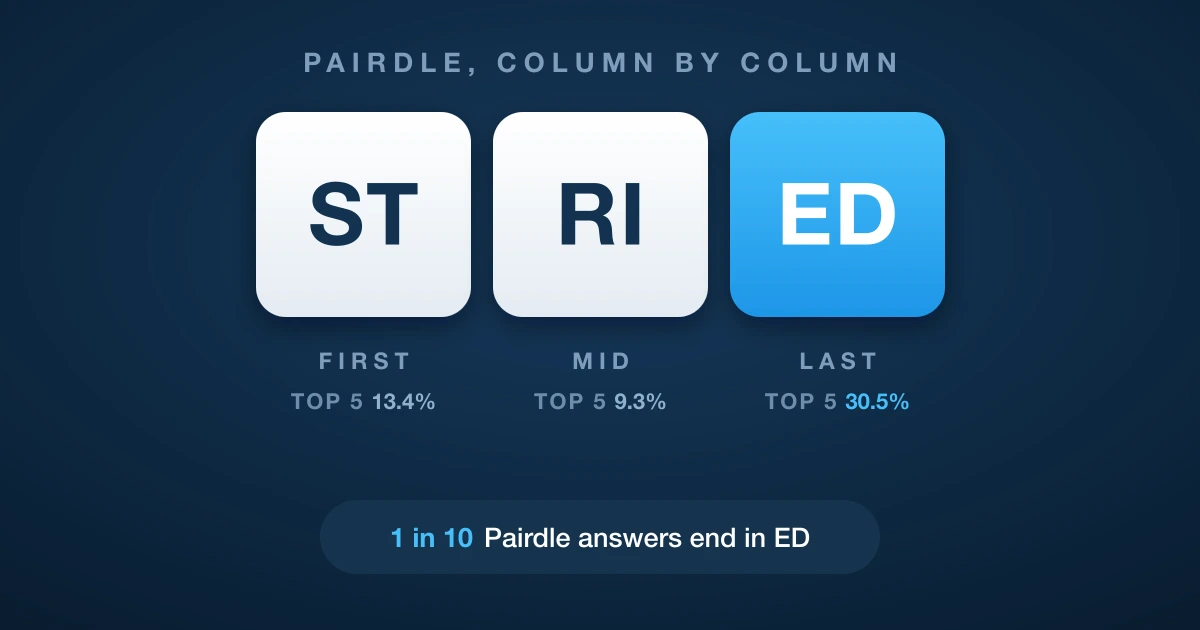
How to Master Pairdle, Column by Column
I counted the letter pairs in every answer on the Pairdle 1.5 schedule. The three boxes are nothing alike, and the last one is by far the easiest to call.
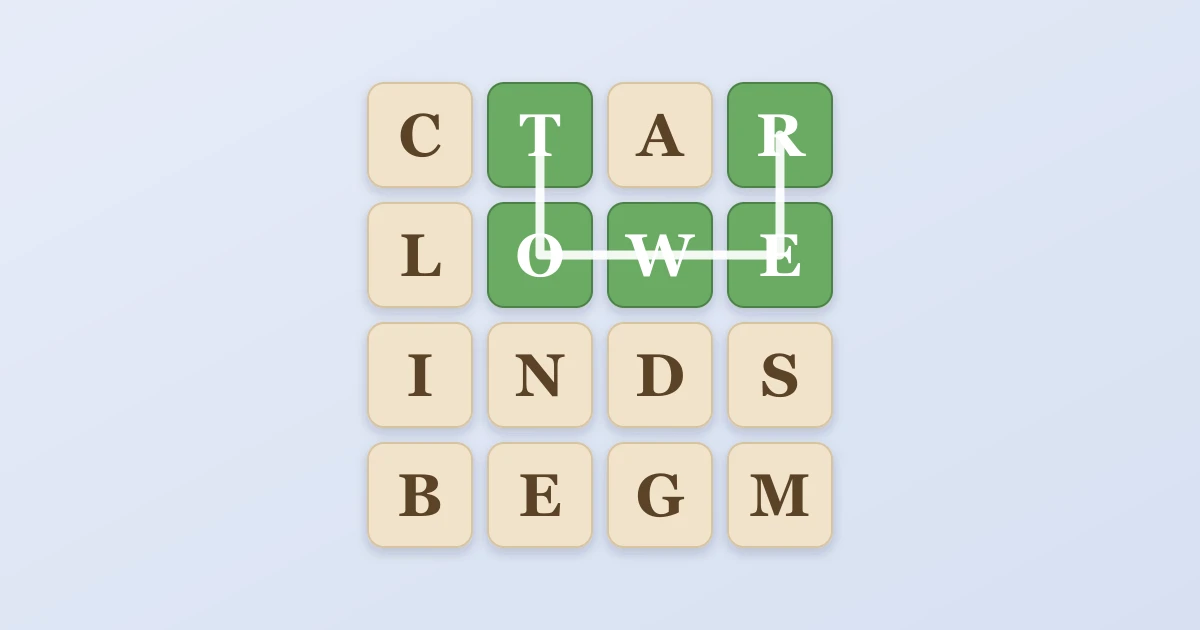
How to Play Boggle, and What 100,000 Boards Taught Us
Boggle rules and scoring, then real strategy: we rolled 100,000 boards against our game dictionary to find the words, pairs and letters that actually win.