
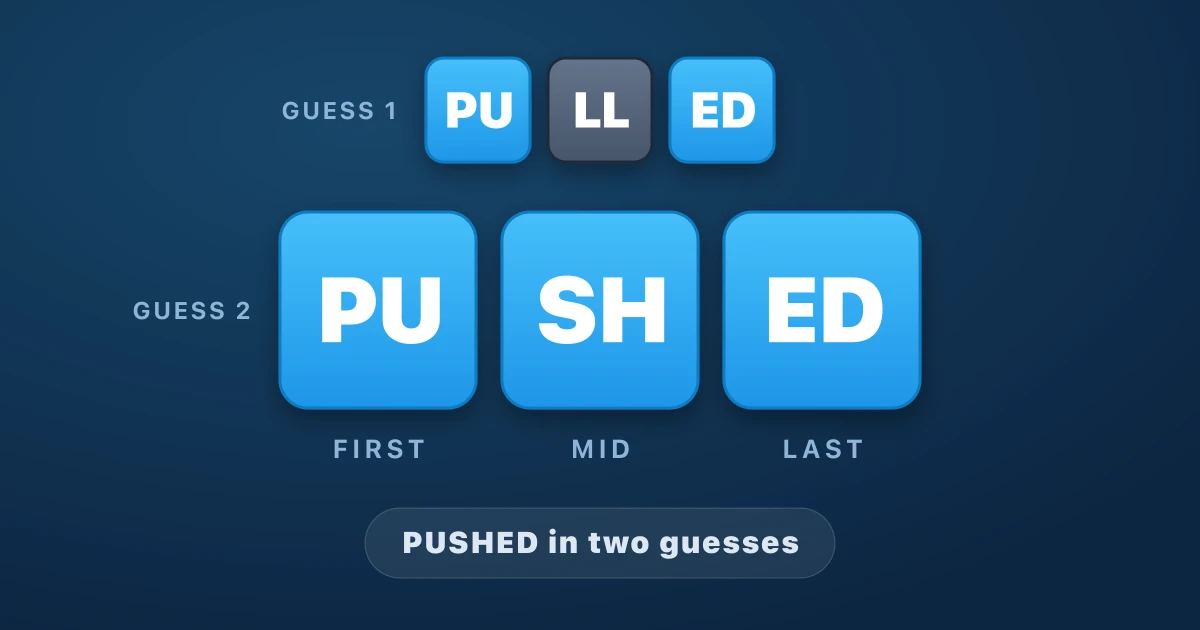
Editor's note, September 2026: Suzette wrote this diary in July, before Pairdle 1.5. The board she played had 24 pairs, and the colours were green, yellow and grey. Today's Pairdle has one row of three boxes (FIRST, MID, LAST), 12 tiles, and blue, red and grey colours. Her column method works on the new board too, with fewer pairs to sort. You can read what changed in Pairdle 1.5.
I recently came across Logic Loft's word game, Pairdle, and I have to say, I really like it.
At first glance it looks a little like Wordle, but instead of single letters you're working with letter pairs. That makes it a very different game.
You can't just hit and hope. Pairdle rewards knowing English, knowing which letter pairs are common, and knowing where in a word those pairs usually go. Working it out feels good.
Six Guesses, Three Colors
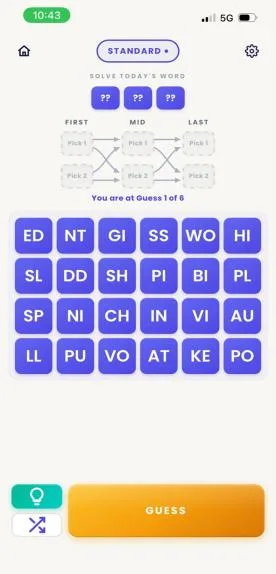
I'm sure everyone finds their own way of playing. You get six guesses, so you could simply throw random pairs onto the board and wait for the colours to guide you. When I played, that meant waiting for a few greens and yellows. Pairdle now uses these colours instead:
- 🟦 Blue: right pair in the right box. It locks in place.
- 🟥 Red: the pair is in the answer, but in a different box.
- ⬜ Grey: that pair isn't in the answer at all.
I actually tried the "hit and hope" approach first. It worked... sort of. I usually ended up with lots of grey tiles until my fourth or fifth guess. In fairness, by then there were so few pairs left that choosing became much easier! But I wanted to see if I could do better than luck, so I changed tactics.
Why Grey Tiles Are the Real Prize
It took me a puzzle or two to see that grey tiles tell you the most. Every grey pair takes one option off the board for good. On the 24-pair board I played in July, that was one pair out of 24. On today's 12-tile board, each grey rules out a bigger share. A green (blue now) tells you where one pair goes. A grey rules one out. Get enough greys and the pairs that are left start to point at the answer, the same way you rule out numbers in a good Sudoku. After that I stopped chasing greens and started paying attention to the greys.
Grabbing a Notebook
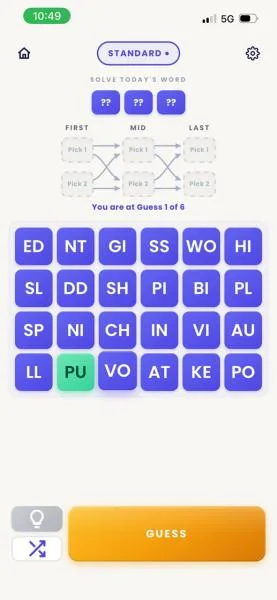
Rather than guessing, I wrote every available letter pair into three columns:
- Pairs that could start a six-letter word
- Pairs that could sit in the middle
- Pairs that were likely to finish a word
Some pairs fit more than one position, so I noted those too.
| First | Mid | Last |
|---|---|---|
| WO | GI | GD |
| HI | SS | NT |
| SL | DD | SH |
| SH | IN | CH |
| PI | LL | LL |
| BI | AT | |
| PL | KE | |
| SP | ||
| NI | ||
| VI | ||
| AU | ||
| PU | ||
| VO | ||
| AT | ||
| PO |
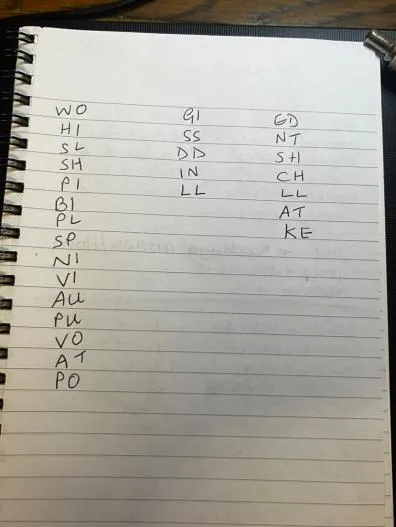
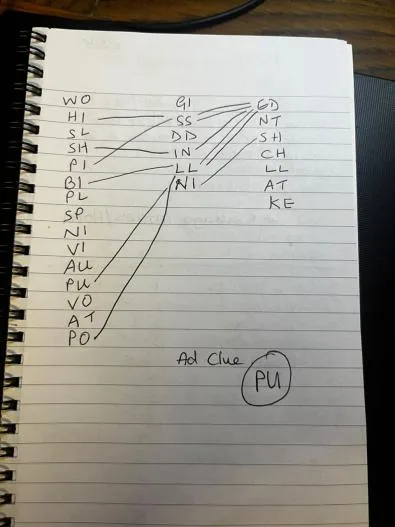
From there I started joining pairs together, drawing lines between pairs that could sit next to each other in a real word. By the time I'd finished, I'd narrowed the answer down to about six or seven real English words.
Then I decided to use Pairdle's clue feature. After a short advert, it showed me the pair PU. That cut my shortlist right down.
Down to Two — and Confident
Looking at my notes, I was sure the answer had to be either:
- PULLED
- PUNISH
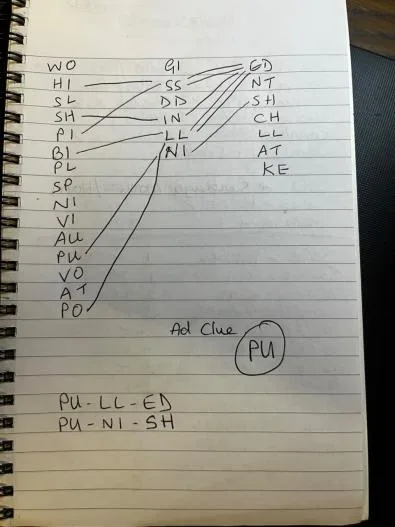
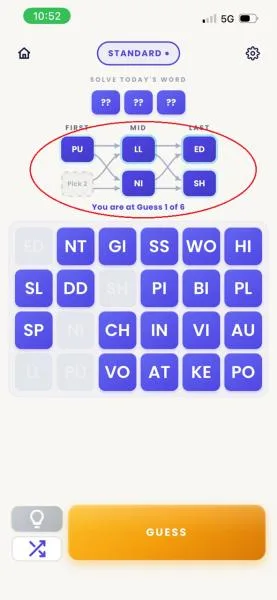
As far as I could see, PU only made sense at the start of a six-letter English word. Feeling confident, I entered my pick, hoping to get the answer in ONE try...
Wrong!! 😂🙅♀️🤦
The Mistake Was Mine, Not the Game's
Looking back at my notes, I saw my mistake. I'd forgotten to put SH in my "middle" column. Of course!
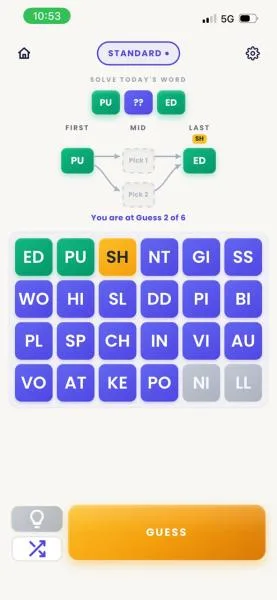
The answer was PUSHED.
My own note-taking caught me out! That's what I enjoyed most about the puzzle. It reminded me how interesting English is. There are patterns, rules, common letter spots and exceptions everywhere.
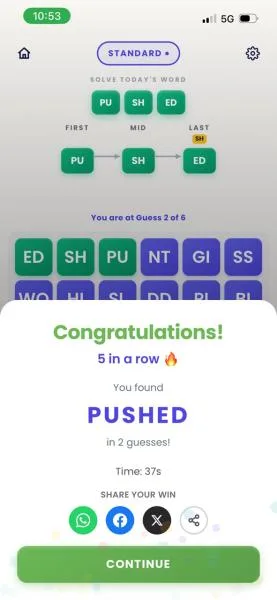
That puzzle really made me think, and it taught me that if I'm going to use pen and paper, I need to set up my columns more carefully next time!
The Power of Pairs
Each Pairdle puzzle makes me work out why a word fits the boxes. If you want a head start on your own column system, our 5 strategies to get better at Pairdle covers the same FIRST/MID/LAST pattern-reading I used here, and Pairdle vs. Wordle is a good read if you're coming from Wordle habits like I was. If you like letter-pair puzzles, Pairdle Hunt takes the same pairs-not-letters idea and turns it into a word-hunt board. Our list of the most common letter pairs in English is the same idea outside any one game.
It's the POWER OF PAIRS.
To try the column method without risking your streak, Pairdle Practice gives you unlimited boards that don't count toward your streak or stats. When six letters feel easy, Pairdle Pro (8 letters, 16 tiles) and Pairdle Expert (10 letters, 20 tiles) are free to play.
Play today's Pairdle, and maybe grab a notebook.
By Suzette Simons, guest contributor
Related articles
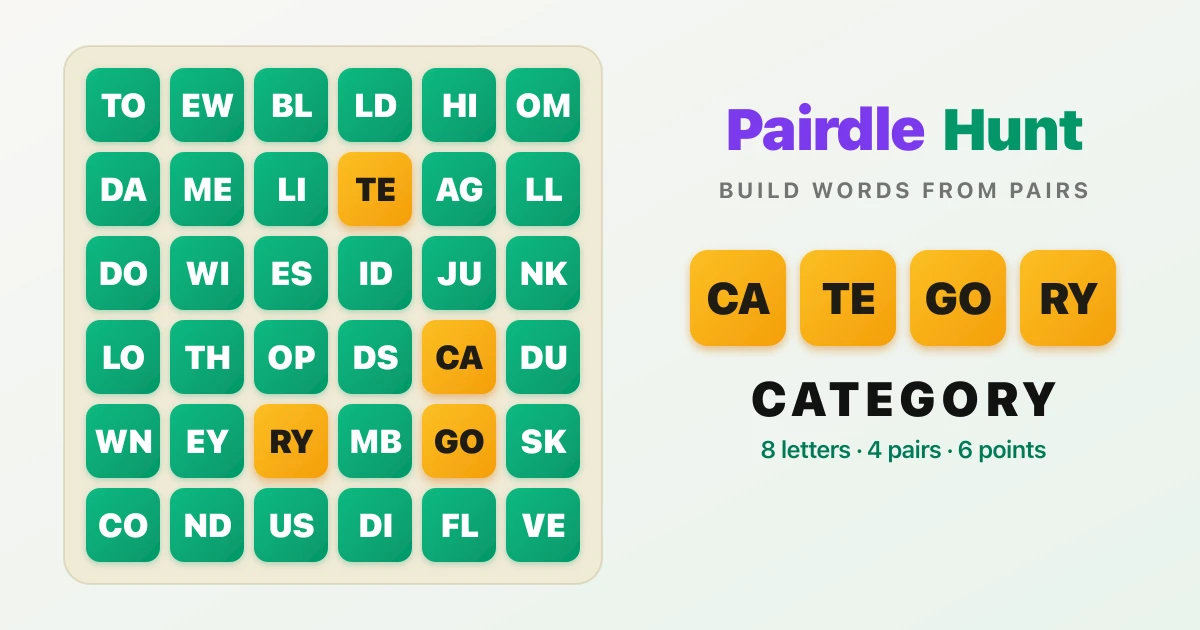
Pairdle Hunt: How to Play and the Math of Hidden Words
Pairdle Hunt is Logic Loft's new word-hunt game, coming soon to iOS and Android. How to play, how scoring works, and how many words hide in one grid.
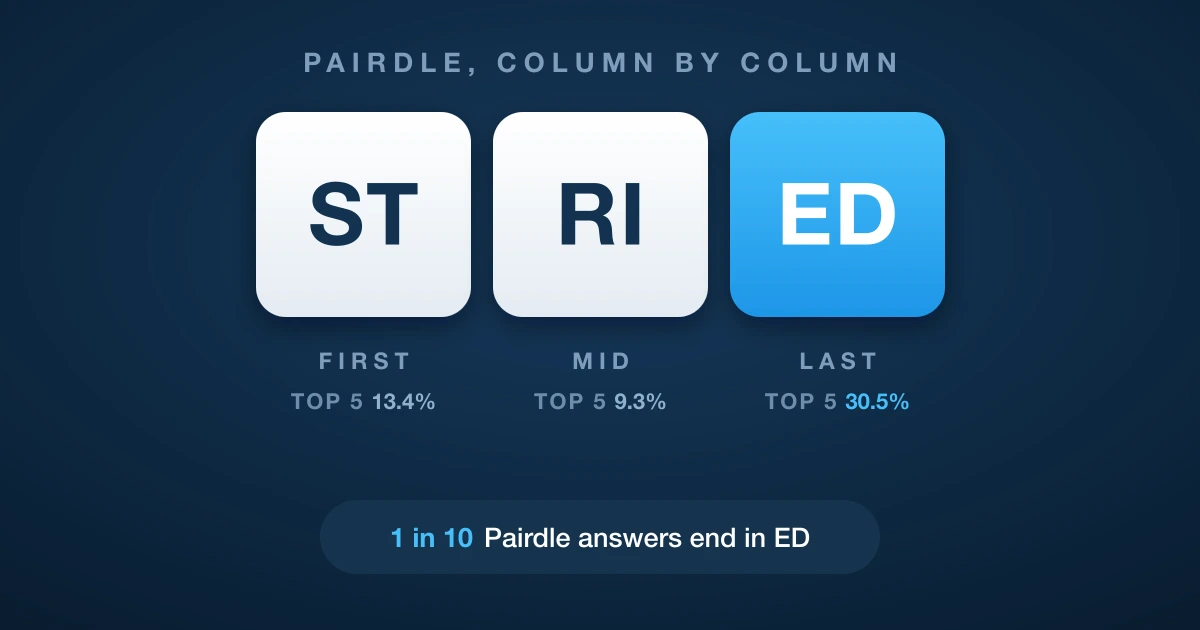
How to Master Pairdle, Column by Column
I counted the letter pairs in every answer on the Pairdle 1.5 schedule. The three boxes are nothing alike, and the last one is by far the easiest to call.
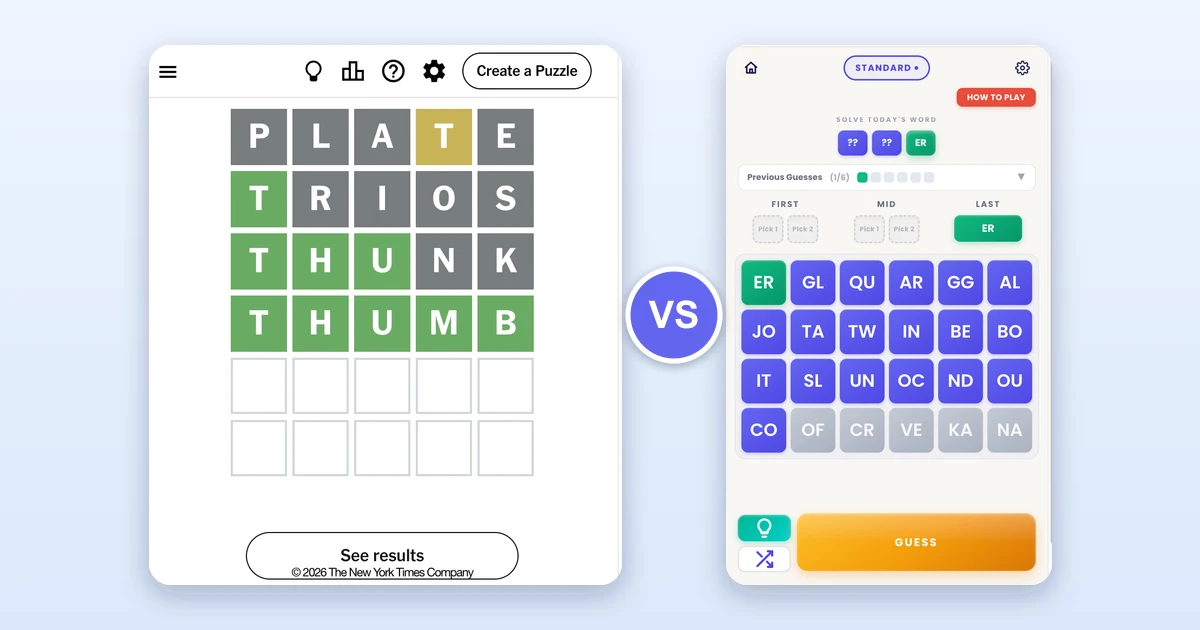
Pairdle vs. Wordle: What's the Difference?
Both are daily word puzzles solved by deduction, but Pairdle and Wordle play very differently. Here is a fair side-by-side from the team behind Pairdle.