The Chronicle of Epic Words
Murklin
A hamlet that says most of what it means without opening its mouth.
At a glance
- Kingdom II (The Murmuring Brook)
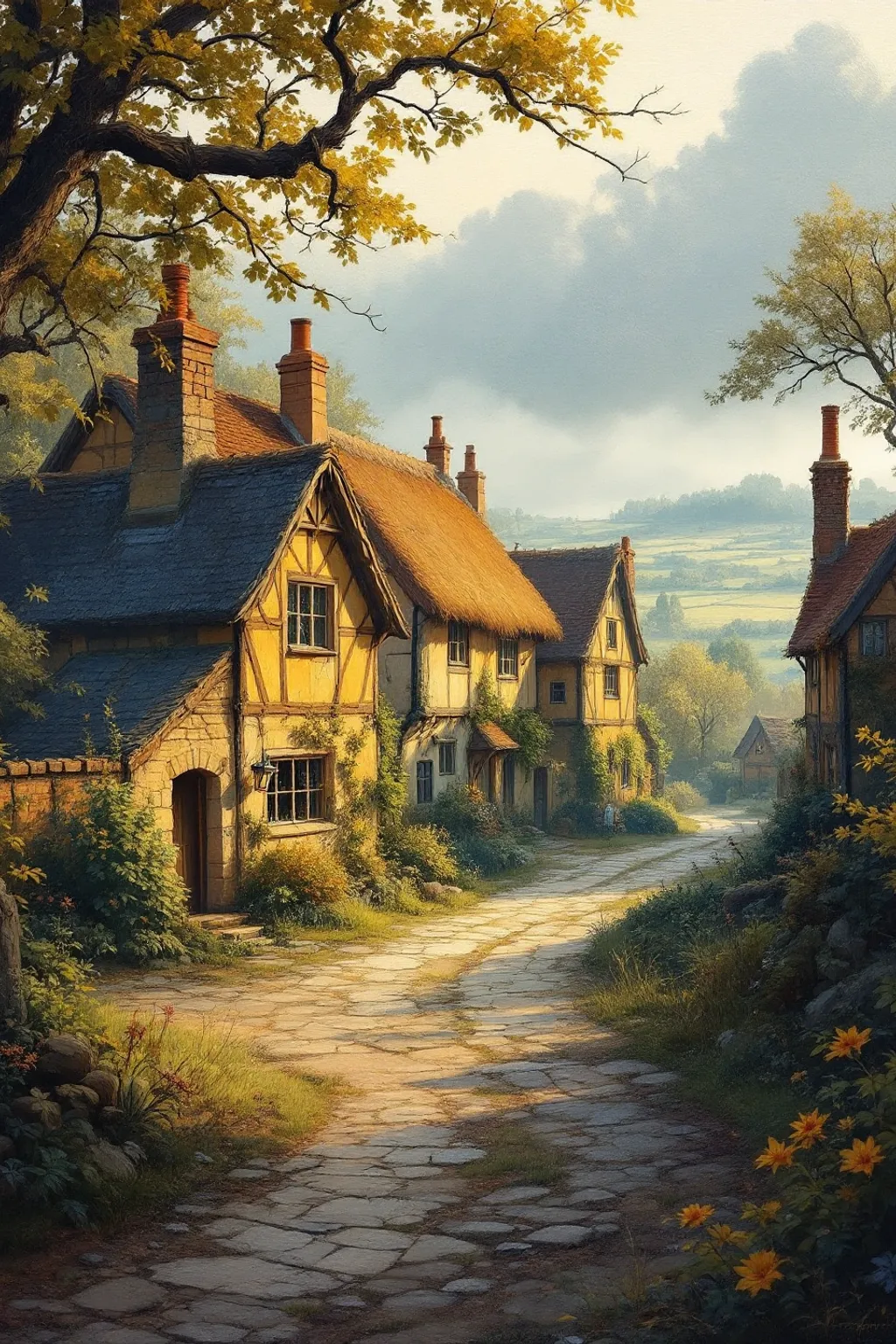
Murklin is the sort of village you arrive in before you realize you've arrived. There's no gate, no wall, no herald to announce it — and, once you're in the lane, not much announcing of any kind. This is a place that learned, a long time ago, to say most of what it means without opening its mouth, and a newcomer feels the quiet before he understands it.
Because that is the thing about Murklin. The folk here communicate partly by gesture and raised eyebrow — a whole grammar of tilted chins, lifted brows, and hands that finish sentences the mouth never started. A newcomer reads it as rudeness, or slyness, or a village keeping secrets. It's none of those. It's simply a place that decided, long ago, that a raised eyebrow rarely gets a man into the trouble a loose word will. Stand in the lane a while and you'll start to feel the shape of a conversation happening all around you, in a language with no letters in it at all.
The village keeps a riddle at its edge, carved into a stone tablet that has greeted travelers for longer than anyone can date. What speaks most clearly when it says nothing at all? It's the kind of question that sounds like a trap and turns out to be a confession. The answer is silence — and Murklin, which trades in silence the way other villages trade in grain, always knew it. The tablet just waits for each visitor to stop talking long enough to hear it. There's a second, gentler puzzle in the lanes too, where some idle hand has scrambled the very word for how the village says most things: gesture, louder than words here, and worth more.
For all its quiet, Murklin sits on a road that matters. It is the last friendly stop before Aldren's Mill, whose great wheel is said to grind sense out of gibberish; and it is the mouth of the long approach to the gatehouse of Duke Aldren himself. Every petition that comes before the Duke seems to pass through Murklin first, and picks up three hearings' worth of gossip on the way. When the Duke's steward meets a traveler at the gate, he already knows they've come up the road from here — and so, somehow, does everyone else.
The village pays for that road, too. It was a boy of Murklin, twelve and fatherless, who walked the river road alone one hard winter and was caught a mile short of Aldren's Mill with a half-sack of ducal grain — a small, desperate crime that landed squarely in the Duke's justice and, one way or another, in yours. Murklin breeds that kind of story: quiet people, quiet needs, and a hunger that patience can't fill. Its deeds and disputes end up filed away in the ledgers Hallowell the Archivist climbs his rolling ladder to reach.
If you've come this far up from Uttermost Rest, you'll recognize the vale's old trick — a place that says less than it knows, and knows more than it lets on. Rest here, then go on to the Duke's roads. But before you leave, stop at the tablet. Say nothing. See what the village tells you back.
Where you'll find it
Murklin is an early stop on the road into Kingdom II (The Murmuring Brook) — a small vale hamlet up the river road from Kingdom I, and the gossip-post where every petition bound for the Duke's halls picks up its rumor before you do. Come up the road from Uttermost Rest and Murklin is where the vale gathers itself: cottages along the lane, a stone tablet at its edge, and the wheel of Aldren's Mill turning somewhere down the road. Linger long enough and you'll notice nobody here is doing much talking.