The Chronicle of Epic Words
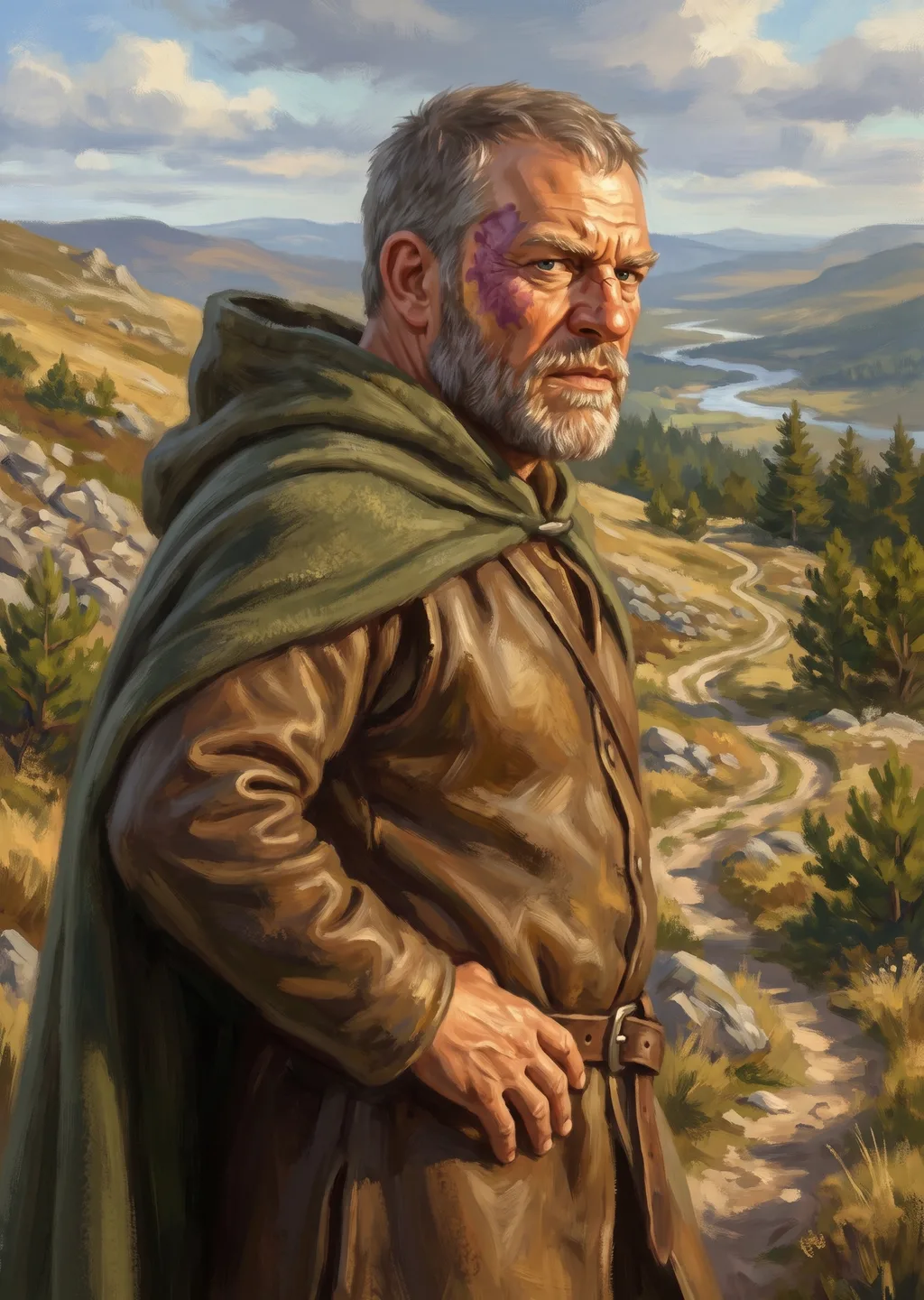
Maelin, the Ridge Gamekeeper
A gamekeeper who trusts the sheep-tracks over any road a mapmaker ever drew.
At a glance
Old enough that the mapmakers he's outlived were the ones who first taught him to read a slope. Young enough to still climb past the men who doubt he still can.
- Home The high pass, above Confluence Watch
- Kingdom V (The Babel Tower)
- Faction Common folk · Gamekeeper
Maelin keeps the high shoulders above Confluence Watch, where the river splits and the road between Tongue's Landing and the Watch is less a road than an ongoing argument between the cliff and the weather. Every season the pass rearranges itself — a switchback crumbles into the red-clay drop the locals call the Long Shrug, a goat-trail ices early, a slope the map swears is passable quietly stops being so. The mapmakers gave up on this stretch a long time ago. Maelin did not. He simply stopped waiting for anyone to tell him where the roads were, and went and found out for himself, one wet slope at a time, and never stopped.
He is a gamekeeper the way the word used to mean it — not a warden of someone's hunting preserve, but a keeper of what the land actually does, who walks it until it has no more secrets and then walks it again in case it grew some new ones. He trusts trail-sign, the movement of animals, and the smell of stone after rain the way other people trust a signature and a seal. This is not superstition. It is that the seal has been wrong before, on his ridge, in his memory — a Duke's patrol posted where no patrol had ridden in years, a toll-mark on a road the toll-keeper had abandoned — and the wet stone never has. Given a choice between what a nailed-up authority mark claims and what the sheep are doing, Maelin will believe the sheep every time, and he has yet to lose that bet.
He is not unfriendly, exactly. He is economical. He'll tell you what a slope is doing in as few words as it takes and then go quiet, and whether you find the quiet restful or unnerving is your affair, not his. The people who earn more than that from him earn it the old way: the boar-tusk charm from the deep woods, the mark that once told a keeper a hunter knew enough not to die on his ridge. It's a language older than the great houses and their filed-down seals, and Maelin trusts it precisely because no factor can forge it with a warm signet and a name he'd rather not sign. Show him the tusk and you've said, without a word, that you belong to the woodcraft and not to the wardens. That's a thing he can work with.
What he offers, when he decides you're worth it, is the one thing the pass truly withholds from everyone else: a way through that isn't the way through. While the marked road above Tongue's Landing runs straight into Corvin's thirty men and their clean, well-oiled weapons, Maelin knows the drovers' cut behind a granite slab, the sheep-path the bandits couldn't watch without sprouting wings. He'll take you and your stranded centaur courier up it and have the courier at the Duke's gate by dusk, astonishing him — the centaur is the sort who's always surprised to arrive anywhere on time — and before you part he'll scratch a quick route-map onto a scrap of waxed bark and fold it into your hand. For later. For the next time the official road proves less useful than the unofficial one. It is, from Maelin, close to sentiment.
He notices more than he keeps. The shortened crest on the courier's satchel — a four-cornered arms pressed with one corner smoothed flat, not worn but removed — he'd seen its like before, on a coin-seal he took as a salt-toll one thaw, and thought nothing of it, because a missing letter is not the business of a ridge. Now he's seen it twice — once on a toll-coin, once on a courier's satchel — and Maelin has a keeper's instinct for the number of a thing. One is weather. Two is intent. He won't chase it down — chasing other people's schemes off his mountain is a fine way to die on it — but he filed the fact away, in his own shorthand, on his own bark, the way he files everything the slope shows him that he isn't ready to explain. It'll keep. Most things do, up here, until the season decides they won't.
Tales & Rumors
He keeps notes no ledger-keeper would recognize: the season a switchback slumped into the river, the winter the goat-path iced over three weeks early, the smell that means a slope is about to give. He writes them on waxed bark in a shorthand only he can read, and when a Duke's mapmaker once asked to copy them he looked at the man the way you'd look at someone asking to borrow your knees. The routes are his because he walked them. That is, to Maelin, the only kind of ownership a road has ever earned.
There's an old boar-tusk charm that used to mean something on his ridge — that a hunter knew enough not to die on it. He'll slide down the scree for anyone carrying one, quick and sure-footed, and then decide about you afterward. Show him the tusk and you've told him you belong to the woodcraft, not the wardens; it's a language older than the seals, and one of the few he still trusts to mean exactly what it says.
He once paid a salt-toll with a coin-seal that had a letter filed clean out of the family name — and he noticed, the way he notices everything, and said nothing, because a missing letter is not his ridge's business. When he saw the same short crest ride through on a courier's satchel a season later, he stopped noticing quietly. Two of a thing that should be one of a thing is, in his experience, exactly how a trap announces itself to anyone paying attention.
How They Measure Up
A gamekeeper takes the measure of everything that crosses his ridge — himself included.
Carries a downed ewe off the scree without breaking stride. Complains about it afterward, at length, to no one in particular.
Crosses a slope the bandits can't watch without growing wings, and doesn't send a single stone down to announce he did.
Works a season on the shoulders above the Watch that rearranges the road and half the men who try it. He's still up there when the road isn't.
Keeps notes on the routes the mapmakers gave up on — his own hand, his own shorthand, on whatever bark happens to be dry.
Trusts trail-sign, animal movement, and the smell of wet stone over any authority-mark nailed to a post. The post has been wrong before. The wet stone never has.
Tells you what a slope is doing, then stops talking. People find this restful or unnerving, and he has never once adjusted for which.
The Unofficial Map — he knows every track that still exists after the mapmakers quit — sheep-cut, drovers' cut, the one the smugglers think nobody's found — and can tell you at a glance which one you actually are. The nailed-up authority marks he reads mostly to learn who's lying.
Where you'll meet him
You'll find Maelin only if you're carrying the right token — the boar-tusk charm from your first hour on the road. Otherwise he's a stillness higher on the scree, half-hidden in dwarf pine above the switchback between Tongue's Landing and Confluence Watch, counting hooves rather than people while Corvin's men hold the road below. Lift the tusk toward the ridge and he comes down — lichen-green cloak, balance of someone who's spent half his life on bad ground — reads you, reads the seal on the courier's satchel, and decides you're worth the drovers' cut. He'll thread you both onto a sheep-path the bandits can't watch, and press a route scratched on bark into your hand for the next time the official road proves less useful than the unofficial one.