The Chronicle of Epic Words
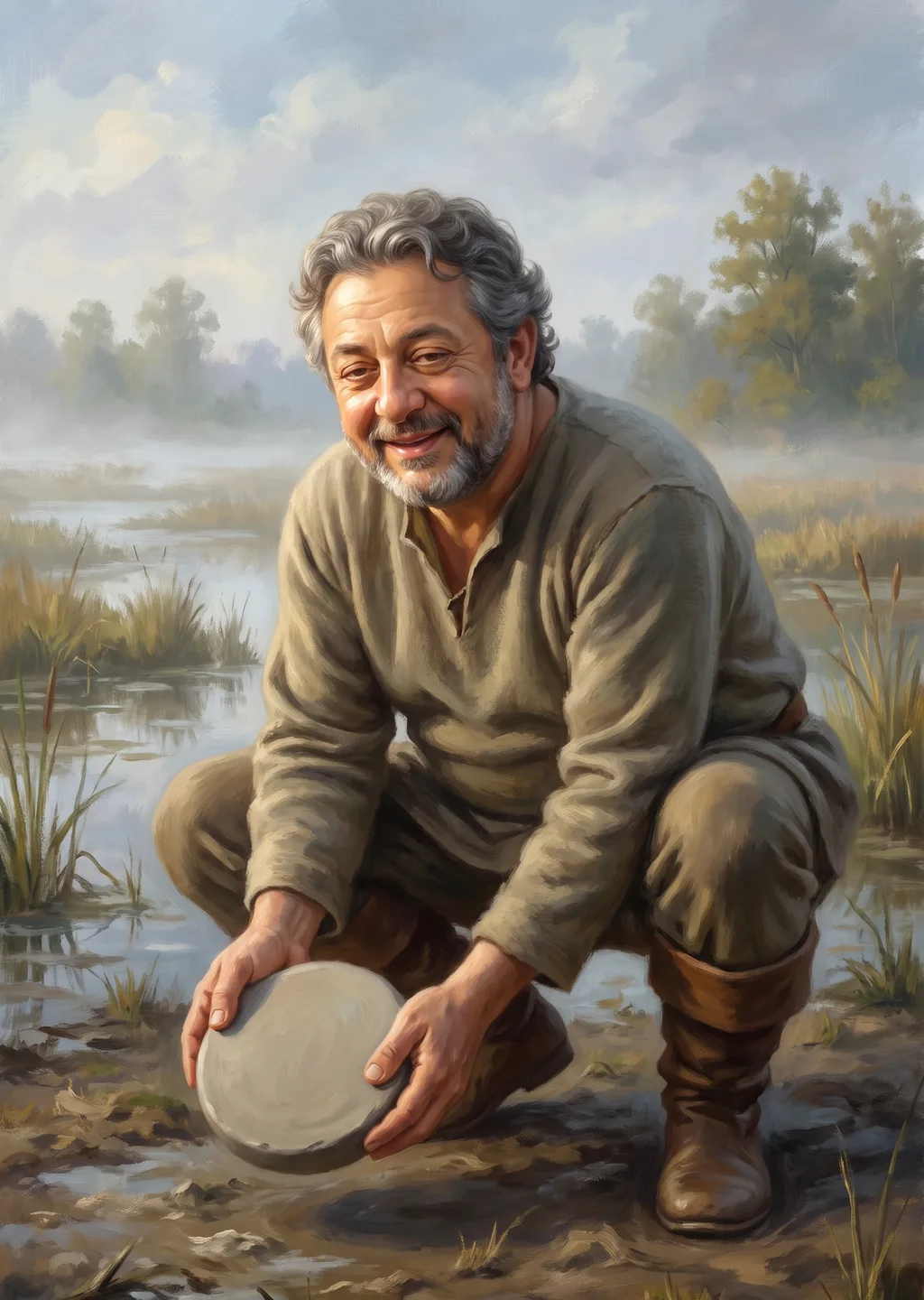
Calder
A warm, well-read scholar who knows your name before you've given it and is wrong in ways that are always just slightly convenient.
At a glance
Old enough to have references going back further than anyone thinks to check. Young enough to still find every dead language genuinely delightful.
- Home No fixed address — wherever the writs are
- Kingdom X (The Lexicon Forge)
- Faction Independent · Scholar of Fragment-writs
Calder will tell you, if you give him the afternoon, that he is simply a researcher — independent, unaffiliated, in possession of excellent references and no particular agenda beyond the truth of the thing in front of him. He says it the way he says everything: warmly, precisely, and in a manner that makes disagreement feel not so much wrong as slightly rude. By the time you've noticed you never actually saw those excellent references, he's three sentences into a genuinely charming account of a dialect you'd never heard of, and the question has quietly left the room.
He arrived at the Worn Index to settle a matter. For fifteen years he and its keeper, Geva, had been trading rebuttals by post over the classification of certain old stone discs — she convinced they mattered, he equally convinced they were "a historical curiosity, a tradition that had lost its purpose." They had never met. When Geva finally pulled one such disc from the inner chamber of the Rootword Barrow, Calder was, with impeccable timing, already in the district, and offered to come look. He has been there a week. He is in no hurry to leave, and no hurry, you'll notice, to let anyone carry the disc anywhere he can't watch it go.
What makes Calder difficult is not that he lies. Lying would be far easier to catch. Calder deals in the almost — the date that's off by exactly the number that changes everything, the sequence of construction reversed so gently you'd never think to check the mortar, the word "decorative" laid over a thing that is anything but. He hands you these small, tidy, convenient wrongnesses one at a time, each wrapped in enough true and interesting fact that swallowing the whole is effortless. Set his conclusions side by side, though, and a shape emerges: they all lean the same way. They all make the strange thing smaller, older, safer, done-with. A man who was merely mistaken would be wrong in scattered directions. Calder is only ever wrong toward comfort.
Geva has spent fifteen years unable to prove any of this and unwilling to stop trying. She is the one person in the region his warmth does not redirect — she doesn't dislike him, exactly; she simply keeps a colder kind of attention than he's used to, and it vexes him in a way he's far too well-mannered to show. "He's very good," she'll tell you, "at making you feel you've reached a conclusion together. And the conclusion is always his." She means it as a warning. She also, being a scholar, means it as a description of an unusually elegant technique, and can't quite keep the professional admiration out of her voice.
You'll do most of your talking with him out in the Glossary Mire, where he catalogues silt-inscriptions with real care and calls a pressed word "a surveyor's mark" when surveyors mark property with numbers, not words. He'll use your name. He'll remember a thing you mentioned in passing and return to it, flatteringly, an hour later. He'll explain exactly enough to make you feel you understand the whole, and stop precisely where understanding would become inconvenient. And when you leave, you'll carry off the distinct, pleasant impression of having been helped by a friend.
The impression is not entirely false. That's the trouble with him. The warmth is real; the interest is real; he would, in another life, make a wonderful teacher. It's only the direction of all that goodwill that's off — always steering, always gentle, always toward the door marked nothing here worth digging up. He leaves behind a calling card with a middle initial he's never explained, a handful of conclusions too neat to trust, and the faint, unshakeable sense that somewhere a half-step back from where he stopped, there was a question he took very great care to keep you from asking.
Tales & Rumors
He and Geva have been at war for fifteen years, entirely by post — trading rebuttals over the classification of a disc neither had seen in the same room until this month. She has never once caught him in an outright error, and never once agreed with a single thing he's concluded. Ask her about him and she'll say only that his answers are 'always too neat,' the way other people say a floor is 'a little too level,' meaning: someone worked at it.
He remembers names. Yours, before you offer it; the barrow-diggers', the ferrymen's, the concerns of a village he passed through once and will pass through again. It reads as warmth, and it is warmth — the effort is simply made so completely invisible that you never think to ask why a stranger arrived already knowing the most comfortable way to approach you.
The first time you meet him he will explain Fragment-writs with the easy patience of a man for whom the matter is settled, and he will be wrong in three separate places while looking genuinely, unhurriedly interested in your answers. On the study table he leaves a calling card. The middle initial reads 'T.' He has mentioned no middle name, and does not, when you glance at it, mention one now.
How They Measure Up
Even a man who trades in other people's conclusions has been measured for a few of his own.
Carries his own field-kit and not much else. The heaviest thing he lifts is a conclusion, gently, into your hands.
Handles a two-hundred-year-old disc, and your good opinion, with exactly the same unhurried care.
Fifteen years of losing the same argument by post without once tiring of it. Call it stamina. Geva calls it something less polite.
Knows the right answer to everything — which is precisely what makes the wrong ones he hands you so difficult to catch.
Reads a room the way you read a signpost: instantly, and for exactly what he needs out of it.
Doesn't argue you round. Walks beside you until you find you've arrived at his position and can't recall which of you suggested it.
The Shared Conclusion — his gift and his tell. Calder never tells you what to think — he simply makes certain that whatever you decide, you decide it together, and that it comes to rest a comfortable half-step shy of the truth. Every time. That the half-step always falls in the same direction is the sort of thing you only notice if you're the sort to keep count.
Where you'll meet him
You'll find Calder in Kingdom X (The Lexicon Forge), a week into a visit that was supposed to last an afternoon — most often out in the Glossary Mire, crouched over a word pressed into the silt bank, calling it 'probably a surveyor's mark' with the confidence of a man who has decided it doesn't matter. He came to assess a stone disc Geva pulled from the Rootword Barrow, the two of them fifteen years into an argument by letter and finally, awkwardly, in the same building. He is warm, specific, and already using your name. He'll walk you through what the disc is and isn't, agree with you generously, and send you off feeling clever and looked-after. It's only later, comparing what he said against what the mortar and the dates actually show, that you might start to wonder.