The Chronicle of Epic Words
Pre-Settlement
A village that has been here a hundred and forty years and still isn't sure it's staying.
At a glance
- Kingdom XXII (The Prefix Passage)
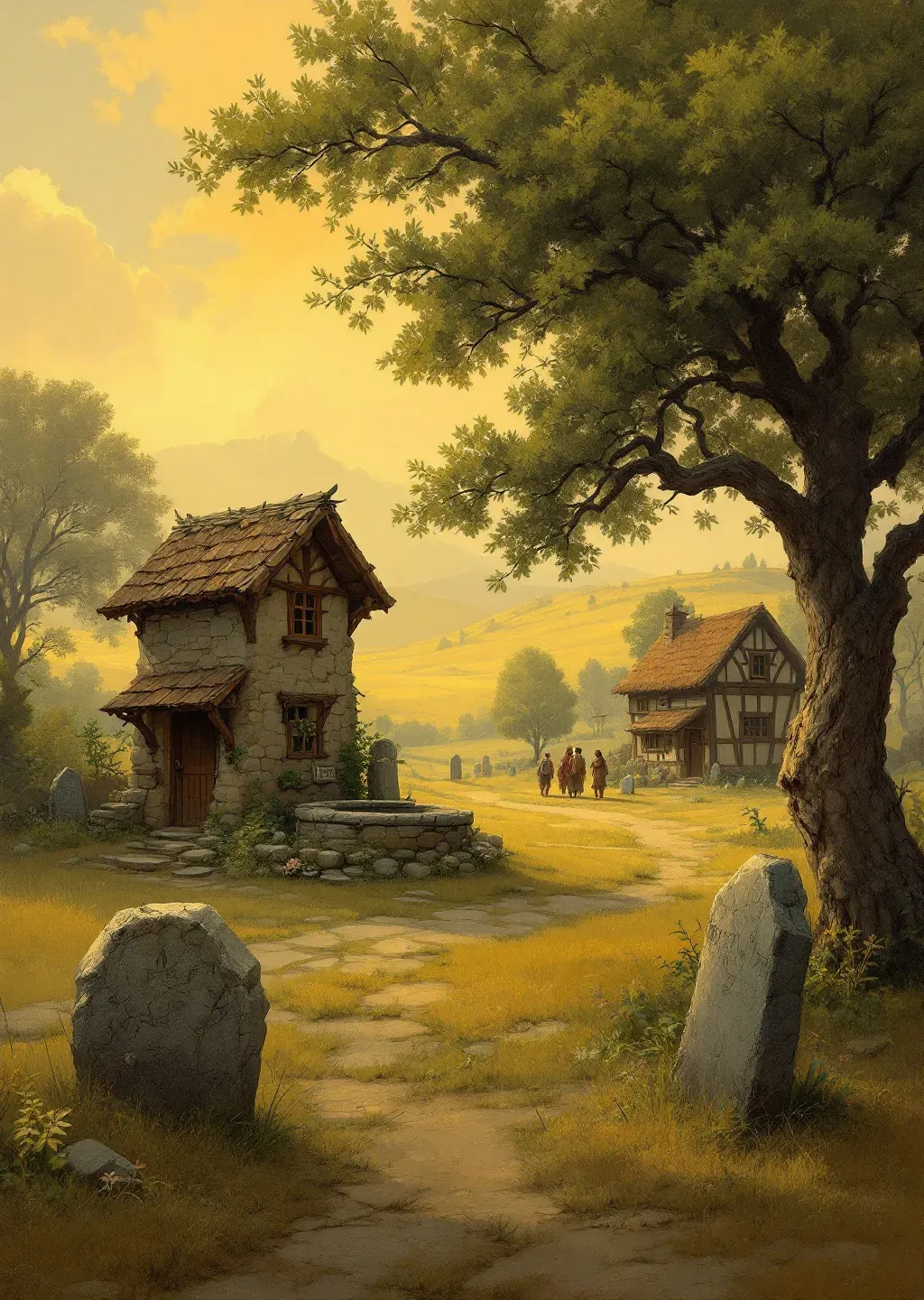
Every kingdom has a village that outstayed its own doubts. Pre-Settlement is one — and it has never once admitted the fact. It has a granary. It has a well. It has three generations of graves, which is about as committed to a place as a person can get. And it has a town council that meets weekly, without fail, to reaffirm the same solemn conclusion it reached the week before: that none of this is permanent yet, and everyone would do well not to get ahead of themselves.
You'll notice it the moment you arrive, because a settlement this thoroughly built has no business being this coy about being built. Ask the miller — a man standing squarely inside a mill his grandfather raised — and he'll tell you, with the total sincerity of a man who has never once heard how this sounds, "We're still deciding." Ask what, exactly, is still under discussion, and he'll gesture at the well, the granary, the graves, the whole visibly thriving village, and answer, "Whether it's worth it. Early days yet." Somewhere behind him, someone who looks uncannily like his grandfather's portrait will nod in grave agreement.
The town charter is genuinely on display — under glass, in the building everyone uses as a town hall and no one will officially call a town hall, because calling it one would settle the matter. The charter describes the settlement as "provisional, pending further consideration." It is dated a hundred and forty years ago. Nobody has proposed an amendment. Nobody, it seems, dares to be the one who commits the place to something on the record — to go first, in writing, about calling it finished. That reluctance isn't cowardice so much as manners. In Pre-Settlement, being the person who ends the debate is a little like being the person who ends the party: technically allowed, quietly unforgivable.
The stonework and the door-chalk keep the joke running whether the council likes it or not. Chalked on the town hall's door is a riddle whose answer is the one thing everyone here insists is still open — and it is, of course, foregone, conclusion very much included. Pinned outside the granary is a council notice naming what the town has resolved, once again, not to do about its own permanence: precede. Nobody wants to precede. Nobody wants to be first across the line that turns "provisional" into "here to stay." So the notice goes up, and the vote goes the way it always goes, and the village continues being exactly what it refuses to concede it already is.
None of this is the heavy business of the Passage. Just up the road, Before-Gate keeps a ledger of the unclaimed dead and charges a toll of pure presence; Orin the Tollkeeper reads a name aloud there because no one else will. Further on, Preamble Walk marches its columns down to a last, orphaned stub, and the Proto-Vault sits four centuries deeper than the road above it. Against all of that, Pre-Settlement is deliberately light — a breath the country lets you take before it asks anything of you again. Back the way you came, the Foreword's innkeeper keeps his own careful count of who's rationing properly and who isn't; ask him about the village up the road and you can imagine what he'd make of a place that's spent a hundred and forty years refusing to decide anything. The village, for its part, considers the matter unresolved.
You'll leave no more enlightened than you arrived, and — this is the strange gift of the place — you won't mind. There's a comfort in it that the rest of the Passage doesn't offer: the sense that some decisions are better left permanently, gloriously provisional. Not everything has to be finished becoming what it's going to be. Pre-Settlement is proof you can live a good long while in the not-yet, graves and granary and all, and call it early days with a straight face.
Where you'll find it
Pre-Settlement sits a short way past the arch in Kingdom XXII (The Prefix Passage), the light comic breather between heavier stops. Come through Before-Gate, pay Orin's toll, and the road eventually delivers you to a granary, a well, three generations of graves, and a town council that will cheerfully explain none of it is permanent yet. It's the easiest place to stop in the whole Passage — and the one least able to admit it exists.