The Chronicle of Epic Words
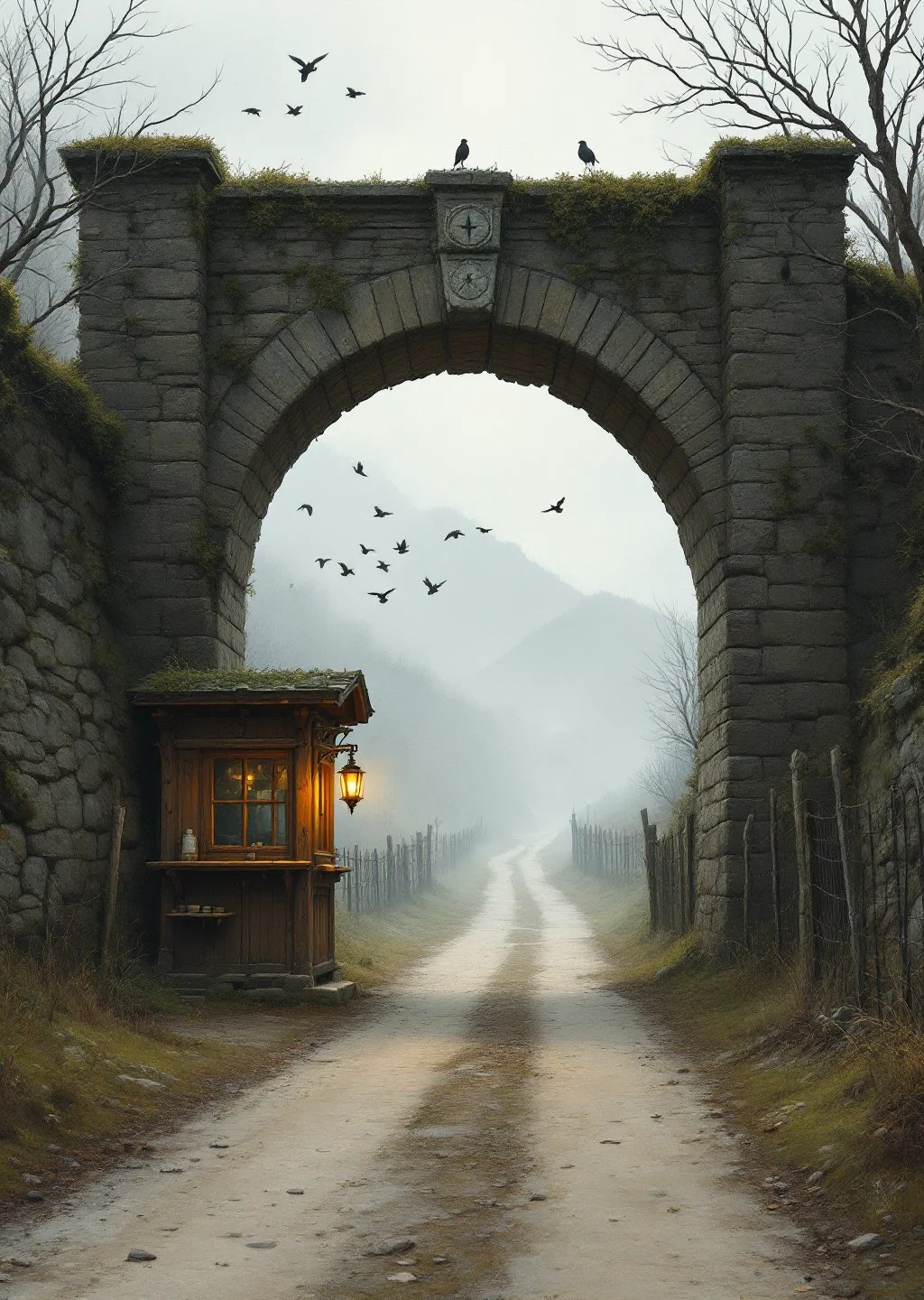
Before-Gate
The crossing keeps the forgotten, and the toll is not coin.
At a glance
- Kingdom XXII (The Prefix Passage)
Every kingdom has a threshold. Before-Gate is one — the last named place on the road before the country ahead loses its own name entirely — and it wears the fact plainly, the way a border stone wears the weather: openly, without complaint, expecting nothing of you but that you stop long enough to be counted.
Because you will stop. The arch is real, the road runs through it and nowhere else, and beneath it sits a booth, and in the booth sits Orin the Tollkeeper, who does not look up from his page when he tells you there's a toll. It isn't coin. It's presence. Cross here and the price is that you stand still while he reads one name out loud from a ledger thick as a brick — the names of everyone who died out in the nameless country and whom nobody ever came back for. He has to say them eventually. It is easier with a witness. It is unbearable alone.
The country beyond the arch has been without a name for longer than anyone currently walking it has been alive. Not lost, exactly — taken, cleanly enough that even the taking left no scar to point at. Before-Gate is where that erasure stops being a rumor and starts being a place you can feel: a quiet at the fence-line, a ledger nobody else would keep, a keeper who stayed because staying was the only remaining way to hold a door for the dead.
Look up as you wait and you'll see them — a loose, patient circle of birds working the fence-line above the booth. A grief-flock, the locals call it: the kind that follows a shepherd's sheep once the shepherd stops coming to call them in. Orin doesn't shoo them off. He feeds them out of his own stores, quietly, and would rather the Foreword's innkeeper not hear about it. When he reads a name, the flock goes silent for exactly as long as it takes him to finish, and lifts again when the silence after it has run its course. Nobody has ever fully explained why they do it. Some kinds of watching, Orin will tell you if pressed, don't require an explanation to keep happening — and you get the sense he counts his own work in that category, whether he'd say so aloud or not.
Beside the booth is a small shelf. Travelers leave things on it — a whittled bird, a single glove, a coin from a country that may not use coins anymore — for reasons Orin long ago stopped asking about. He won't offer it to you. It's just there, the way a shelf is. Nothing about it suggests it matters. That, if anything, is the most notable thing about it.
The stonework here likes a riddle. Carved above the arch, in the same hand that carved everything else in the Passage, is a puzzle about the small word that comes before the real word does its work — the crossing's whole architecture, confessed in a line most travelers read straight past. A weathered plaque by the booth names, in eight letters with two worn away, the one thing every visitor here is thoroughly full of by the time they leave. The toll-schedule pretends otherwise. The plaque is more honest about the crossing's actual business.
If you come to Before-Gate having already met Mara the Healer on the roads behind you, mention her name before Orin begins. Something in his face will ease. He'll remember a healer's tonic sent this way once, years back, and a jar he never could bring himself to throw out — and he'll look at you a beat longer, recalculating who you might turn out to be. It isn't a large moment. At a crossing like this one, it doesn't need to be.
Where you'll find it
Before-Gate stands at the mouth of Kingdom XXII (The Prefix Passage), the first thing you reach on the road into the old, name-effaced country beyond. You can't slip past it — the crossing is the way through, and the way through has a keeper. Cross the arch and the Passage opens up ahead of you: the Foreword's inn, Pre-Settlement's stubborn little council, the shrinking columns of Preamble Walk, and the Proto-Vault four centuries older than the road above it.