The Chronicle of Epic Words
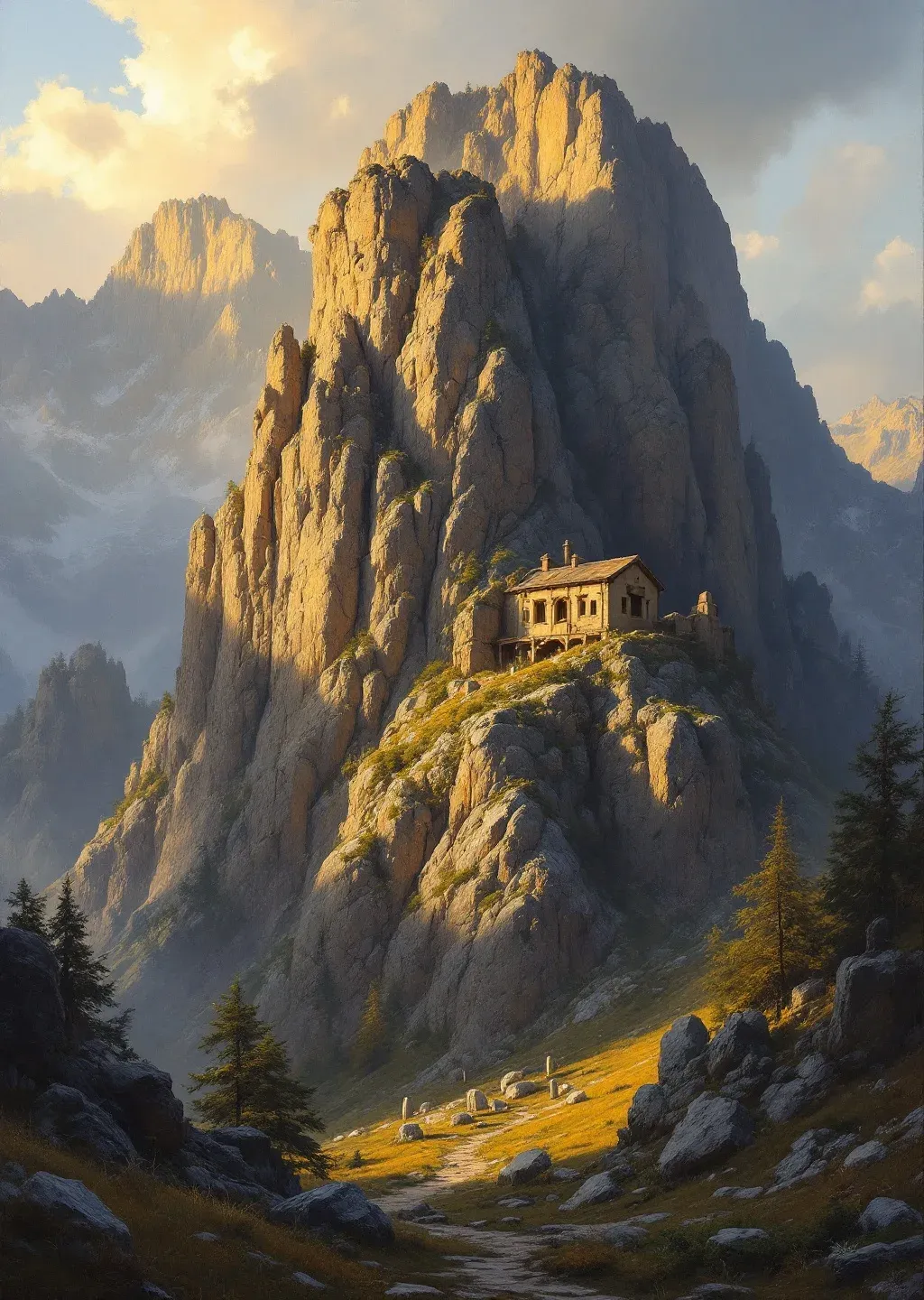
Lexicon Ridge
A region named for the working of raw language into shape — and missing one letter of its own name, polished out on purpose.
At a glance
- Kingdom X (The Lexicon Forge)
Most regions are named after a person, a battle, or a river. Lexicon Ridge is named after a craft — the working of raw linguistic material into something precise, the way a smith pulls metal into shape. The founding stone says so, or nearly does. Run a finger along its face and you'll find one letter of the region's own name has been polished clean away — not eroded, not chipped, but taken deliberately by a hand that was neither careless nor in a hurry, and that smoothed the space where the letter had been. It is the ridge's whole character in miniature: a place that treats a missing letter not as damage but as a question, and expects you to sit with it.
At the foot of the ridge sits the Worn Index, a low stone building that looks as though it grew where it stands. When you see how the mortar joins the bedrock, you understand why the locals never quite say it was built. The place is old — not old the way archives are old, but old the way certain stones are, having held a particular kind of weight long enough to register it structurally. Its ceiling beams came from the Lexicon Ridge timber stand, very old growth, and the grain runs along the ridgeline rather than the ground. Geva, the keeper who runs the Index from behind a desk of organized catastrophe, finds this significant. Most people just find it pretty.
Uphill from the Index lies the Rootword Barrow, a burial-mound complex Geva has spent three years cataloguing corridor by corridor. In its inner chamber she found something the outer chambers had no vocabulary for: a coin-sized stone disc, pale grey, carrying a letter-form that is somehow prior to recognition — you don't fail to place it because it's obscure, but because it seems to come from before the alphabet decided what its letters would mean. Two institutions called it decorative. One called it Valdric period. The mortar of the barrow tells its own story, and it does not agree with any of them: the inner chamber, where the disc was found, is older than the corridors that lead to it. Someone dug inward toward something that was already there.
Below the ridgeline, where a river meets the land and neither is quite sure which it is, the Glossary Mire holds words pressed into its silt banks — surveyors' marks, some say, though surveyors mark property with numbers, not words. It is here, cataloguing silt-inscriptions with easy patience, that you may find the visiting scholar Calder, who has been trading rebuttals with Geva by post for fifteen years and has finally come to the ridge in person. He is warm, precise, and helpful, and he is wrong in three small places — but you'd have to know exactly what to look for.
Beneath the Index itself is a sealed trapdoor with an iron ring, and beside it a maintenance log of forty-seven entries spanning three generations, each in a different hand, each identical: Sealed. Do not open. Cold. The cold that leaks through the gap is the wrong temperature for a cellar — not damp cold, not stone cold, but the cold of something undisturbed for a very long time and not expecting to be otherwise. Nobody on the ridge writes the forty-eighth entry. Given the building, you'll understand why.
That is Lexicon Ridge: a whole region that treats every worn stone and scratched-out word as a deliberate act by a patient hand, and is usually, unsettlingly, right.
Where you'll find it
Lexicon Ridge is the spine of Kingdom X (The Lexicon Forge), the wilderness zone where words are pulled up by the root and some roots run deeper than anyone thought to dig. You'll come to it climbing out of the low country, and you'll know the ridge by the buildings that seem to have grown out of the bedrock rather than been set on it. Start at the Worn Index at the foot of the slope; the rest of the region unfolds uphill from there.