
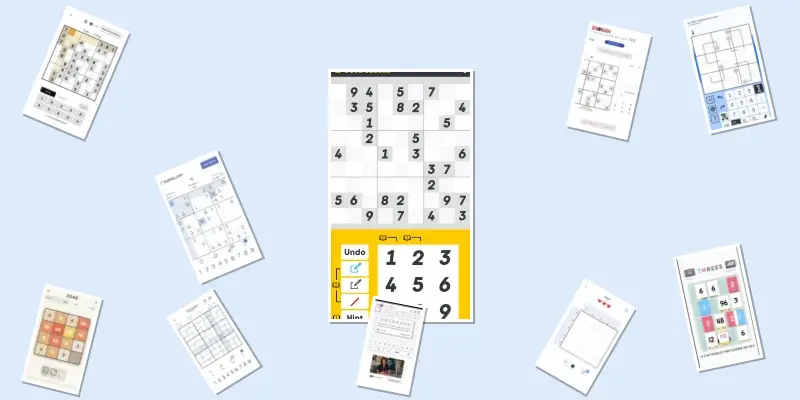
Sudoku needs no introduction. The 9x9 grid with the simple rule, every row, column and 3x3 box holding the digits 1 through 9, is the most popular logic puzzle in the world. Digital sudoku now goes far beyond the classic grid.
This list covers the best sudoku apps, the newest number puzzles, and the games that stretched what "number puzzle" means. Some are a clean five-minute daily. Some will keep you up until 2 AM.
Nobody pays to be on this list, and we earn nothing when you click through to a game. Read how we choose and review games.
1. Good Sudoku
Developer: Zach Gage (indie) | Released: 2020
Platforms: iOS, Android
Difficulty: Adaptive | Price: Free (limited); $3.99 for full version
Where to play: Website · App Store
The sudoku app that teaches you to think like a solver. Zach Gage (SpellTower, Typeshift) rebuilt sudoku from scratch and added note-taking tools that highlight patterns, candidate eliminations and logical chains. Instead of handing you a puzzle and leaving you to it, Good Sudoku shows you the path to the solution.
The hint system does not hand over a number. It highlights the technique you need, so you pick up strategies like X-Wings, Swordfish and hidden pairs as you play. Best pick for players who want to get better at sudoku, not just fill in numbers.
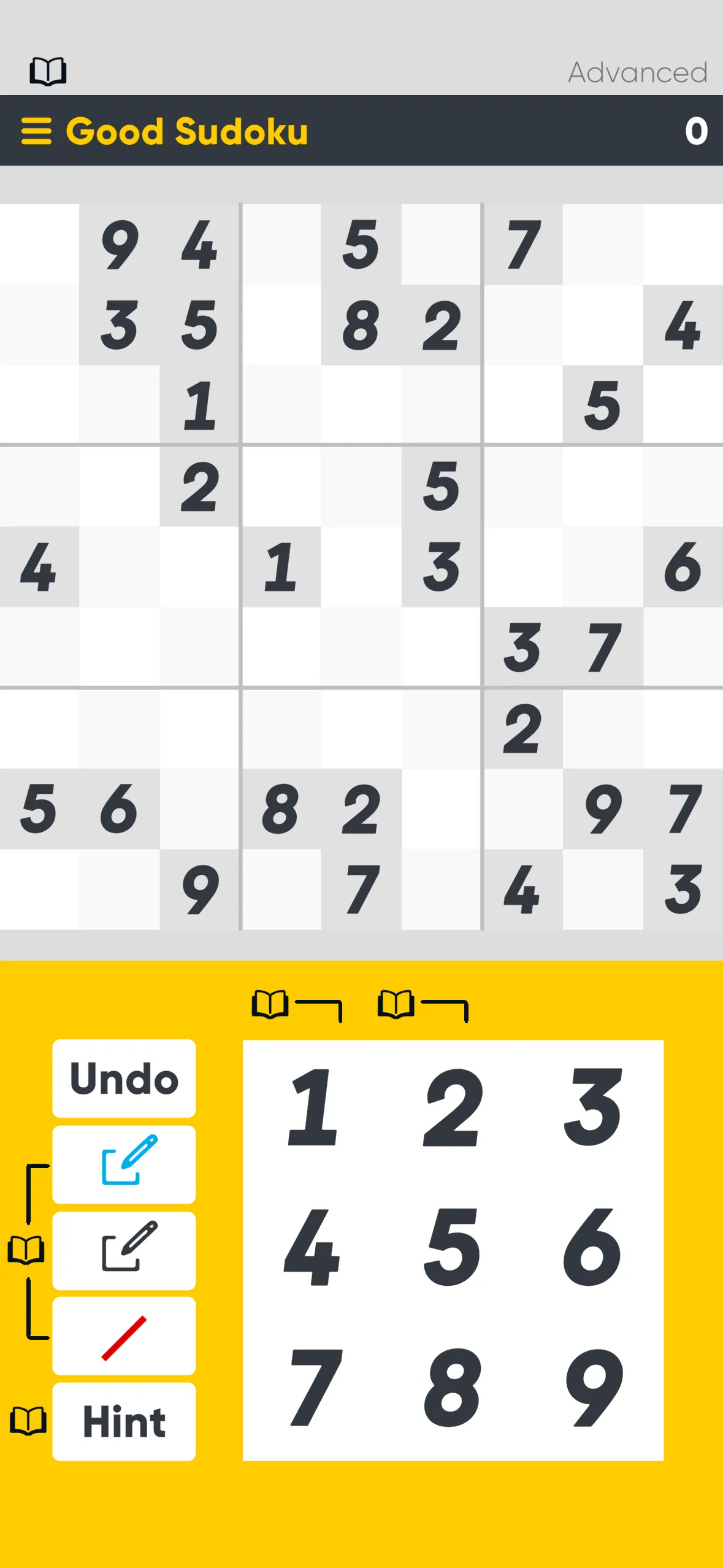
Screenshot: Good Sudoku, Zach Gage.
2. NYT Sudoku
Developer: The New York Times | Released: longtime staple of the NYT Games lineup
Platforms: Web, iOS, Android (NYT Games app)
Difficulty: Easy to hard (three daily puzzles) | Price: Free with NYT Games subscription
Where to play: Website · App Store · Google Play
The NYT's digital sudoku is clean, no-frills and daily. Three difficulty levels each day, Easy, Medium and Hard, with a timer and error checking. The paper's editorial quality control means the puzzles are consistently well built, with clean solution paths.
For players already in the NYT Games lineup (Wordle, Connections, Spelling Bee), sudoku slots into the daily rotation. There are no ads, no power-ups and no in-app purchases, which is rare in a category full of them.
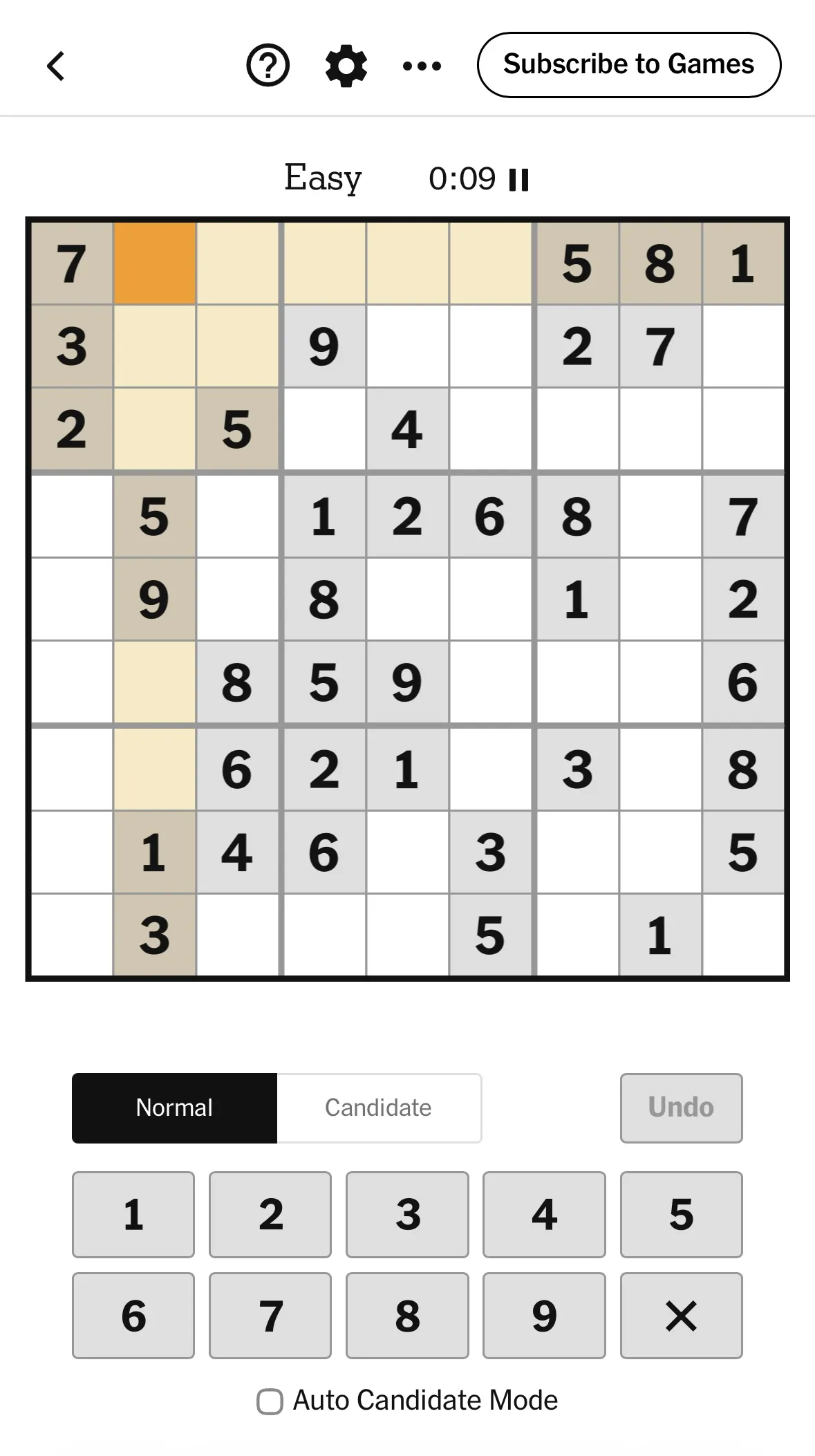
Screenshot: NYT Sudoku, The New York Times.
3. Cracking the Cryptic App
Developer: Cracking the Cryptic (Mark Goodliffe & Simon Anthony) | Released: 2021
Platforms: iOS, Android, PC (Steam)
Difficulty: Medium to extremely hard | Price: Free (limited); puzzle packs $2.99–$4.99
Where to play: Website · App Store · Google Play
Two British puzzle experts solve very hard sudoku variants on camera on the Cracking the Cryptic YouTube channel. The app puts those same puzzles on your phone: classic sudoku, Killer Sudoku, Sandwich Sudoku, Thermometer Sudoku and dozens of other variants built on extra constraints.
The channel has over half a million subscribers, and watching Mark and Simon solve has turned sudoku into something people sit down to watch. The app hands you the puzzles they work through on screen, and they are much harder than they look.
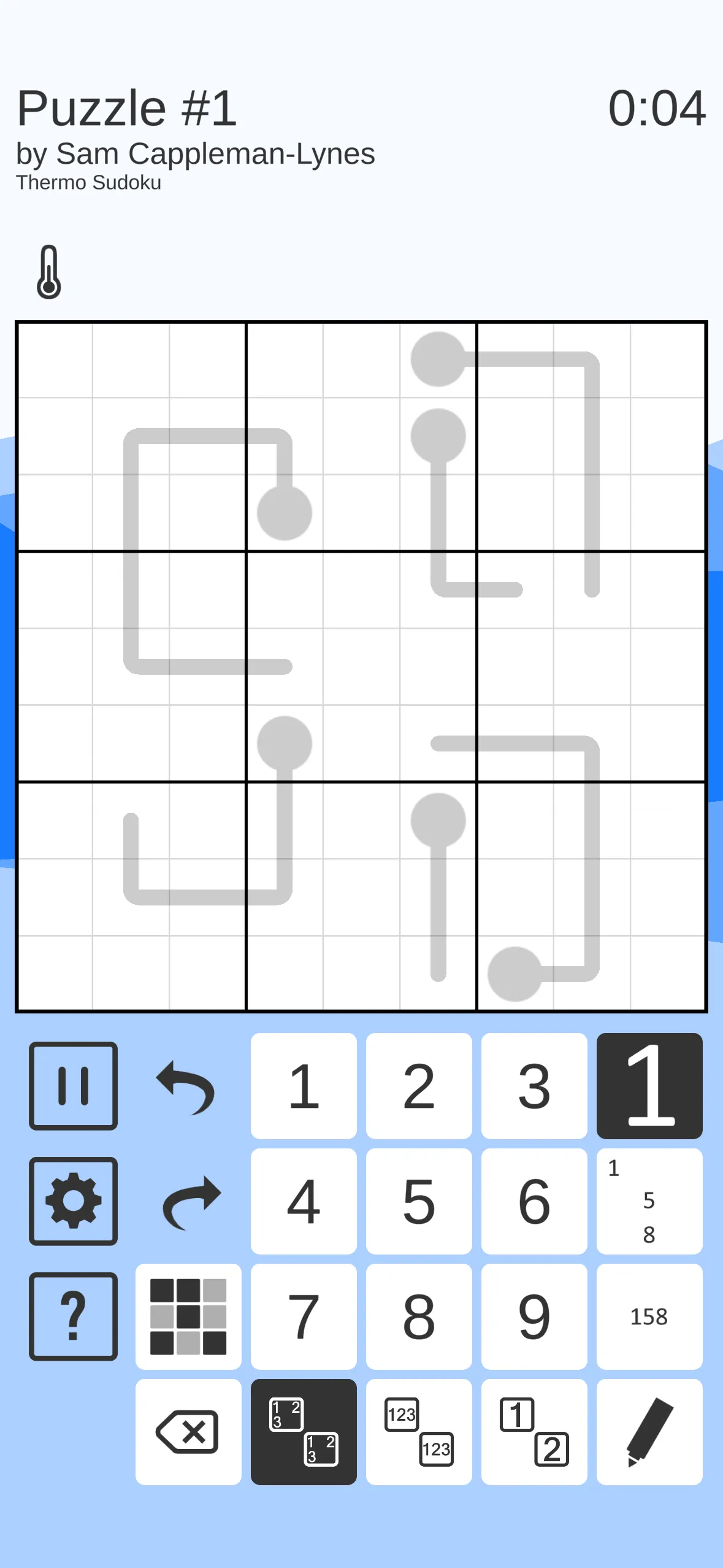
Screenshot: Cracking the Cryptic.
4. Sudoku.com
Developer: Easybrain | Released: 2017
Platforms: iOS, Android
Difficulty: Easy to expert | Price: Free (ads); premium subscription removes them
Where to play: Website · App Store · Google Play
The most downloaded sudoku app globally, with over 100 million installs. Sudoku.com offers daily challenges, seasonal events, a statistics dashboard and four difficulty levels. The pencil mark system, undo button and hint system are polished and easy to pick up.
Stillfront Group bought Easybrain for $640 million in 2021, which put a sudoku app among the most valuable properties in casual mobile gaming. That price is a fair measure of how large the sudoku audience is.
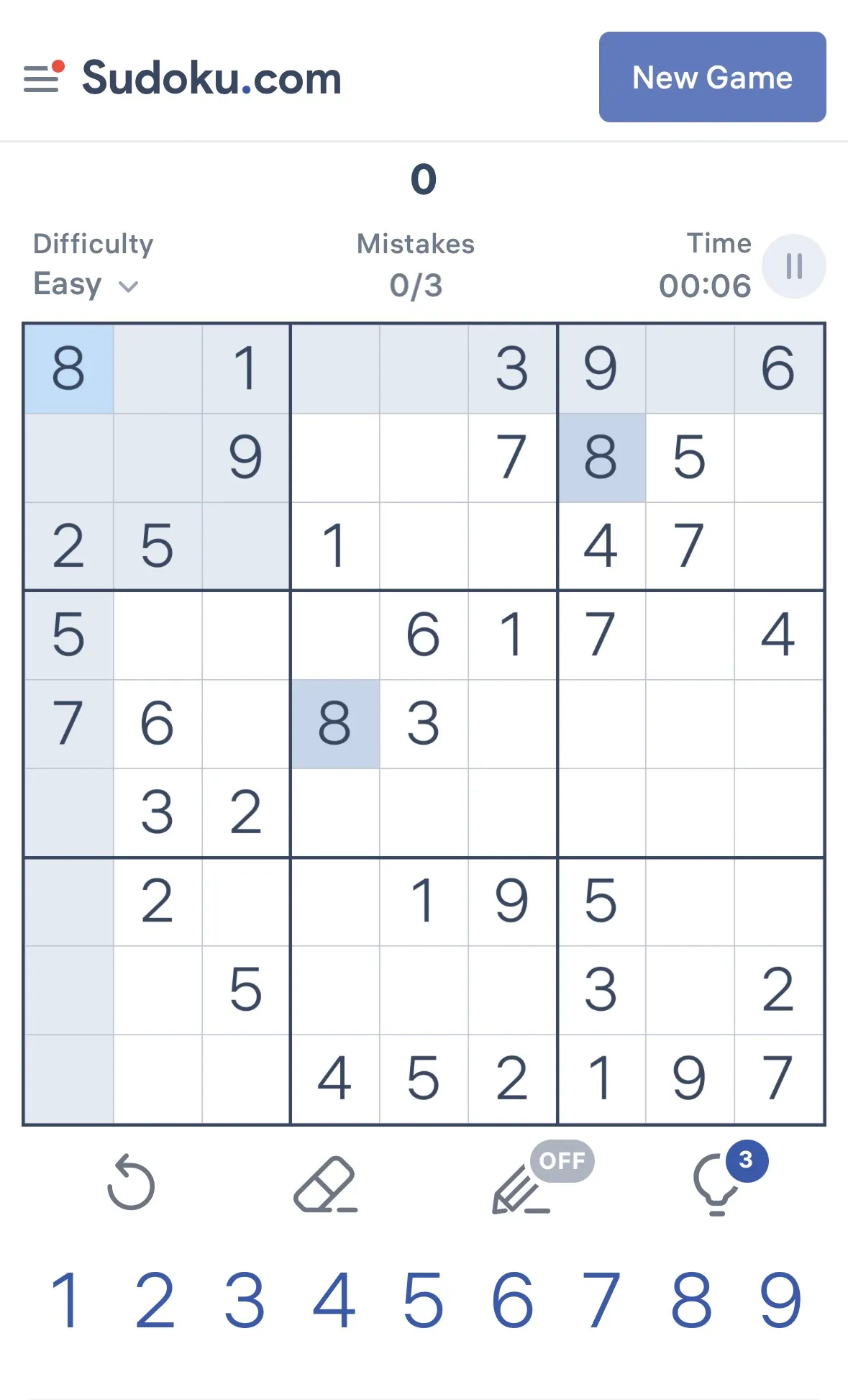
Screenshot: Sudoku.com, Easybrain.
5. KenKen
Developer: Nextoy (created by Tetsuya Miyamoto) | Released: 2008 (digital versions)
Platforms: Web (kenken.com), iOS, Android
Difficulty: Easy to very hard | Price: Free (web); app varies
Where to play: Website · App Store · Google Play
KenKen combines the logic of sudoku with arithmetic. Each cage (a group of cells) shows a target number and an operation: add, subtract, multiply or divide. You fill the grid so each row and column holds unique digits AND each cage's numbers produce the target using the operation shown.
Japanese math teacher Tetsuya Miyamoto invented it as a classroom tool. The New York Times picked it up and has run it in the paper since 2009. Solving one is arithmetic practice as much as logic practice.
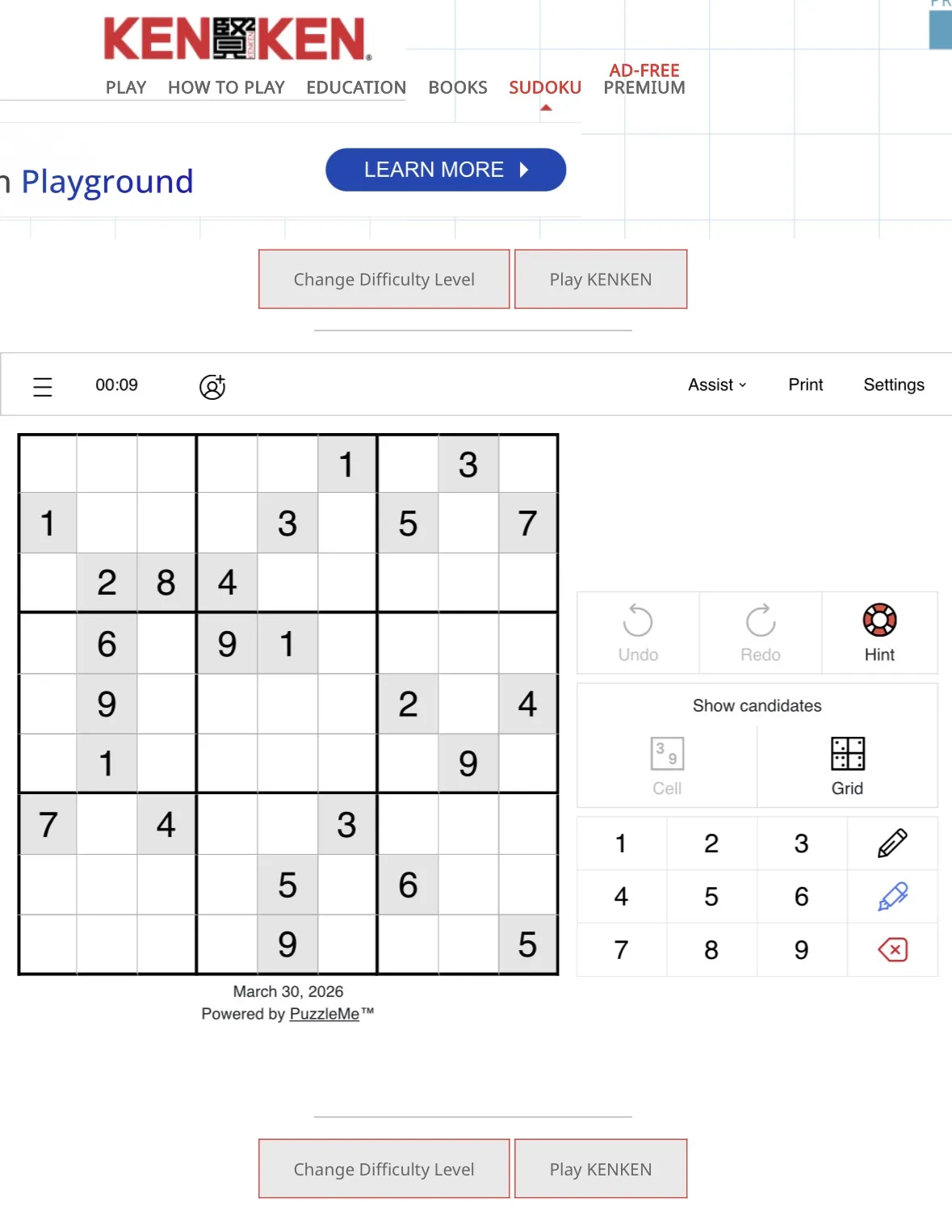
Screenshot: KenKen, Nextoy.
6. Threes!
Developer: Sirvo (Asher Vollmer, Greg Wohlwend) | Released: 2014
Platforms: iOS, Android, Xbox One
Difficulty: Easy to learn, extremely hard to master | Price: $5.99 (no ads)
Where to play: Website · App Store · Google Play
Slide numbered tiles on a 4x4 grid to combine them: 1+2=3, then matching tiles double (3+3=6, 6+6=12, and so on). Each swipe moves every tile, so positioning matters as much as math. The game ends when the board fills with no possible moves.
Threes! came first, a month before 2048, the free clone that went viral and buried it. The team published a postmortem of their 14-month design process that is still one of the most cited pieces of game design writing. The clone won on downloads, but Threes! is the better built game.
Pop culture: Won Apple Design Award 2014. The 2048 clone controversy sparked industry-wide conversation about idea theft in mobile gaming.
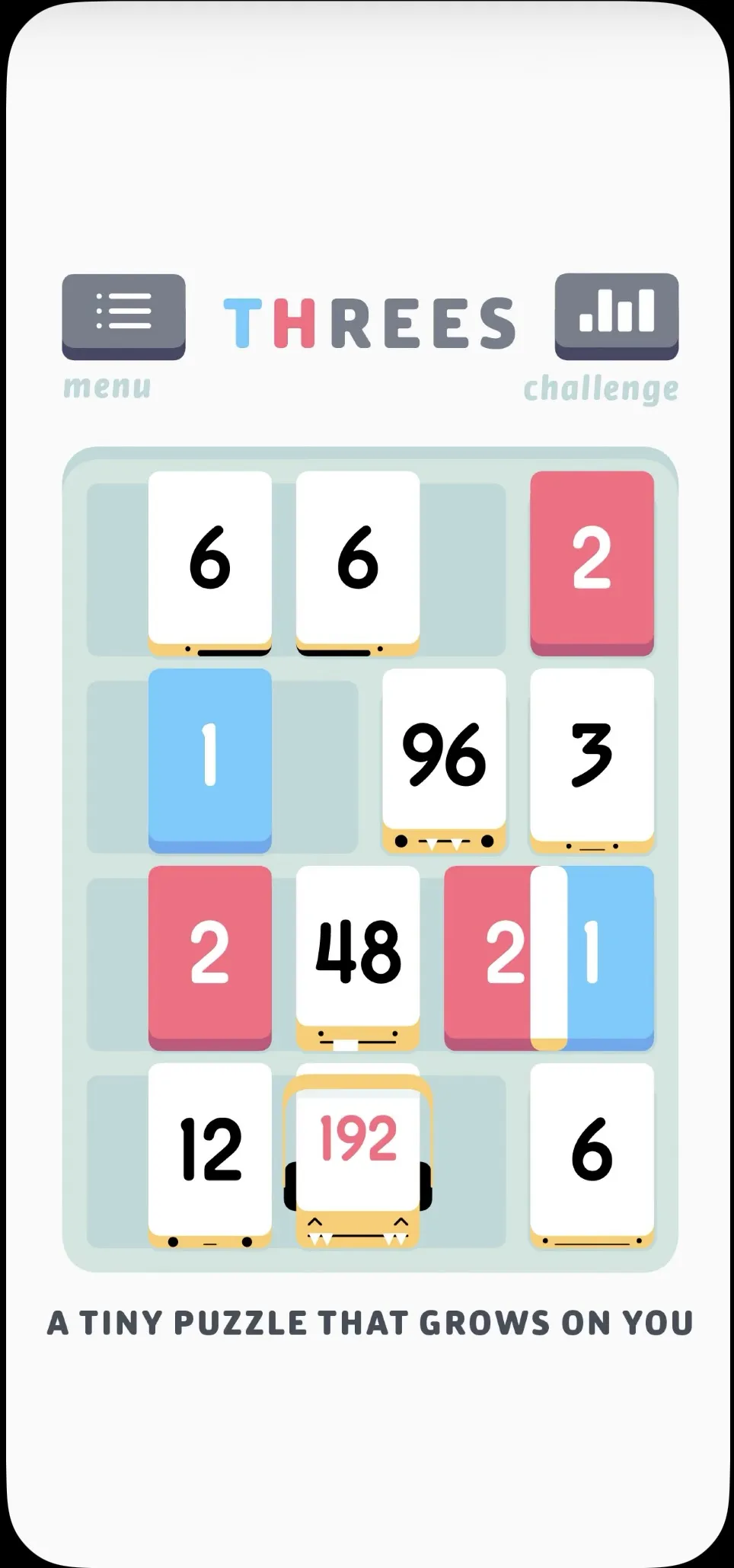
Screenshot: Threes!, Sirvo.
7. 2048
Developer: Gabriele Cirulli (independent) | Released: March 2014
Platforms: Web (play2048.co), iOS, Android
Difficulty: Medium | Price: Free
Where to play: Website
Slide tiles on a 4x4 grid to combine matching numbers: 2+2=4, 4+4=8, and so on, aiming to reach the 2048 tile. Cirulli, a 19-year-old Italian developer, built it in a weekend as a JavaScript exercise. It went viral within days, reaching millions of players.
2048 is a clone of Threes! (see above), which Cirulli has openly acknowledged. But it was free, it ran in a browser and its rules were simpler, so it reached far more people than Threes! ever did. It is still one of the most played browser games in history.
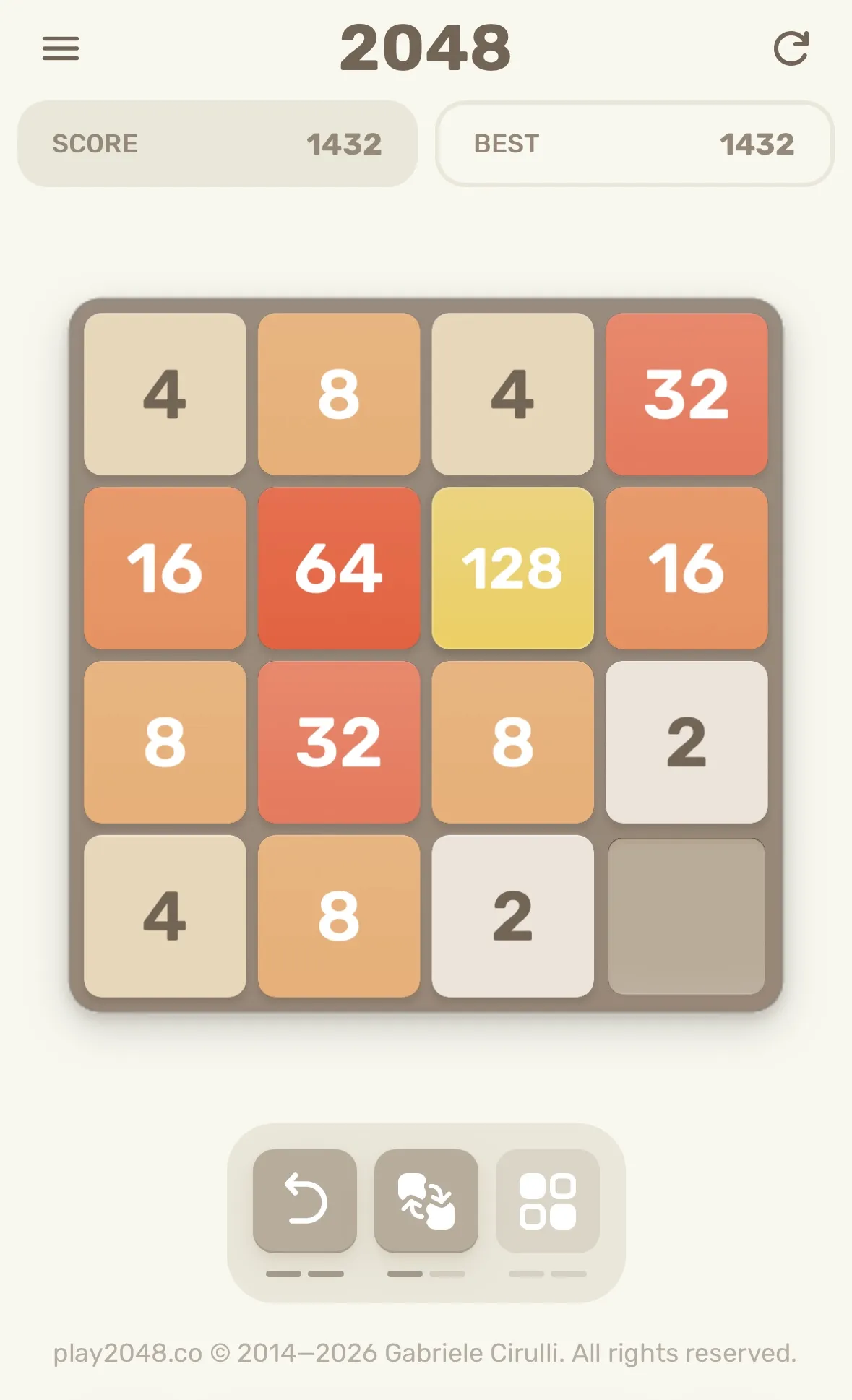
Screenshot: 2048, Gabriele Cirulli.
8. Nonograms / Picross
Developer: Various (Jupiter for Nintendo Picross series; Nonograms Katana on mobile) | Released: 1987 (concept); digital versions ongoing
Platforms: Nintendo DS/3DS/Switch (Picross), iOS, Android (Nonograms Katana)
Difficulty: Easy to very hard | Price: Varies ($1.99–$9.99 for premium apps; free with ads)
Where to play: App Store · Google Play
Number clues along rows and columns tell you which cells to fill in. Solve it correctly and a picture appears. The puzzles also go by Picross, Griddlers or Paint by Numbers. The picture at the end is what makes them hard to put down: you get a reward you can see, not just a solved grid.
The Picross series on Nintendo platforms (Picross S, Picross e) is the gold standard, with hundreds of puzzles and clean design. On mobile, Nonograms Katana offers thousands of free puzzles, plus a community that keeps adding its own.
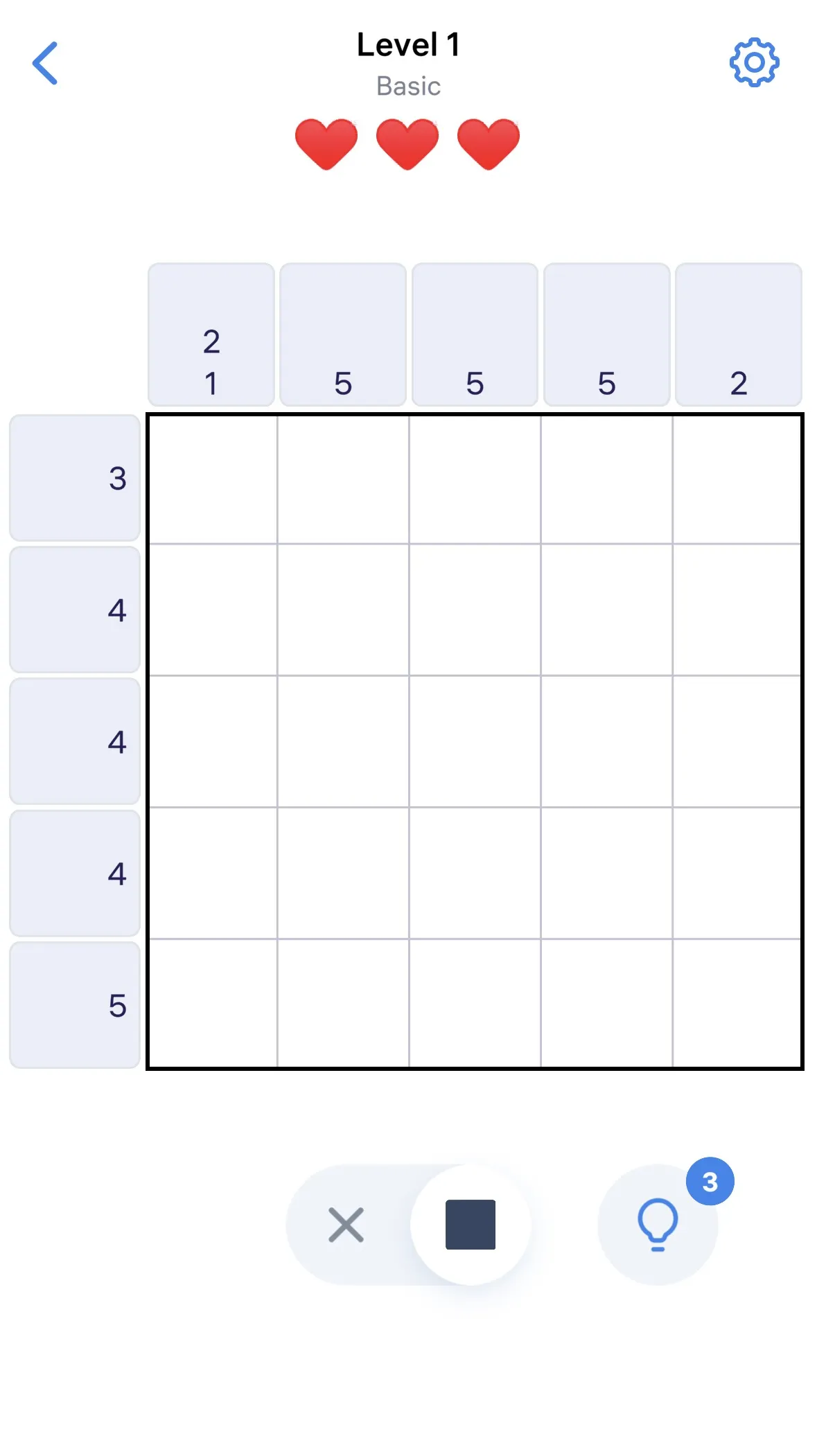
Screenshot: a nonogram puzzle.
9. Killer Sudoku
Developer: Various (Cracking the Cryptic, Sudoku.com, dedicated apps) | Released: Concept from 2005; digital versions ongoing
Platforms: iOS, Android, Web
Difficulty: Medium to very hard | Price: Free to $4.99 depending on app
Killer Sudoku applies the same row, column and box rules as classic sudoku but removes all given numbers. Instead, dotted cages show a sum, and the digits inside must add up to that total without repeating. You solve it by combining sudoku logic with arithmetic.
Killer Sudoku is the most popular sudoku variant after the classic. It is the next step for players who have finished with standard sudoku and want a fresh challenge without learning a whole new game. Cracking the Cryptic's YouTube channel has driven a lot of interest in it.
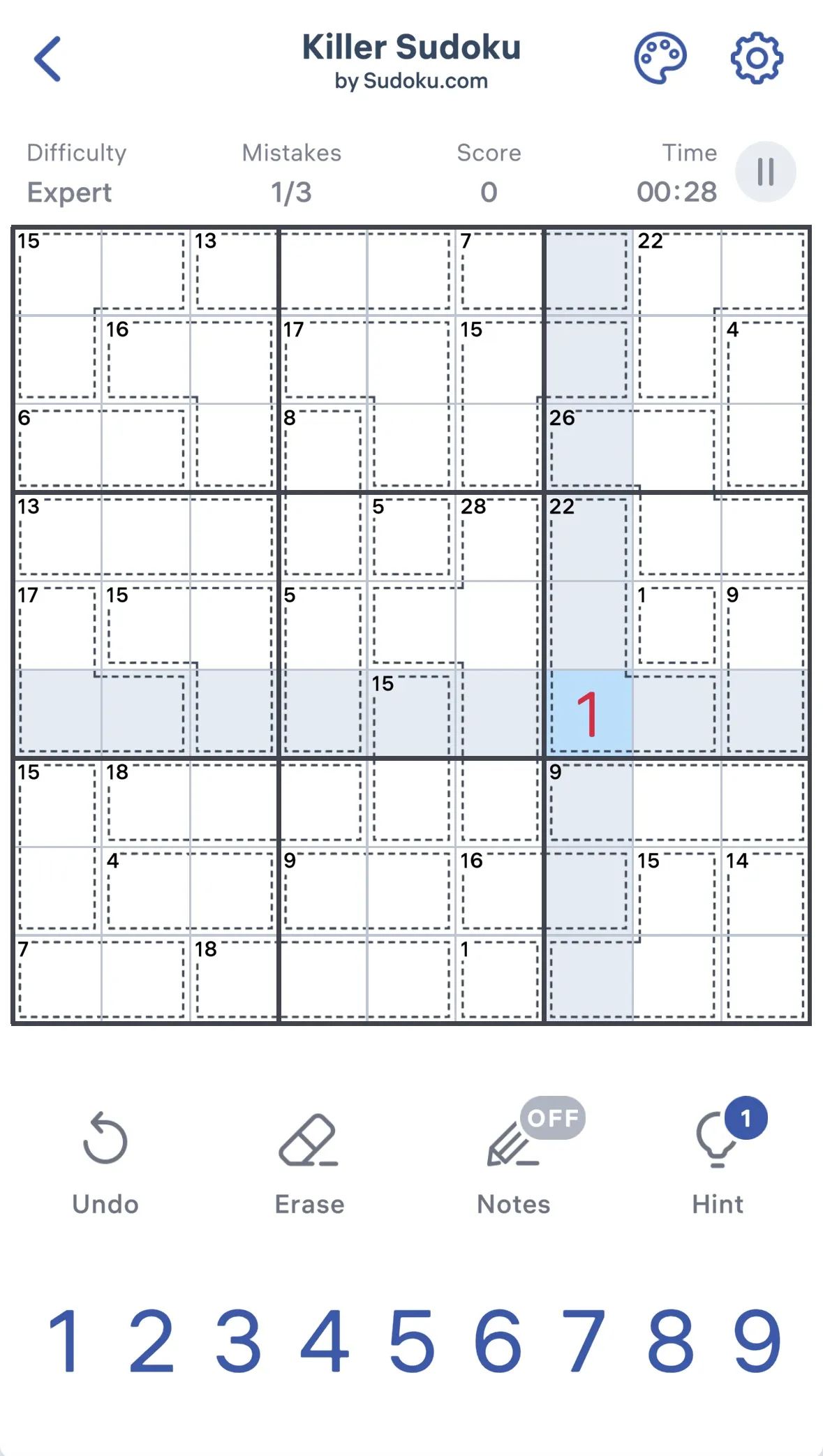
Screenshot: a killer sudoku grid.
10. Nerdle
Developer: Richard Mann and Marcus Tettmar | Released: January 2022
Platforms: Web (nerdlegame.com)
Difficulty: Moderate to hard | Price: Free
Where to play: Website · App Store · Google Play
Included on our Daily Word Games list too, Nerdle earns a spot here because it is a number puzzle. Guess a valid eight-character arithmetic equation in six attempts, with color-coded feedback on which numbers and operators are correct. If Wordle is for word people, Nerdle is for math people.
Teachers use it as a classroom warm-up. Multiple modes (Mini, Micro, Speed) add variety. It launched at the peak of the Wordle-variant wave and has held on to a loyal daily player base.
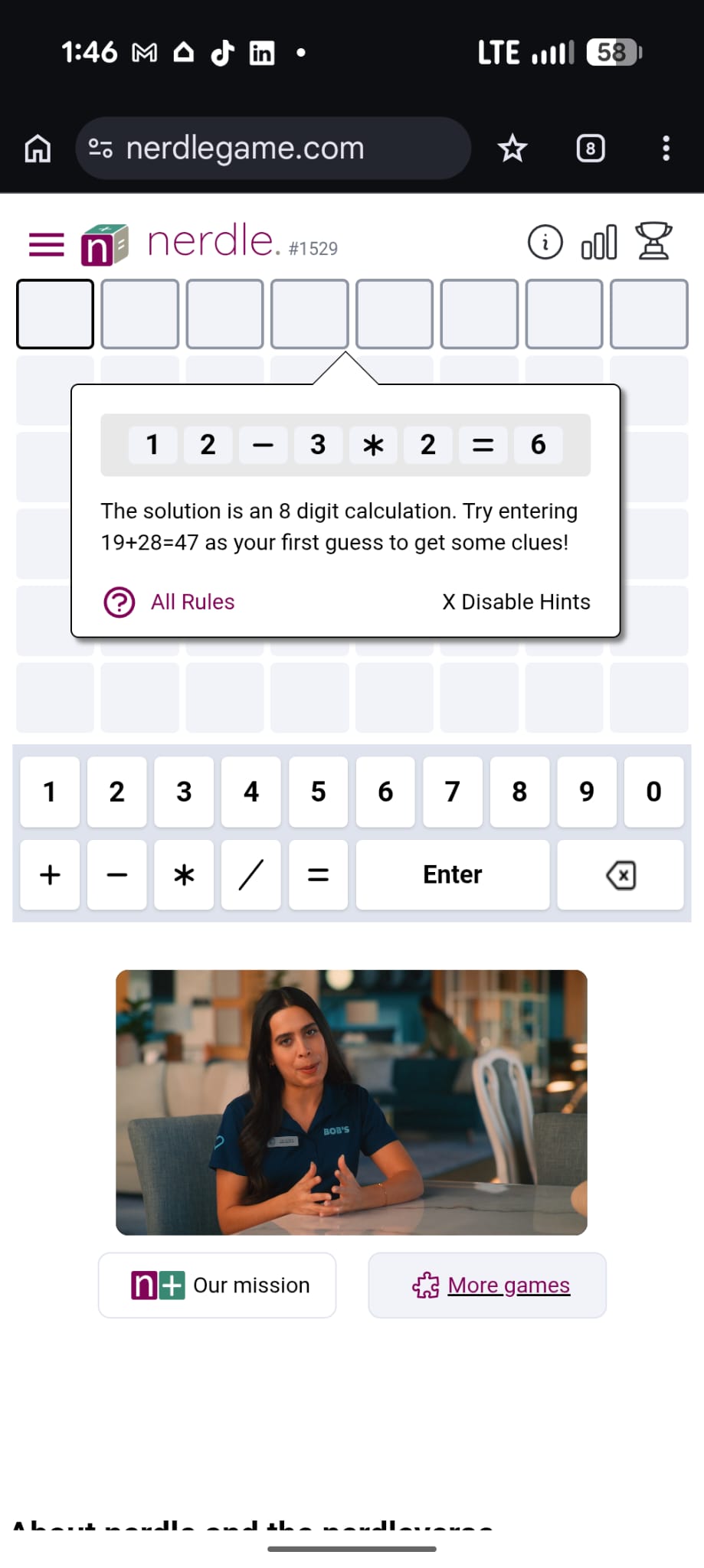
Screenshot: Nerdle, Richard Mann and Marcus Tettmar.
Quick Guide
| If you want... | Play... |
|---|---|
| The best sudoku app, period | Good Sudoku |
| No-frills daily sudoku | NYT Sudoku |
| Fiendishly hard variants | Cracking the Cryptic |
| The most popular free app | Sudoku.com |
| Sudoku + arithmetic | KenKen or Killer Sudoku |
| Addictive number sliding | Threes! (premium) or 2048 (free) |
| Logic puzzles that reveal pictures | Nonograms / Picross |
| Daily math challenge | Nerdle |
Enjoy logic puzzles? Try Pairdle, a daily word puzzle that plays more like Sudoku than Scrabble.
By Suzette Simons, Logic Loft Games
Related articles
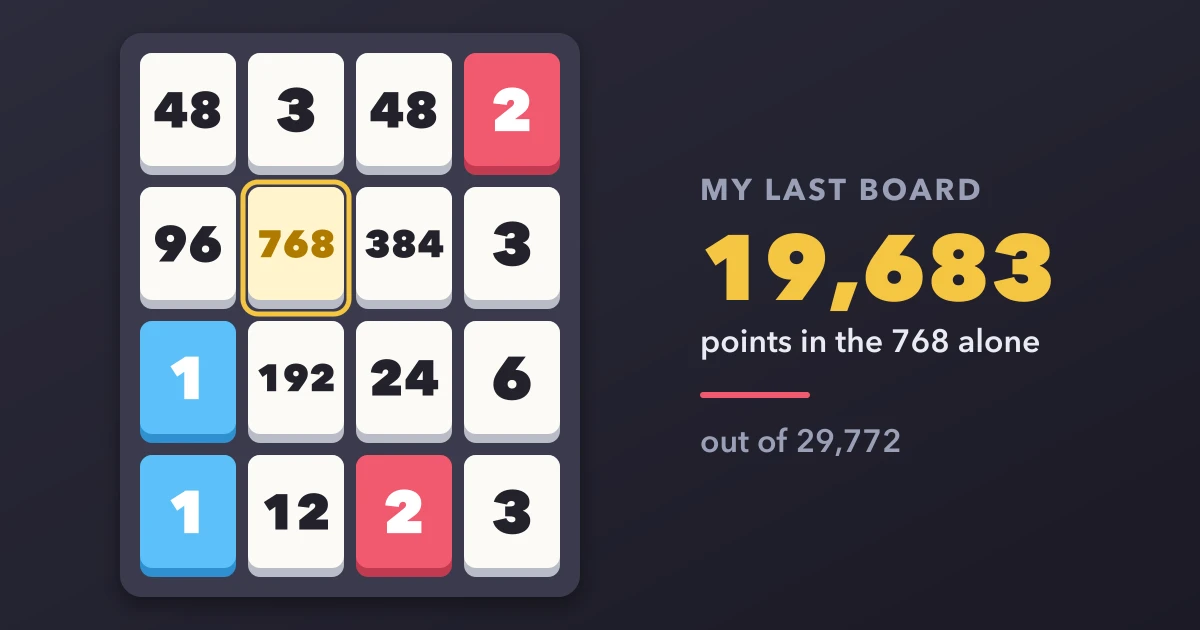
Four Years of Threes!: Why I Can't Get Past 1536
Four years, one 1536 card, and an all-time best of 69,222, of which a single card is 85%. The wall in Threes!, and why the game keeps me playing anyway.
Meowdoku: A Surprisingly Addictive Logic Puzzle
A colorful grid, nine hidden cats, three lives. Meowdoku looks hard at first glance, but the deduction chain that opens it up is pure Sudoku logic.
The 10 Best Trivia and Quiz Games in 2026
The 10 best trivia and quiz games you can play right now, from Sporcle to Jeopardy! to Trivia Crack, plus a 10-question quiz about trivia itself.