The Chronicle of Epic Words
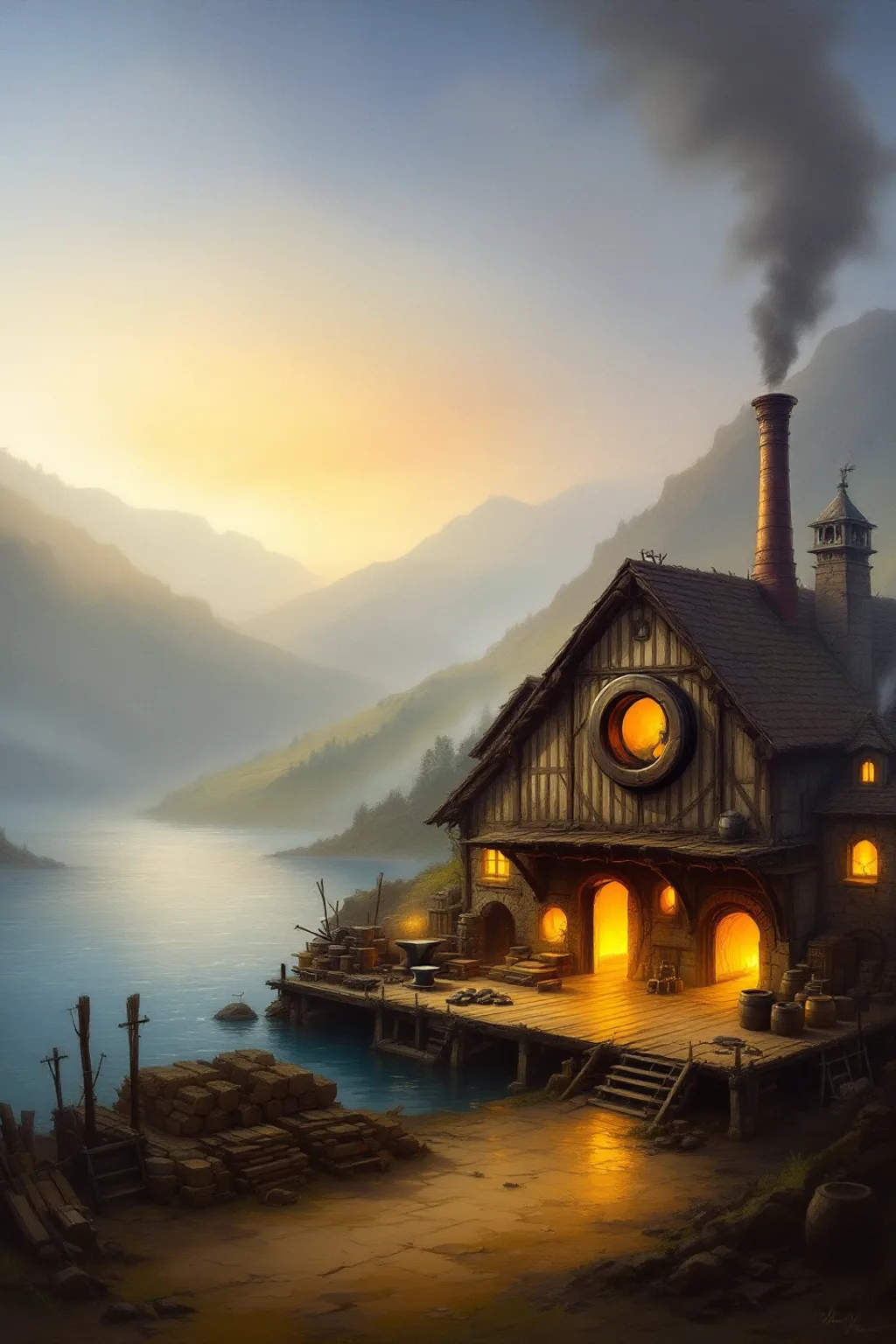
The Forge Wharf
Where a word struck in metal is meant to outlast any word written on paper.
At a glance
- Kingdom IX (The Word Forge)
The Forge Wharf smells of charcoal, iron filings, and the particular ambition of people who believe a word struck in metal will outlast any word written on paper. It is the quay and anvil-yard of Kingdom IX — the place where the river brings the ore in and carries the finished ironwork back out, and where, in between, the smiths of the Word Forge hammer letters into metal and dare them to wear away. Most of the vale traffics in words that fade: signs that lose their daylight, doors that weather their carvings down to nothing. The Wharf traffics in the opposite conviction. Here a word is a thing you can drop on your foot.
Stand in the yard at dawn and the whole quarter announces its logic to you at once. Above, Bellows Hollow exhales its perpetual breath down the hillside — a natural updraft the founding smiths were clever enough to build downwind of, so the hill feeds the coals for free. That breath comes up hardest beneath The Iron Vowel, where a wagon-wheel-sized iron O turns slowly on its mount like a letter searching for its word. Look closely and you'll see the O is not a pure circle: there's a small notch at the top, as though one letter of a longer word was all anyone here could ever lift. That, more than any signboard, tells you what kind of place this is — a Wharf that reaches for whole words and settles, honestly, for the part it can carry.
At the center of it all is the anvil, and at the anvil is Aldwyn the Blacksmith, a man you do not interrupt. He works iron the way the vale works everything else — slowly, without ceremony, and with the settled conviction that the material will eventually betray whatever flaw is hiding in it. His anvil is carved from a single block of meteoric iron that keeps a faint blue-grey sheen in the furnace-glow, older than the forge built around it. And propped behind him, long-handled and ash-pale, is the axe: the head dark with age except for one struck strip where a word has been hammered clean into the metal. It is the only blade, the smiths hold, that can fell the three-hundred-year Ironwood Ash out at the edge of The Cold Letter. Six axes shattered against that tree before this one; two men were wrong about it in ways that cost more than pride.
The Wharf is not only Aldwyn's. A young bellows-blower named Hal rests between shifts on a heap of anthracite sacks near the kiln doors, wiping soot from his eyes and grumbling to anyone who'll listen about the poor swamp-ore coming up from the lower valleys — more sand than iron these days, he says, and he isn't entirely wrong. Couriers pass through too, hauling finished work down to the water; it's on the Wharf's runs that Cody the Centaur Courier has been known to appear, cargo lashed and hooves loud on the quay-boards.
What the Wharf itself is built on, nobody has bothered to measure. Ask about the foundation and Aldwyn will tell you the forge sits on stone older than the forge — older than the wharf, probably — the way a man mentions a draft under a door he's decided not to investigate. Under everything here, holding it up, is something the smiths take on faith and never dig down to confirm. It suits the place. The Forge Wharf spends its days making words permanent and its nights standing, quietly, on one it has never once finished reading.
Where you'll find it
The Forge Wharf is the working heart of Kingdom IX (The Word Forge) — the loading quay and anvil-yard where the ironworks meets the river, and where you'll find Aldwyn the Blacksmith at his anvil before the day has fully committed to being morning. Climb the hillside path and you're in Bellows Hollow, the cleft whose draft feeds the coals; look up as you cross the yard and The Iron Vowel turns overhead, a wagon-wheel-sized iron 'O' hunting for the rest of its word. You'll know you've arrived by the smell — charcoal, iron filings, and ambition — long before you see the furnaces.