The Chronicle of Epic Words
Rhyme Wall
Three hundred years of scratched couplets, and it keeps the worst ones longest.
At a glance
- Kingdom XVII (The Verse Engine)
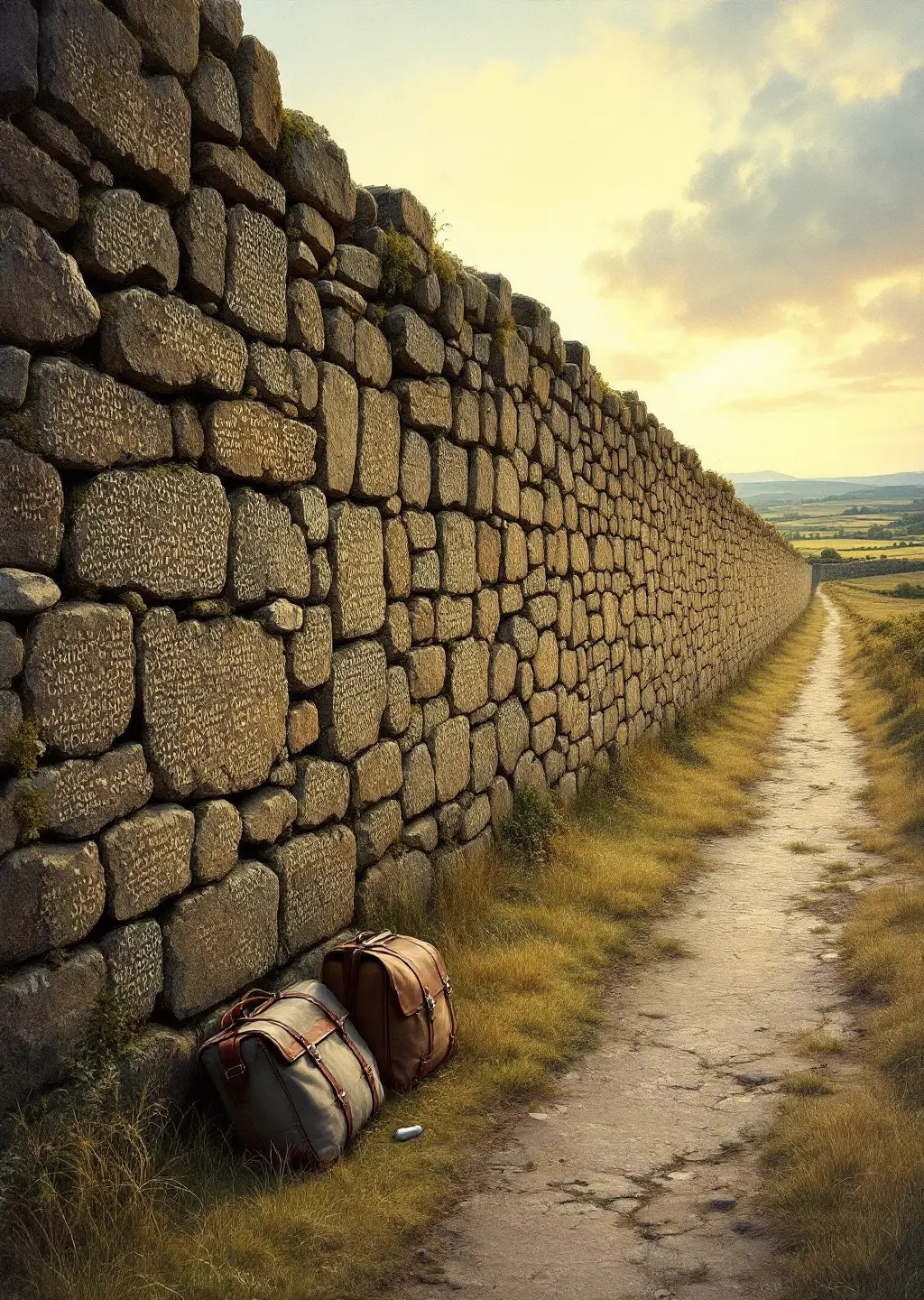
Every region in The Verse Engine is a joke about poetry that someone eventually took seriously, and Rhyme Wall is where the joke stops being funny. It is exactly what the name promises: a long stretch of stone, three hundred years deep in scratched-in couplets, where travelers have been leaving their lines since before anyone alive can account for the first of them. Most of the wall is what you'd expect — the cheerful, the drunken, the earnest, the awful. People stop, read a while, add their own, and move on lighter than they came.
Then there's the couplet nobody scratches over.
Somewhere along the face is a line eighty years old — the wall's most notorious, by common agreement — and the strange thing about it is not the words but the durability. Three hundred years of weather and idle chisels should have buried an eighty-year-old couplet under a hundred better ones by now. This one survives. Nobody erases it; nobody writes across it; nobody, when pressed, can quite say why not. It simply sits there, being bad, outlasting the lines that had every right to replace it. Scratched beneath it, in a hand nearly as old, someone left a riddle — I am verse without craft, rhyme without reason, and I have outlasted better lines out of sheer stubbornness — and the answer, once you have it, is the wall's whole thesis in a word: doggerel, bad on purpose or bad by accident, and either way apparently built to last.
That is the quiet unease of the place. The Verse Engine's other landmarks reward the good line — The Stressed Syllable crowns its verse-champions, Couplet Bridge makes you finish a rhyme or forfeit the toll. Rhyme Wall does the opposite. It is a monument to the lines that should have been forgotten and weren't, and standing in front of it long enough gives most people the same thought in the same order: the worst of what we write is the part that survives us. It troubles people. It is meant to.
Which is why, on the right afternoon, you might find Brindle working at the base of it — a satchel of small glass vials open at her feet, a brush in her hand, dabbing her fixing-ink across the older couplets to see which ones answer. Most of the wall ignores her politely. A few lines brighten the instant her brush touches them, like they'd been waiting. Her ink, she'll tell you without looking up, doesn't add anything; it holds down what's already there, so the words stop sliding off the stone. It is a refinement of a formula that used to be her teacher's, and she says so with the particular pride of an apprentice whose work has quietly outgrown the recipe it came from.
Rhyme Wall is the ideal place to test such a thing precisely because it has never thrown anything away. Three centuries of writing, faithfully kept — the good, the terrible, and the one couplet that has no business still being legible. When Brindle packs up as the light goes, she says a thing to herself that sounds less like an observation than a plan: if ink can be lifted, ink can be held down — somebody just has to be stubborn enough to figure out how, in the right order. Fitting, at a wall whose whole nature is stubbornness. It kept the worst line for eighty years out of nothing but refusal to let go. She intends to be more stubborn than the stone.
Read what's there. Add a line if you have one. Just know the wall keeps everything — and it is fondest, in its patient and unnerving way, of exactly the parts you'd most want it to forget.
Where you'll find it
Rhyme Wall stands at the far end of The Verse Engine, the last landmark on a road that runs through the region's other conceits — past The Meter Works, through Pentameter's five deliberate districts, past The Stressed Syllable's verse-contests, and over Couplet Bridge, where the tollgate charges you full fare if your rhyme doesn't land. Come the whole way and the Wall is what you arrive at: a long face of stone that has been collecting couplets for three centuries and shows no sign of stopping.