The Chronicle of Epic Words
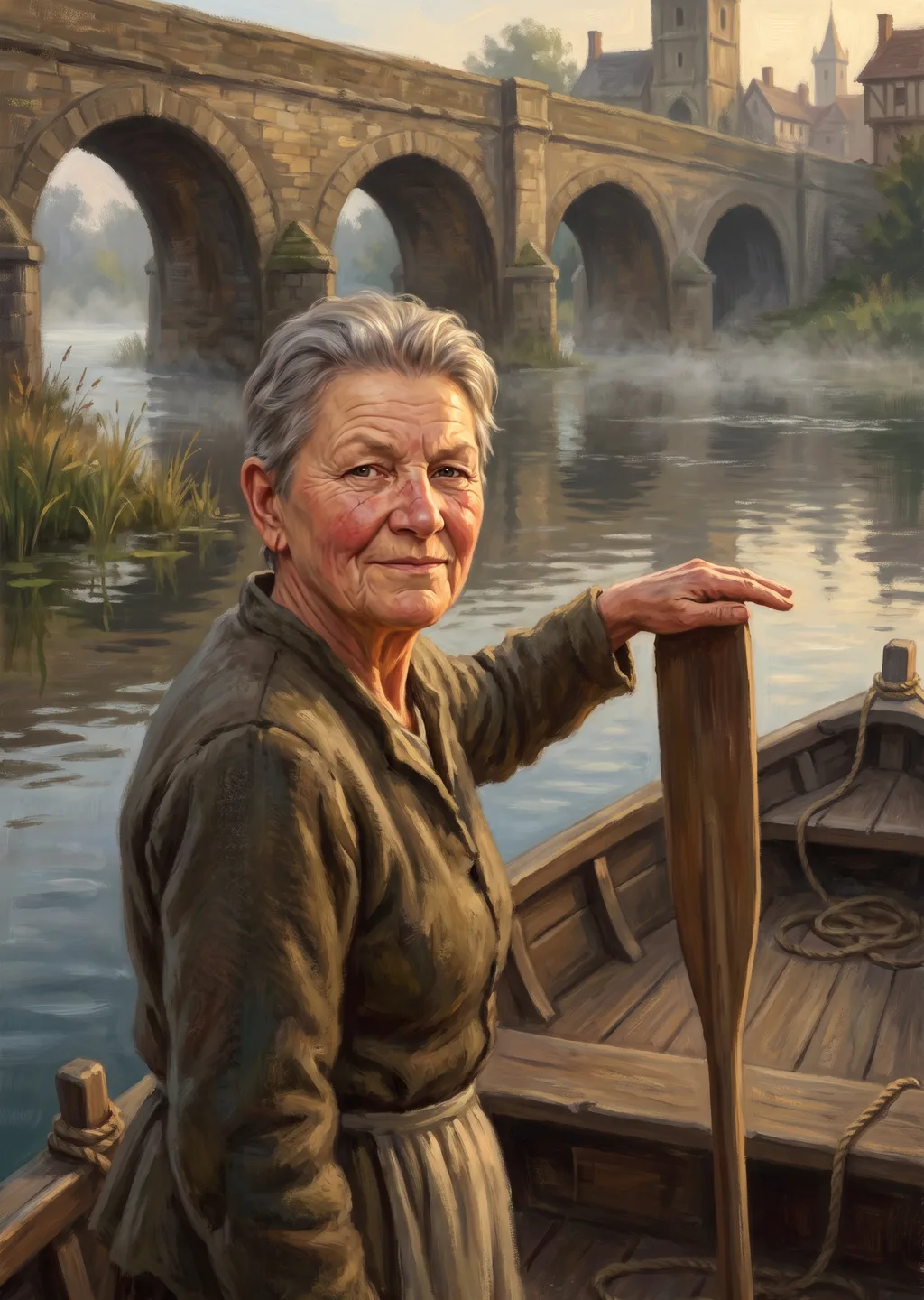
Bett, the River's Old Hand
A ferrywoman who takes her toll in true stories, and has never once run short.
At a glance
Old enough to have out-argued the river for thirty years. Young enough to still be surprised, occasionally, when it argues back.
- Home Four-Arch Ford
- Kingdom XII (The Vowel Crossing)
- Faction Common Folk · Ferry-keeper
- Ally The Ferryman
Bett does not want your coin. She will tell you this kindly, testing the current with the flat of an oar, in the tone of a woman who has turned down more silver than most people ever see and never once regretted it. The toll at Four-Arch Ford is a story — something true, something you haven't told anyone yet — and she will listen to it the way people listen who have heard ten thousand of the things and never, not once, grown tired of the shape they take. "Coin, I already have enough of," she says, poling off from the bank, and the four arches behind her ring in four different keys as the wind comes up, as if agreeing.
She is broad-shouldered and weathered in the specific way of someone who has spent thirty years arguing with a river and mostly won. A faded tattoo of crossed oars marks one forearm; the other carries an old rope-scar she won't explain unless you ask twice, and possibly not then. She worked the eastern fords for decades before she came west to Four-Arch this spring, and she has kept the crossing alone since the thaw — no ferry-hand, no relief, just Bett and the flatboat and a private, wordless agreement with the water that she hums under her breath while she works. It is not quite a tune. The arches seem to know it anyway.
What she trades in, more than passage, is knowing. Ferry-folk talk — slowly, and never to outsiders, but across the whole length of a kingdom's river they end up carrying the same small hoard of good stories between them, passed hand to hand at every ford like a coin that never wears out. So a traveler who mentions, offhand, some clever crossing he once talked his way over for free will find Bett laughing before he's done, because the man it cost tells that one fondly and she heard it seasons ago. There is no getting a fresh start with Bett. You cross her ford once as a stranger, and after that you are a story the river keeps.
She knew the Ferryman once — back on the eastern water, long before either of them came to the crossings they keep now, and long before he became the thing strangers lower their voices about. She is among the very last who ever worked a ford beside him, and she carries none of the hush the subject usually earns. To Bett he is simply an old friend who keeps his crossing his own way, settles his debts more reliably than most of the living do, and turns up, secondhand, in more of her stories than he probably realizes. When Yarrow, the Hedge Witch comes poling alongside mid-river every few years to collect on what he owes — paid, as it always is, not in silver he no longer has but in knowledge of every crossing between the ford and the sea — Bett keeps the boat straight and narrates the whole exchange for whoever's aboard, dry as a towpath in August. "She does this," she'll say. "He always pays. It's the living who forget."
She keeps well clear of the louder business up the bank. At The Open Mouth — an inn whose door has not shut in living memory — three wardship delegations have spent the better part of a season arguing over a bronze relic-piece the ferry-folk dredged from her ford, a fitted thing that matches no banner anyone can name. Bett will not be drawn into whose it is. And when Iliana convenes the Moot up at the barrow-hall to read out oaths in the flat voice of a woman who has believed roughly two of them, Bett stays at the water, because someone has to, and because a crossing does not keep itself while the important people decide what verb to swear.
That, in the end, is the whole of her: a woman at a ford, taking her toll in the one currency that never runs short, keeping her stretch of river open one true story at a time. Pay her honestly and she'll wave you aboard. Try to short her, and the arches will tell her before you reach the far bank. They always do.
Tales & Rumors
She worked the eastern fords for the better part of her life before she took up Four-Arch Ford this spring, alone, poling a flatboat past four stone arches the locals swear are each tuned to a different pitch. She could ask coin for the crossing. She doesn't. 'Toll's a story,' she'll tell you, testing the current with an oar — 'same as it's always been down here' — and she means the whole river when she says it, all the crossings and all the years she has kept one.
Ferry-folk talk. Not in any hurry, and not to outsiders, but across an entire kingdom's worth of river they somehow all end up knowing the same handful of good stories — so mention to Bett the time you talked your way over some other crossing without paying, and she'll laugh before you've finished the sentence, because she has already heard that one, fondly, from the man it cost. It is faintly alarming, the reach of it. She finds your alarm delightful.
She knew the Ferryman back on the eastern water, long before he came to keep a crossing of his own — kept, now, differently than the living keep theirs. She is one of the last who worked a ford beside him, and she speaks of him the way you speak of an old and slightly exasperating friend: plainly, warmly, and without a scrap of the awe that strangers bring to the subject. When his name comes up she goes carefully quiet, then keeps poling. Some debts, she'll tell you, a body settles in silence.
How They Measure Up
A ferrywoman keeps a tally too — though hers is all in stories, and she has never once written one down.
Poles a loaded flatboat against a current that has opinions, and hauls her own gear besides. There is no ferry-hand. There is Bett.
Reads a current with the flat of an oar the way other people read a face, and finds the seam in it every time. Ask her how and she'll say 'practice,' which is not an answer.
Thirty years on the water, in every weather the river could think to invent, and she is still here at the tiller looking mildly unimpressed by the weather. That's not toughness. That's a grudge, kept warm.
Never learned her letters past what a manifest needs, and says so without embarrassment. Knows the river's whole vocabulary anyway, none of it written down.
Has heard ten thousand true stories and never once gotten bored of the form. Knows, to the word, which questions to let a passenger keep.
Terrible at accepting silver, excellent at making a stranger feel he's arrived somewhere. People confess things to Bett they meant to take to the grave, and leave the ford lighter for it.
The Story-Toll — she takes payment the old way, the way every crossing down here has always taken it: not silver, but something true you haven't told anyone yet. It is a warmer toll than coin, and a shrewder one — you cross her ford exactly once as a stranger, and after that she knows a thing about you that the river's whole length of ferry-folk will, in time, come to know too.
Where you'll meet her
You'll find Bett at Four-Arch Ford, in Kingdom XII (The Vowel Crossing) — one woman, one flatboat, and four stone arches that answer the wind in four different keys. She'll be testing the current with an oar as you arrive, in no particular hurry, and she'll wave off your coin before you've dug for it: the toll here is a true story, something you haven't told anyone yet, your pick which. Pay it and she poles off from the bank, unbothered and companionable. Cross at the wrong moment and you may find Yarrow, the Hedge Witch drawing alongside mid-river in a patched green cloak, come to collect on an old and thoroughly deserved account — a scene Bett will narrate for you, dry as a good stretch of towpath, while she keeps the boat straight.