
Every Scrabble player knows the misery of drawing AEIOUEA — a rack so vowel-clogged you can barely make a word, let alone a good one. A vowel glut is one of the most common ways a turn (and a rack) goes to waste. The fix is a small vocabulary of vowel-heavy words that let you offload three, four, even five vowels in a single play. Keep these handy and a "dead" rack becomes a fresh start.
We build word games for a living, so we have deep sympathy for the all-vowel rack — and a list to fix it.
Why you keep getting stuck with vowels
It isn't bad luck — it's the bag. A standard Scrabble set has 42 vowel tiles out of 100: twelve E's, nine A's, nine I's, eight O's, and four U's (plus the two blanks). That's a lot of vowels in circulation, so drawing four or five at once is statistically common, not unusual. Knowing that helps you stop treating a vowel glut as a disaster and start treating it as a routine situation you have a plan for. The players who groan and waste the turn are the ones without a plan; the players who shrug and dump three vowels are the ones who prepared.
Why a vowel glut is a problem
You generally want about three vowels and four consonants to keep your options open (the balance our how to play Scrabble guide recommends). Too many vowels and you can't form much; worse, you're stuck holding them while your opponent scores. The goal isn't always to score big with a vowel-heavy word — it's to shed the excess vowels so your next draw rebalances the rack. A modest play that dumps four vowels is often better than a flashy one that keeps you clogged.
Two-letter vowel dumps
The fastest relief comes from the little words (all on our 2-letter Scrabble words list):
- AA (rough lava), AE, AI (a three-toed sloth), OE (a whirlwind), OI, OU — each sheds one or two vowels and can be played parallel to existing words for extra value.
Three- and four-letter vowel-heavy words
- EAU (a river), AIA, EUOI, OBE
- AREA, IDEA, AURA, EERIE, OBOE, AIDE, OGEE, AJEE, EAUX
- AECIA, AERIE, AIOLI, AUDIO, AUREI, COOEE, LOOIE, MIAOU, OIDIA, OORIE, OUIJA, ZOEAE
Many of these look strange because vowel-heavy words are strange — but most are valid in standard word lists. (As always, agree on TWL vs. Collins before the game.)
The big guns: five-plus vowels
When your rack is truly drowning, these heavy-hitters dump a pile of vowels at once:
- AERIE / EYRIE (an eagle's nest)
- MIAOUED — five vowels in a seven-letter word (the past tense of "miaou")
- EUOUAE — a musical term famous as the longest all-vowel word in English (Collins)
- SEQUOIA — five vowels in one elegant word
- AUREOLAE (plural of aureola, a halo) — eight letters, six vowels, built around a vowel cluster
How to actually use these
You won't memorize this whole list, and you don't need to. Instead:
- Recognize the situation. The moment your rack has five or more vowels, switch goals from "score" to "shed."
- Reach for a two-letter dump first. AA, AE, AI, OE, OI played parallel to a word score points and clear vowels — the best of both.
- Remember the exchange option. If you can't make a decent vowel play, you can swap tiles (forfeiting your score that turn). Dumping four vowels back into the bag for fresh tiles is sometimes the strongest move on the board.
- Keep one or two vowels. Don't over-correct into an all-consonant rack — that's just the opposite problem, and consonant gluts are even harder to play out of. Shed only the surplus and aim back toward that 3-vowel, 4-consonant balance.
A worked example
Say your rack is A, E, I, O, U, R, T — five vowels, two consonants, a classic clog. Don't despair: scan for a vowel-rich anchor. AERATE isn't possible (one A), but you can spot OURIE, AUDIO-style stems, or simply play a parallel OE / AI to shed two vowels and bank a few points while you wait for consonants. Even better, if there's an open lane, OUTLIER-type words (here you'd need an L) show how close a "bad" rack often is to a real word once one consonant arrives. The lesson: a vowel-heavy rack is rarely truly stuck — it's one good consonant away from a strong play, so shed the surplus and set up your next draw.
The all-vowel rack feels like bad luck, but with these words it's just a speed bump. Recognize it, shed the excess, and rebalance. If you also tend to get stuck with the dreaded Q, our words with Q but no U guide is the companion piece — and for the daily word workout that keeps your letter-eye sharp, there's always Pairdle.
Related articles

Most Common Prefixes and Suffixes in English
Prefixes and suffixes are the building blocks of English — and a secret weapon in word games. Here are the most common ones and how to use them.

How to Play Spelling Bee: Rules, Scoring & Tips
The honeycomb word game: make words from 7 letters, always using the center one. Here are the rules, how scoring and pangrams work, and tips to reach Genius.
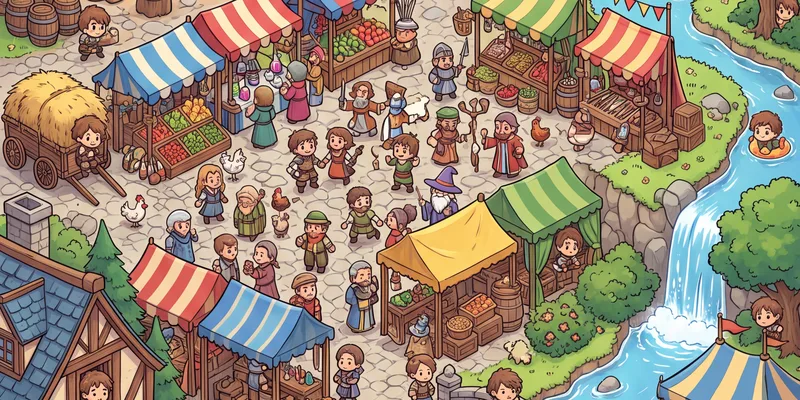
Where's Epic Words? A Hidden Object Puzzle You Can Play Right Here
We hid the Epic Words hero twenty-three times in one crowded medieval village. Scroll the scene, tap him when you spot him, and the answers are one button away.