
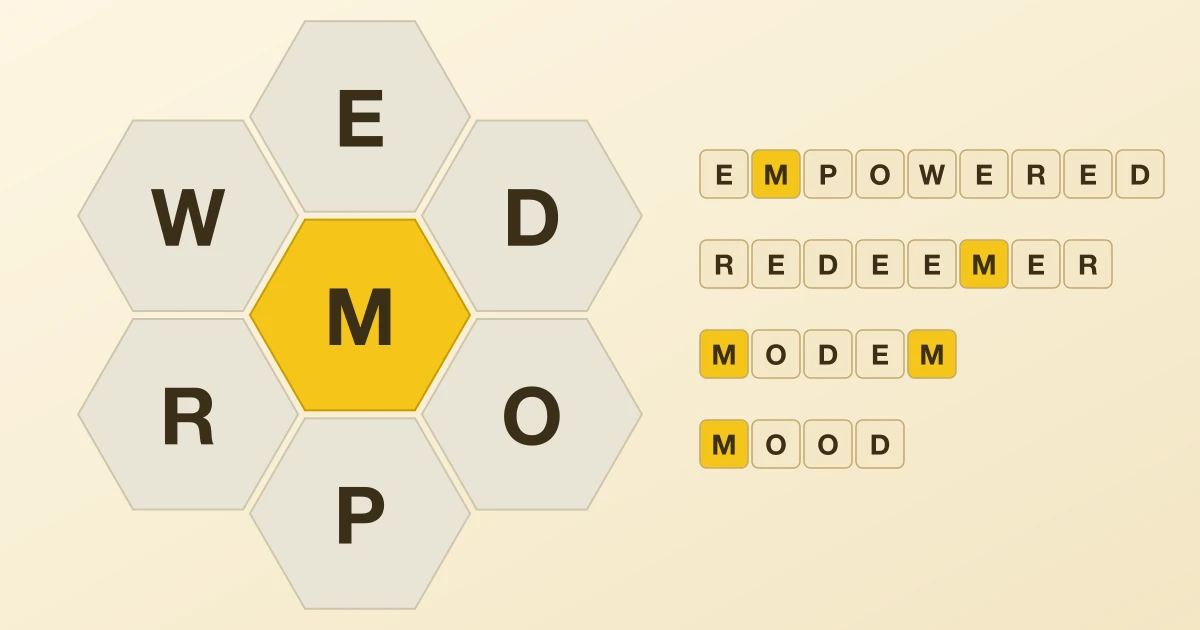
Spelling Bee gives you seven letters in a honeycomb and asks for as many words as you can make from them. The rules fit in four lines. Getting to Genius takes a method, so this page shows one on a real board: a puzzle we built ourselves, solved step by step and scored point by point. After that come numbers from 55,818 puzzles we made from the same word list, which tell you what to expect from a set of letters before you type a single word.
The rules
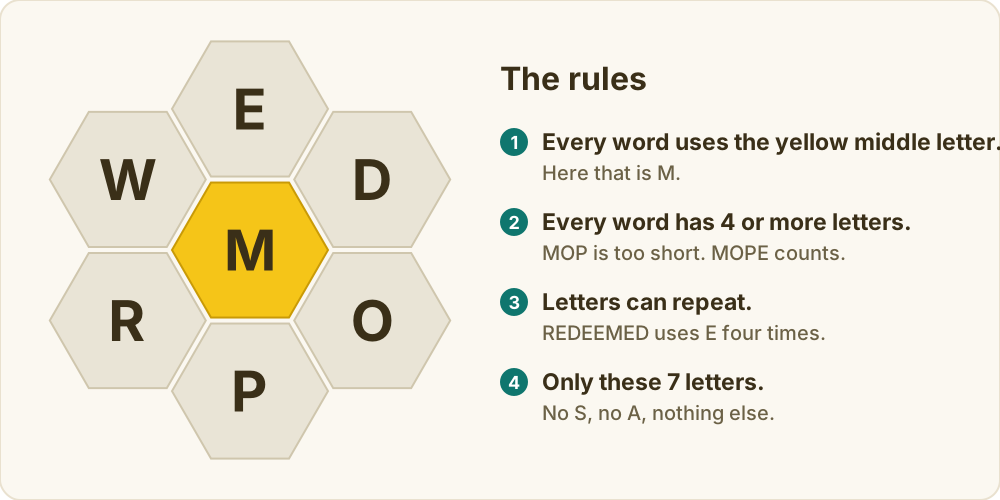
The New York Times runs the best known version. The "How to play" panel on its Spelling Bee page gives these rules (we read it on 25 September 2026):
- Words must contain at least 4 letters.
- Words must include the center letter.
- The word list leaves out words that are obscure, hyphenated or proper nouns, and it has no swear words.
- Letters can be used more than once.
In the hive above the middle letter is M. MOP is too short. MOPE counts. POWER uses only hive letters but has no M, so it scores nothing. REDEEMED is fine even though the hive holds one E, because a letter can be used as often as you like.
How scoring works
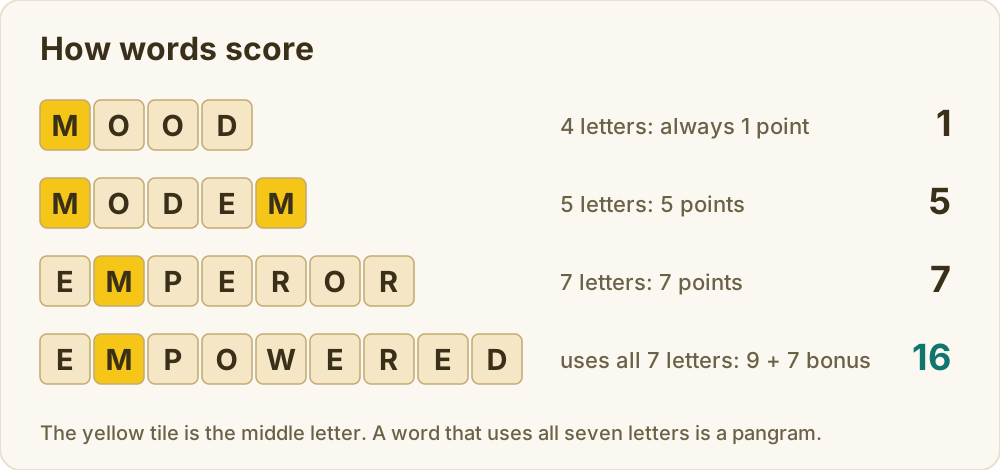
The same panel sets the points:
- A 4-letter word is worth 1 point.
- A longer word earns 1 point per letter, so a 5-letter word is worth 5 and an 8-letter word is worth 8.
- Every puzzle has at least one pangram, a word that uses all seven letters. A pangram gets 7 extra points.
Look at the jump between four and five letters. MOOD is worth 1 point and MODEM is worth 5. EMPOWERED uses every letter in the hive, so it scores 9 for its length plus the 7 point bonus, 16 in all.
Your rank is a share of all the points the day's word list holds. The rank table in the game's page code lists the shares: Good Start 2%, Moving Up 5%, Good 8%, Solid 15%, Nice 25%, Great 40%, Amazing 50%, Genius 70%, and Queen Bee, which means finding every word, at 100%. So Genius is not a fixed score. Letters that make lots of long words set a high Genius line. Letters that make few words set a low one.
Our puzzle: D E M O P R W, with M in the middle
This is not a NYT puzzle. We built it from ENABLE, a free list of 172,823 English words used by many word games, with offensive words taken out. We wanted seven letters with exactly one pangram and an ordinary number of answers. D E M O P R W with M in the middle has 79 answers and one pangram. Out of the 55,818 puzzles further down, 46 in 100 have fewer answers than this one, so it sits near the middle.
One warning before the numbers. NYT's word list is picked by hand and is smaller than ENABLE. ENABLE takes rare words like EMEER, MOME, POMMEE and PODOMERE that NYT would most likely reject, so our 79 is more than NYT would take for the same letters. To get a feel for a smaller list, we also kept only the answers that show up in the 100,000 most used words of a large count of web text. That leaves 44 words. Treat it as rough: it keeps MORRO and OMER and drops MOPE, which most people know.
Step 1: check which endings the letters can spell
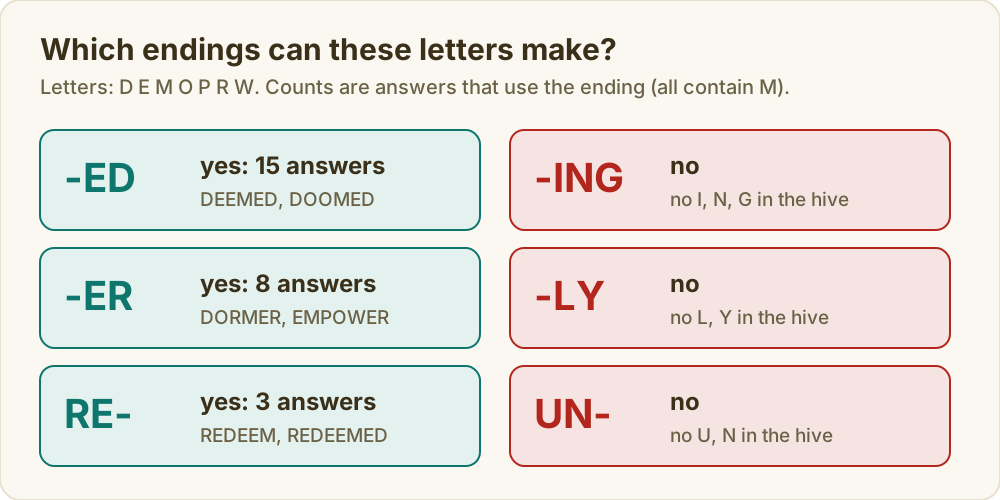
Before you hunt, spend five seconds on which common endings and beginnings the seven letters allow. It tells you where the long words will be.
This hive has D, E and R, so -ED works, -ER works and RE- works. It has no I, N or G, so there is no -ING at all. There is no L or Y for -LY and no U or N for UN-. In ENABLE, 15 of the 79 answers end in ED, 8 end in ER and 3 start with RE. That -ED group is a big slice of the 37 answers with six letters or more.
Try the same check on every new puzzle. When a hive has I, N and G, test -ING on every word you find. When it does not, you can stop thinking about -ING. Our list of common prefixes and suffixes has more endings worth testing.
Step 2: hunt for the pangram
The pangram is worth the most, and finding it early often shows you a family of other words. Start with the awkward letters, here W and P, because the pangram has to hold both. Words with a W from this hive include WORM, MOWER and MEOW. P and W sit together in POWER, which uses five of the seven letters in one go. The missing two are M and D. Put M in front and ED on the end: EMPOWERED.
That habit of pulling a known chunk out and building around it works on anagrams too, and our count of which letter sets hold the most words points the same way: letters like E, R and A make the most words.
Most puzzles have only one pangram to find. Of the 7,974 letter sets in our batch, 5,101 have exactly one pangram in ENABLE, 1,488 have two and 1,385 have three or more.
Step 3: grow each word into a family
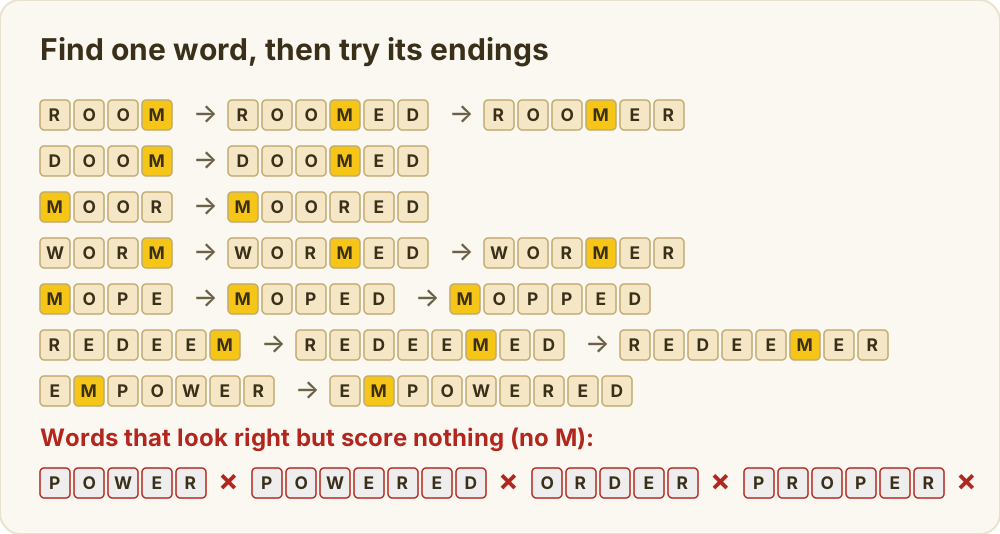
Every word you find is a chance for two or three more. Once ROOM goes in, try ROOMED and ROOMER. WORM gives WORMED and WORMER. MOPE gives MOPED, and with a doubled P, MOPPED. REDEEM gives REDEEMED and REDEEMER. Each ending you already checked in step 1 is a test to run on every new word.
The bottom row of the figure shows the trap in this puzzle. POWER, ORDER and PROPER are real words made only from hive letters, and none of them has an M. EMPOWER counts. POWER does not.
Step 4: remember letters can repeat
Of our 79 answers, 56 use at least one letter twice or more. MEMO, POMPOM, WORMWOOD and REDEEMED, which uses E four times, are all fair. If you read the hive as seven tiles that can each be used once, you miss most of the puzzle. Say the words out loud with a doubled letter: MOOD, DOOM, ROOM, MOOR.
Scoring our puzzle
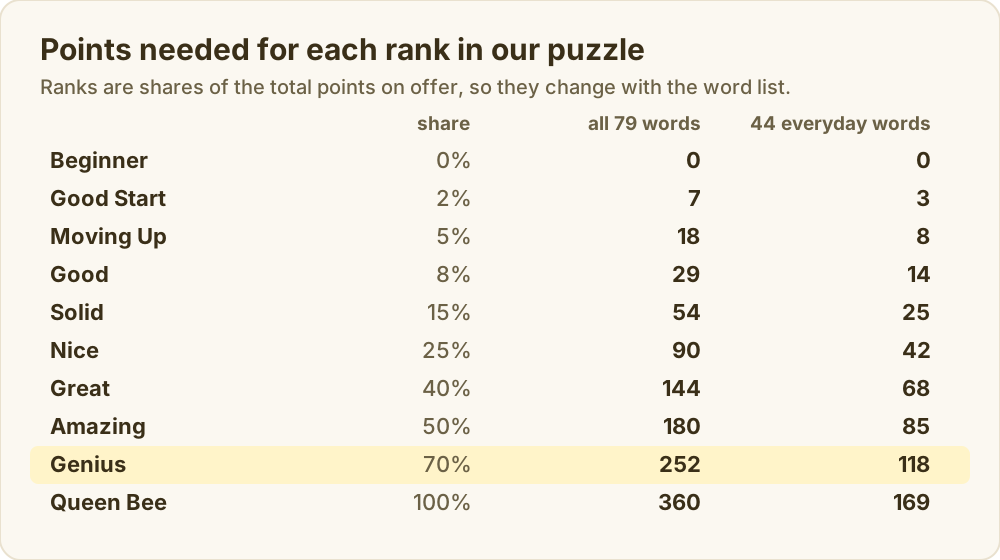
All 79 ENABLE answers add up to 360 points, so Genius needs 252. Here is where those points come from:
| Word length | Words | Points |
|---|---|---|
| 4 letters | 26 | 26 |
| 5 letters | 16 | 80 |
| 6 letters or more | 37 | 254 |
| All | 79 | 360 |
The 26 four-letter words together are worth 26 points. EMPOWERED alone is worth 16. The 37 words of six letters or more carry 254 points, enough for Genius (252) on their own. So when you are stuck a little short of the next rank, stop typing four-letter words and look for length.
With the smaller everyday list the puzzle is worth 169 points and Genius needs 118. The ranks are shares, so a smaller list lowers the Genius line with it.
Show all 79 answers (ENABLE list, shortest first)
What 55,818 puzzles say about the middle letter
We took every set of seven different letters that spells at least one pangram in ENABLE. We left S out, because an S turns so many words into a second word by adding a plural. That gave 7,974 letter sets. Any of the seven letters can go in the middle, so that is 55,818 puzzles, and we counted the answers in each one.
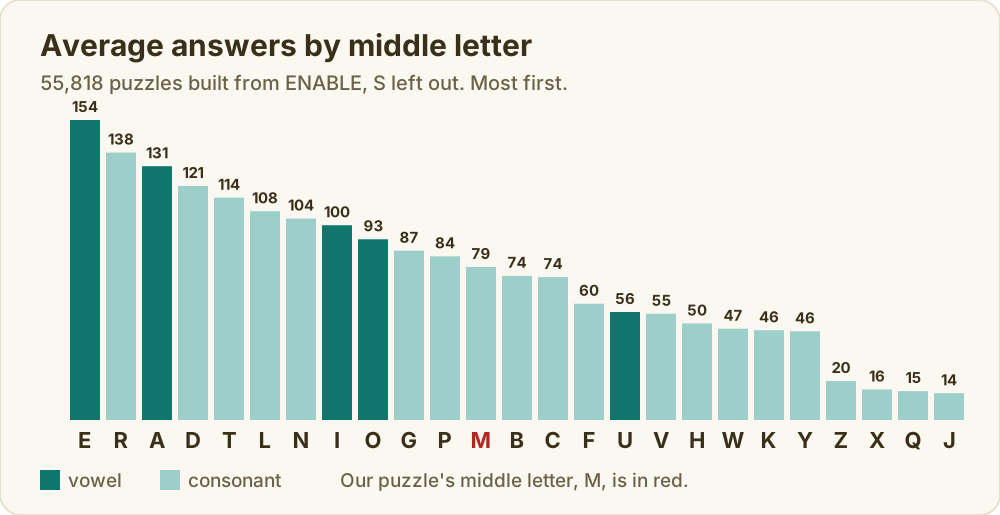
The middle letter matters a lot. With E in the middle, a puzzle averages 154 answers. R averages 138 and A 131. At the other end, J averages 14, Q 15, X 16 and Z 20. U is the weakest vowel at 56. M, our middle letter, averages 79, right where our puzzle landed.
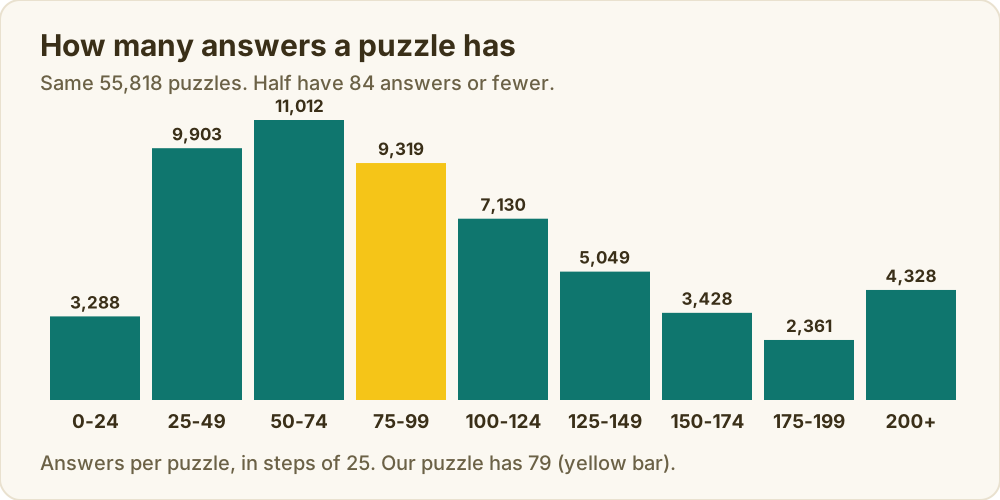
The counts spread wide. The middle puzzle has 84 answers. One puzzle in ten has 31 or fewer, and one in ten has 185 or more. 1,991 of them have fewer than 20.
NYT's own counts will be lower than these, since its list is smaller. The pattern should still hold, because it comes from how many English words contain each letter. Use it to set your goal. A rare middle letter like X or J means a short list, so every word you find is a big share of the total. A middle E or R means a long list, so Genius asks for a lot of long words and Queen Bee is a long day.
Mistakes we see on this board
- Typing POWER, ORDER or PROPER. They look right and have no M.
- Trying three-letter words like MOP, MOW or MOO. Nothing under four letters scores.
- Filling up on four-letter words. Here all 26 of them are worth 26 points out of 360.
- Using each letter once. Most of the answers repeat a letter.
- Checking for -ING in a hive with no G. Do the endings check first and skip what cannot exist.
If you like the find-every-word feeling, Boggle asks for the same skill on a grid of dice. For games that build spelling and word knowledge in other ways, see our roundup of the best spelling and vocabulary games.
Related articles
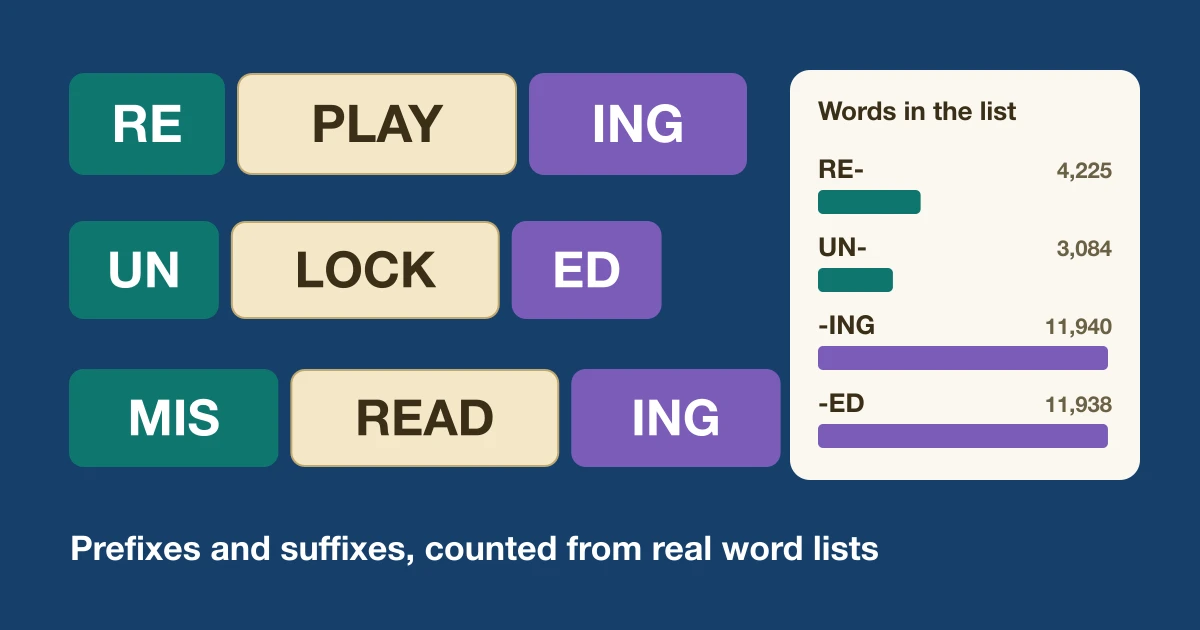
Most Common Prefixes and Suffixes, Counted for Word Games
We counted prefixes and suffixes in a 172,823-word game list and in real Wordle and Pairdle answers. The top 10 of each, and how to use them in play.
The 10 Best Spelling and Vocabulary Games in 2026
From NYT Spelling Bee to classic spelling tests gone digital, these are the 10 best games for building vocabulary and sharpening your spelling.
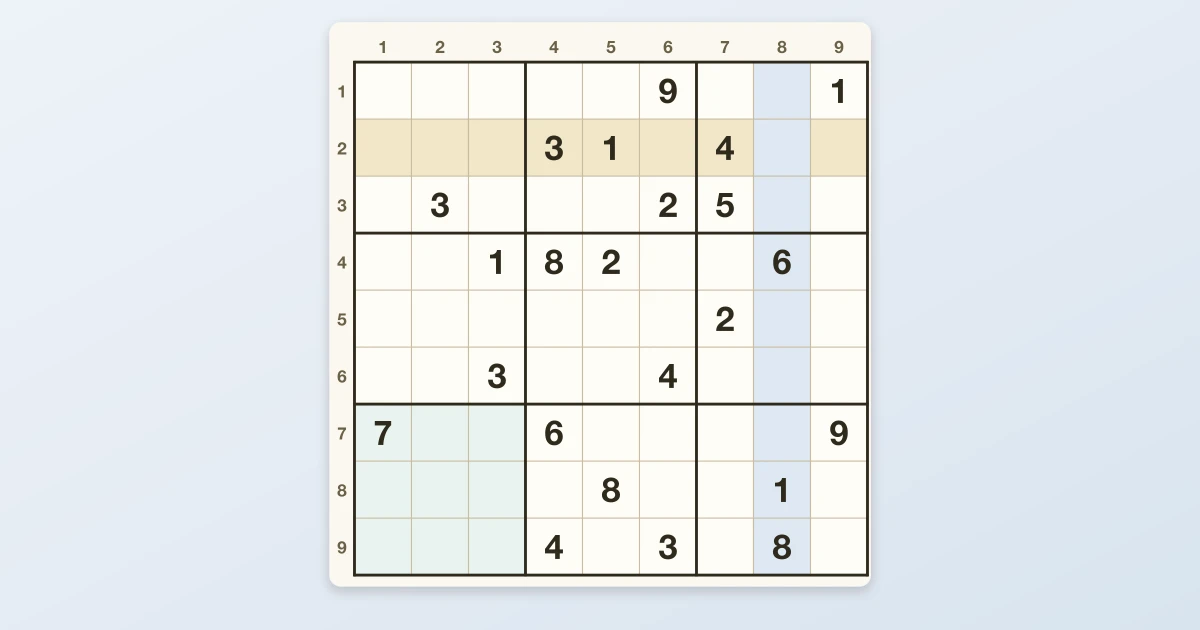
How to Play Sudoku: A Complete Beginner's Guide
New to Sudoku? Learn the one rule behind the game, how to read the grid, and the beginner techniques that take you from stuck to solved. No math required.