
The people who finish crosswords are not the people who know the most words. They are the people who know where to start, and who let the grid do most of the work. This page shows the method on a real puzzle, one pass at a time, and then puts numbers on why it works.
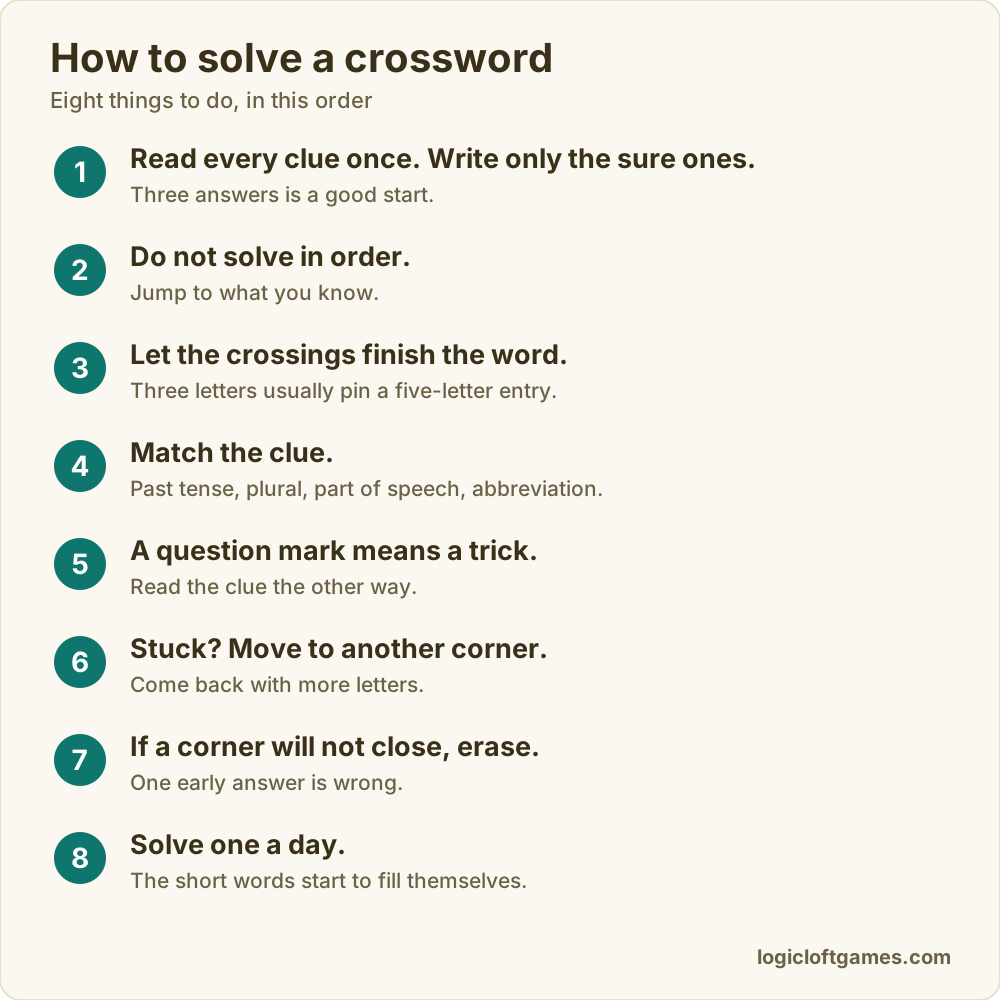
That card is the whole method. Save it, print it, send it to whoever you solve with. The rest of this page shows each step happening.
How a crossword works
A crossword is a grid of white and black squares. The white squares form words that run across and down, and each word has a numbered clue. Every white square belongs to two words at once, one across and one down. That is the whole trick of the puzzle. Each letter you write is also a letter in a second word you have not solved yet.
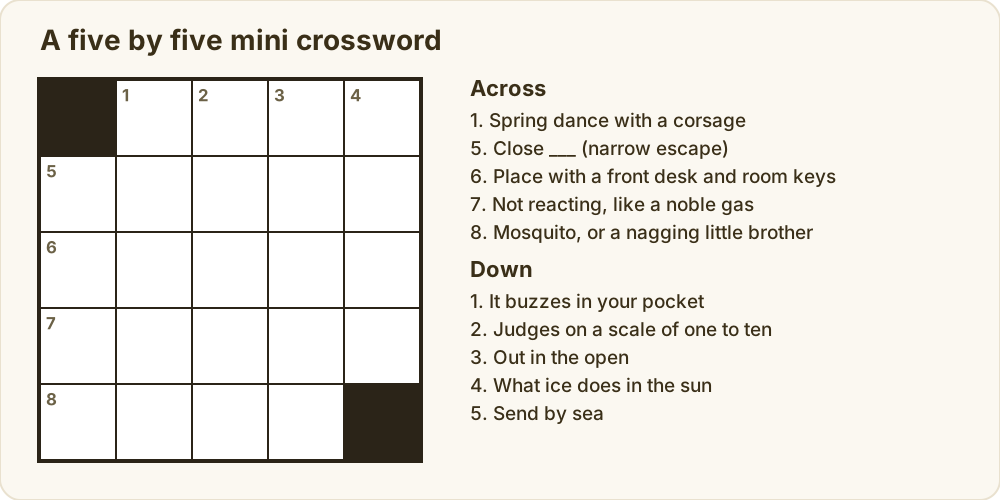
Here is a five by five mini with ten clues. Small, but it has everything a big puzzle has.
Pass one: write only what you are sure of
Do not start at 1 Across. Read all ten clues once and write in only the answers you are certain of. In this puzzle that is 5 Across (Close ___, narrow escape, so SHAVE), 1 Down (it buzzes in your pocket, PHONE) and 4 Down (what ice does in the sun, MELT).
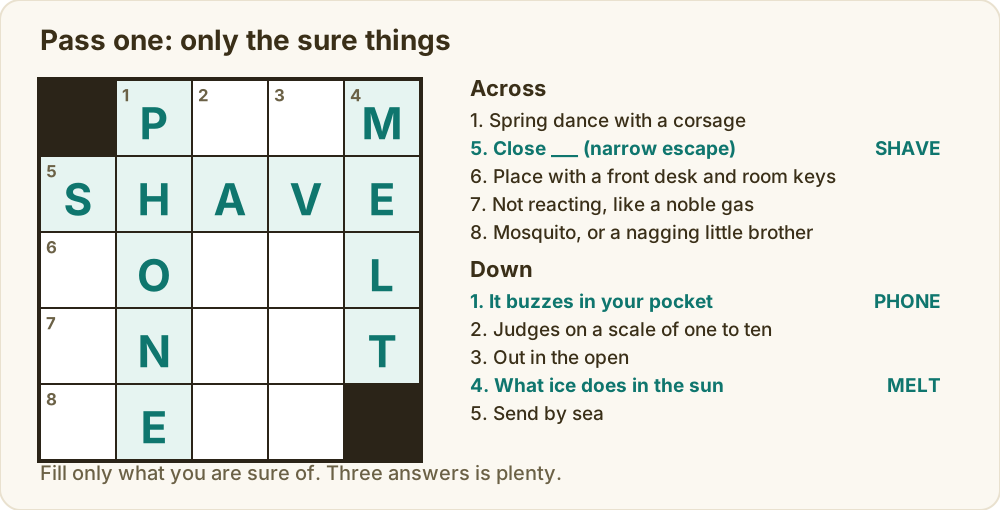
Three answers is a good first pass. Fill in the blank clues and plain definitions are the easiest kind, so look for those first. Skip anything that makes you think.
Pass two: let the crossings finish the word
Now look at the empty entries again, and this time read the letters already sitting in them. 1 Across reads P _ _ M. The clue is "spring dance with a corsage". Only four everyday words fit that shape at all, and one of them is PROM. 6 Across reads _ O _ _ L, and the clue says a place with a front desk. HOTEL.
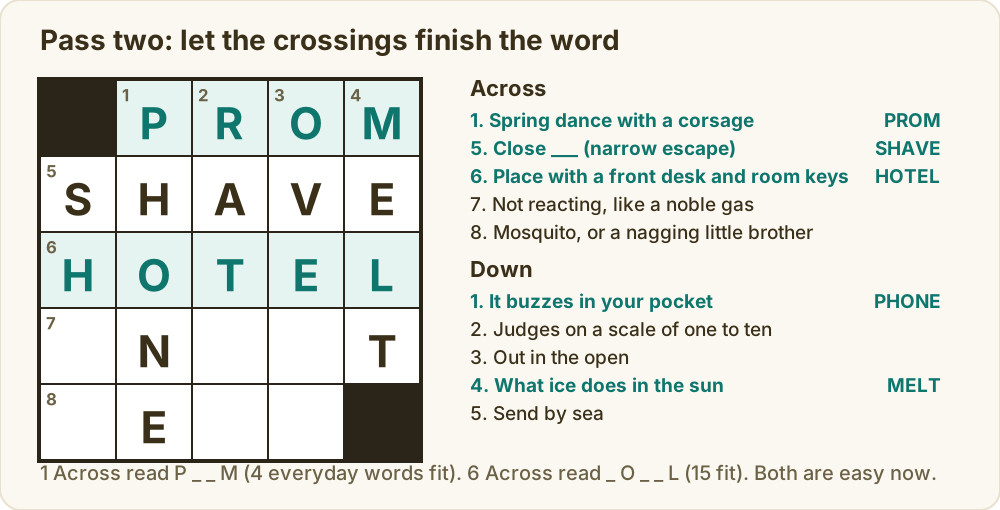
Neither clue was hard, but notice that you did not solve them from the clue alone. You solved them from a shape with a hint attached.
Pass three: the hard clues fall from the letters
The two clues that would stop a beginner are 3 Down, "out in the open", and 7 Across, "not reacting, like a noble gas". Read the grid instead of the clue. 3 Down reads O V E _ _. Only two everyday words fit, OVENS and OVERT, and the clue picks OVERT. Now 7 Across reads _ N _ R T. One word fits: INERT.
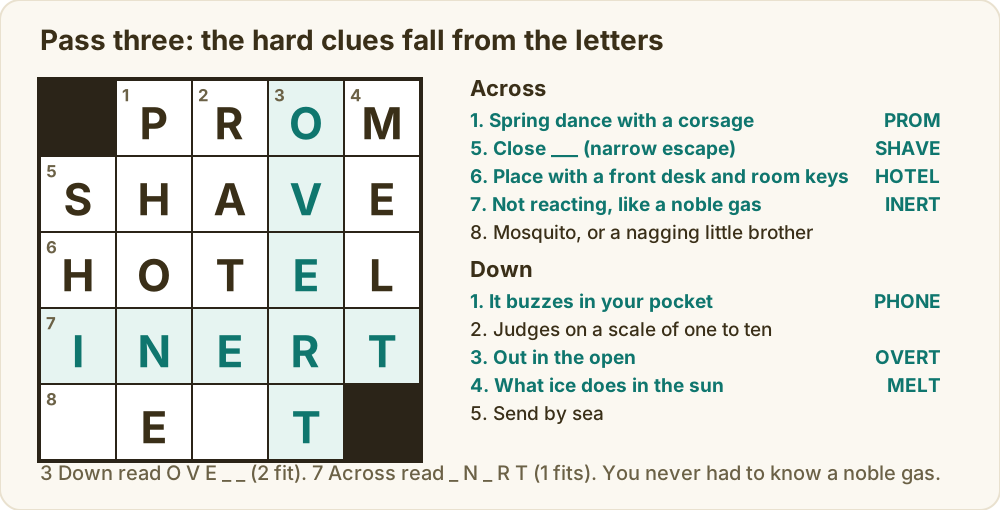
You never had to know what a noble gas does. The letters knew.
Finished
The last three entries write themselves. 2 Down reads R A T E _ and the clue is a verb, so RATES. 5 Down reads S H I _ and the clue says send by sea, so SHIP. That leaves 8 Across as P E S T, which is indeed a mosquito.
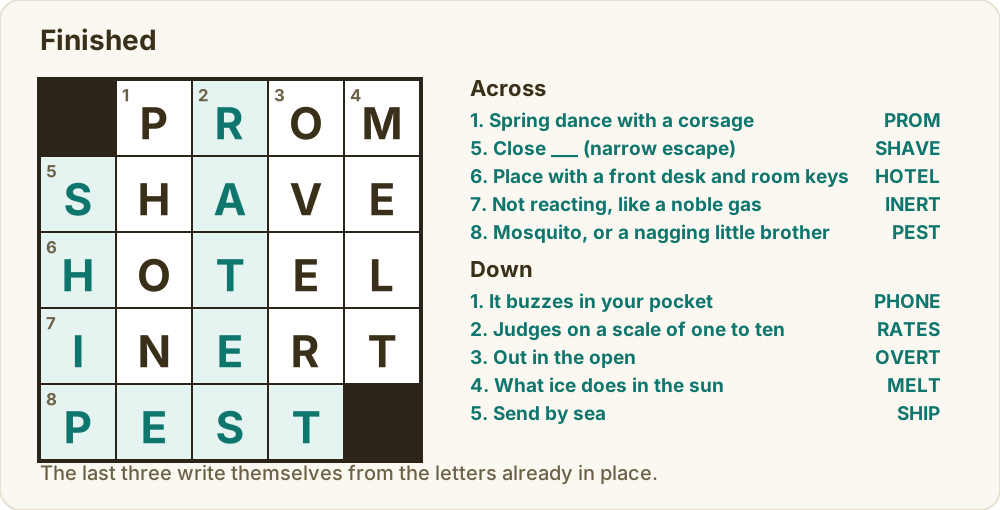
Ten clues, and you solved perhaps four of them from the clue. The grid solved the rest. That is not a trick of this puzzle. It is how every crossword works, and the next section shows why.
Why three letters is usually enough
We counted. We took the 2,308 everyday five-letter words behind our own games and asked, for every word and every choice of known squares, how many other words on the list fit the same pattern.
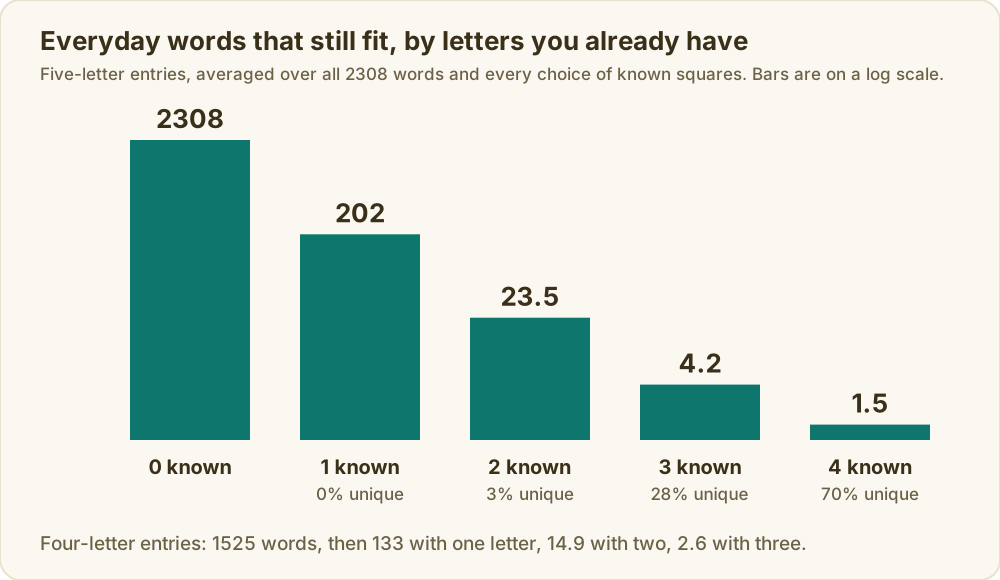
With no letters, any of 2,308 words could go in. One letter cuts that to about 200. Two letters, about 24. Three letters, about 4, and by then the entry is already down to a single word 28 times in 100. With four letters it is unique 70 times in 100. Four-letter entries collapse even faster: 1,525 words, then 133, then 15, then under 3.
So the plan is not "know the answer". The plan is "get three letters into it from the other direction, then read the clue". Three letters plus a clue is nearly always enough.
Which three letters matters, though. Here is a pattern that looks solved and is not.
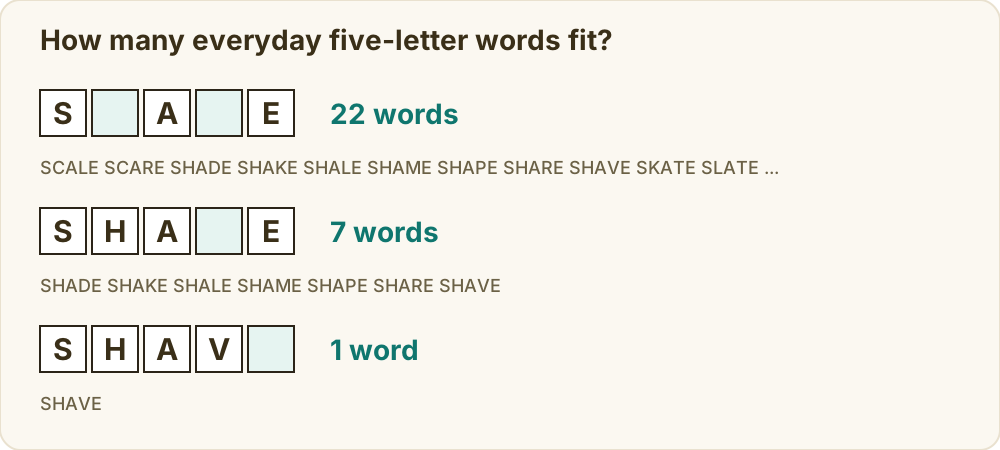
S _ A _ E fits 22 words. Adding the H gives S H A _ E, and that still fits seven: SHADE, SHAKE, SHALE, SHAME, SHAPE, SHARE and SHAVE. The fourth letter is the one that decides it. When a pattern will not resolve, the missing letter you need is usually in the middle of the word, so go and get it from the crossing clue instead of staring.
Read what the clue is telling you
Clues are written to a set of rules, and the rules leak the answer's shape before you know the answer.
| What you see in the clue | What it tells you about the answer |
|---|---|
| Past tense ("Ran quickly") | The answer is past tense too |
| A plural ("Cats, e.g.") | The answer is plural, and probably ends in S |
| An abbreviation ("Dr." or "e.g.") | The answer is an abbreviation |
| "For short" or "briefly" | The answer is a shortened form (EXAM, not EXAMINATION) |
| A word in another language | The answer is in that language (AMI for "friend, in Paris") |
| A blank ("___ and crafts") | A fill in the blank, nearly always easy |
| A question mark at the end | A pun or a twist. Read the clue the other way |
The question mark is the one that catches people. "Flower of London?" is not a rose. It is something that flows: THAMES. "Number?" on its own is not a count. Something that numbs is a number, so the answer might be ETHER. "Lead" can be the metal, the main part in a play, or to guide. "Bow" can be a ribbon, the front of a boat, or what you do on stage. When a clue seems unfair, you are stuck on the most common meaning of one of its words. Try the other meanings.
Part of speech is the quiet one. In our mini, 2 Down was "judges on a scale of one to ten". Judges here is a verb, so the answer is a verb: RATES. If you read it as a noun you look for people in robes and never find them.
The words that turn up most
Crossword makers have a small set of short words they reach for again and again, because those words are full of vowels and easy to cross. XWord Info, which keeps a database of every New York Times crossword, lists the most used answers of the modern era. The top ten are ERA, AREA, ONE, ERE, ELI, ATE, ORE, ETA, ALE and ARE. Just below them come OLE, ERR, ODE, ALI, ALA, ERIE, IRE, ALOE, ACE, EEL, EAR, ADO, SPA, ANTE, EDEN, ASH, IRA, END, ARIA and ELSE.
Read that list once and you will notice that you know almost all of them. A few need a meaning:
| Word | What it means when it turns up |
|---|---|
| ERE | before, in old poems |
| ELI | a Yale student, or the priest in the Bible |
| ETA | a Greek letter, or the time you expect to arrive |
| OLE | the shout at a bullfight |
| ALA | in the style of, from the French |
| ERIE | the Great Lake, or the canal |
| ALOE | the plant in the sunburn gel |
| ADO | fuss, as in much ado |
| ANTE | the chip you put in before a poker hand |
| ARIA | a solo song in an opera |
Then there is a second group, the words that live almost only in crosswords. Solvers call them crosswordese. APSE (the curved end of a church), AERIE (an eagle's nest), ERNE (a sea eagle), OBI (the sash on a kimono), ETUI (a small case for needles), EWER (a jug), ORT (a scrap of food), STOA (a Greek porch), OGEE (an S-shaped curve), EMU, GNU and MOA (three birds and an antelope), RAJA and RANI (an Indian prince and his wife). You will not use these words anywhere else, and you do not need to study them. After a month of daily puzzles you will know them without trying.
Getting faster
Once you can finish, the next thing is finishing quicker. The habits are the same ones on the card, done without hesitating.
Use the same order every time. Down the Across clues once, writing only sure answers. Down the Down clues once. Then back to the top, where the crossings have now done half the work. A fixed route means you never waste time deciding what to look at next.
Move on the second you stall. A clue that does not come in a few seconds gets skipped. Work a different corner. The letters from that corner feed back into the stuck one, and it often falls without you ever solving the hard clue on its own.
Write it and keep going. If an answer fits the crossings and matches the clue's tense and part of speech, it is right. The grid will tell you if it is wrong, because a crossing will refuse to work. That is also the rule for a corner that will not close: one of your early answers is wrong. Erase it, even if you liked it.
Newspaper puzzles usually get harder through the week, easiest on Monday and hardest at the weekend. Build speed on the early days first. A Saturday puzzle before you are ready teaches nothing except frustration.
Is looking up an answer cheating?
There are whole books for this. A crossword dictionary lists answers by length and by the words a clue tends to use, and the well known ones are the Random House Webster's Crossword Puzzle Dictionary, the Merriam-Webster Crossword Puzzle Dictionary and, for British puzzles, the Chambers Crossword Dictionary. Most apps also have a "check" or "reveal" button.
Our view: it is your puzzle. If looking up one answer turns a puzzle you would have abandoned into one you finish, look it up. You will remember that word next time, which is how everyone learned ETUI. The only thing to avoid is revealing before you have tried the crossings, because then the grid never gets the chance to teach you anything.
If you would rather find the answer yourself, that is fine too. Put the puzzle down and come back in an hour. It is surprising how often the answer is waiting for you.
Where to play
For a daily puzzle, our roundup of the best crossword puzzle games covers the apps and sites worth your time. If it is the deduction you enjoy more than the trivia, Pairdle gives you the same feeling of letters narrowing down to one answer, in a couple of minutes a day.
Related articles
The 10 Best Crossword Puzzle Games and Apps in 2026
From the NYT Crossword to free daily apps and cryptics, the 10 best crossword games, with a plain note on which to start with.
Pairdle 1.5: What's New, What's the Same, and an Exciting New Level
Pairdle 1.5 puts every level on one row, unlocks Pro, adds Expert and endless Practice, and introduces Olly the owl. Plus what a 12-tile board really holds.
How to Use a Word Unscrambler Without Spoiling the Puzzle
A word unscrambler will hand you 348 words you did not ask for. The skill is narrowing it to the six that fit, without spoiling the answer.