

Once you can finish a crossword, the next goal is finishing it faster — and speed is a genuinely trainable skill, not a gift. The fastest solvers aren't smarter; they've internalized a set of habits that let them skip the slow parts. This guide covers the techniques that actually cut your time, building on the fundamentals in our how to solve a crossword guide.
We build word puzzles, so we think a lot about what separates a five-minute solve from a twenty-minute one.
1. Learn "crosswordese"
Every crossword draws from a small pool of recurring short words — vowel-heavy, oddly useful entries that constructors lean on to make grids work: ERA, ORE, ALOE, OREO, ETUI, EWER, ESNE, ASEA, OBOE, EPEE, ERNE, ANEW, ELAN. You'll see them again and again. Recognizing crosswordese on sight means you fill those squares instantly instead of puzzling over a clever clue. This is the single biggest speed unlock for newer solvers.
2. Solve the fill, not the puzzle
Fast solvers don't try to be clever — they try to be efficient. On the first pass, blitz through every clue and drop in only the instant answers (gimmes, fill-in-the-blanks, crosswordese). Don't stop to think hard about anything. The letters those answers scatter across the grid turn hard clues into easy ones via crossings. You're not solving clues in order; you're seeding the grid so it solves itself.
3. Trust the crossings completely
The moment you have a few crossing letters in an entry, stop reading the clue cold and let the pattern finish it. O_AN_E is ORANGE; S_A_E is probably STARE, SHALE, SLATE, or SPACE — and one crossing letter decides which. Speed comes from pattern completion, the same instinct that makes our most common 5-letter words reference useful: your brain fills the shape before you've consciously read the clue.
4. Recognize clue conventions instantly
Fast solvers parse a clue's type in a split second:
- "?" = wordplay/pun — don't read it literally.
- Abbreviation in the clue = abbreviation in the answer.
- Tense and number must match the answer.
- "For short"/"briefly" = a shortened form.
- A foreign word in the clue often wants a foreign answer.
You're not solving these clues so much as classifying them, which is far faster than treating each as a fresh riddle.
5. Move on the instant you stall
Every second staring at one stubborn clue is wasted. The fast habit is to abandon and rotate: a clue that won't come immediately gets skipped, and you work a different corner. Fresh gimmes there feed crossing letters back into the stuck section, which often cracks it without you ever "solving" the hard clue directly. Never let one square hold up the whole grid.
6. Solve a lot, ideally daily
Speed is reps. The more puzzles you solve, the more crosswordese you recognize, the more clue conventions become automatic, and the more answer-shapes you complete on instinct. A daily puzzle habit is how every fast solver got fast — there's no shortcut around volume, but the volume genuinely works. (Our roundup of the best crossword puzzle games is a good place to find a daily.)
7. Use a consistent solving order
Fast solvers don't wander the grid randomly. A repeatable routine saves seconds on every puzzle: scan all the Across clues top to bottom dropping gimmes, then all the Down clues, then return to the top and let the now-seeded crossings carry you. Because you always work the same way, you never waste time deciding what to look at next — your eyes just flow. It feels mechanical at first; within a few weeks it's second nature and noticeably faster than hunting around for whatever clue looks interesting.
8. Stop second-guessing confident answers
Beginners lose huge amounts of time re-reading a clue they've already answered correctly, worried it might be a trap. Fast solvers commit: if an answer fits the crossings and the clue's part of speech, they write it and move on. Confidence is a speed skill. The grid itself will tell you (via an impossible crossing) if you were wrong — so trust your answer until the puzzle actively contradicts it, instead of pre-emptively doubting every entry.
A note on difficulty curves
Many newspaper crosswords get harder through the week (easiest early-week, hardest at the weekend). If you're building speed, solve the easier days first to drill the fundamentals, then graduate to harder grids as your gimme-recognition improves. Trying to speed-solve a Saturday puzzle before you're ready just teaches frustration.
Get faster the same way you get better at any puzzle: build pattern recognition until the easy 80% is automatic, freeing your brain for the genuinely hard 20%. Start with the fundamentals in how to solve a crossword, drill crosswordese, and solve daily — and if you want a quick logic warm-up alongside your crossword, Pairdle pairs nicely.
Related articles
How to Solve a Crossword Puzzle (Even a Hard One)
A practical guide to solving crosswords — how to read clues, where to start, the trick to crossing letters, and how to crack the wordplay in tougher puzzles.
The 10 Best Crossword Puzzle Games and Apps in 2026
From the NYT Crossword to quirky indie takes, these are the 10 best crossword puzzle games and apps — for beginners and seasoned solvers alike.
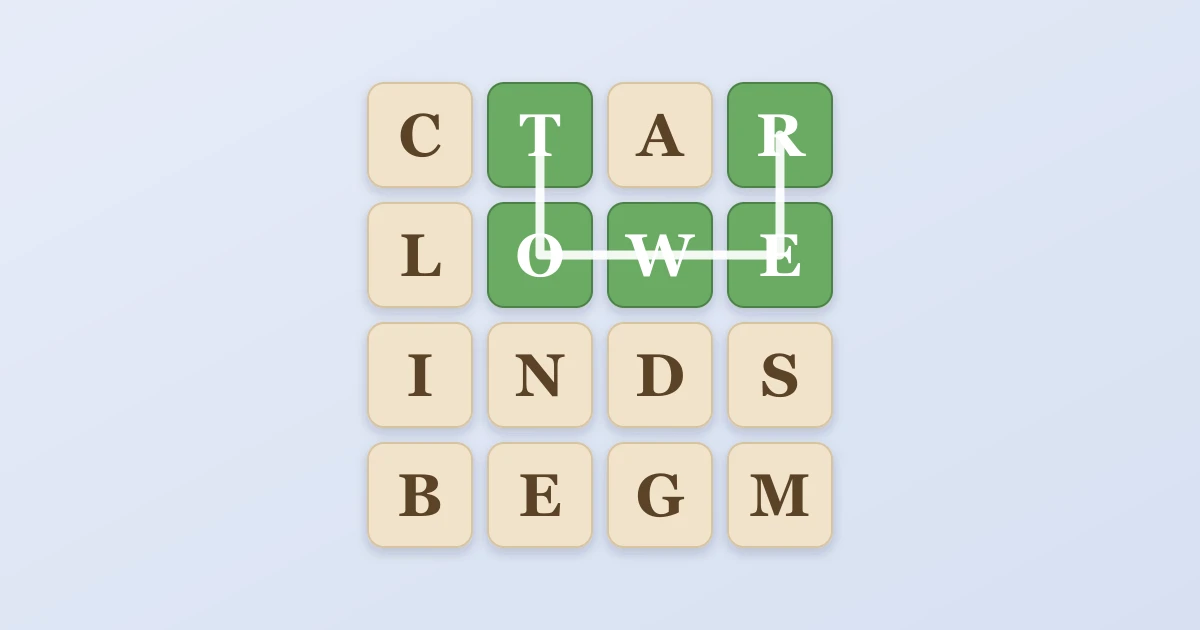
How to Play Boggle, and What 100,000 Boards Taught Us
Boggle rules and scoring, then real strategy: we rolled 100,000 boards against our game dictionary to find the words, pairs and letters that actually win.