The Chronicle of Epic Words
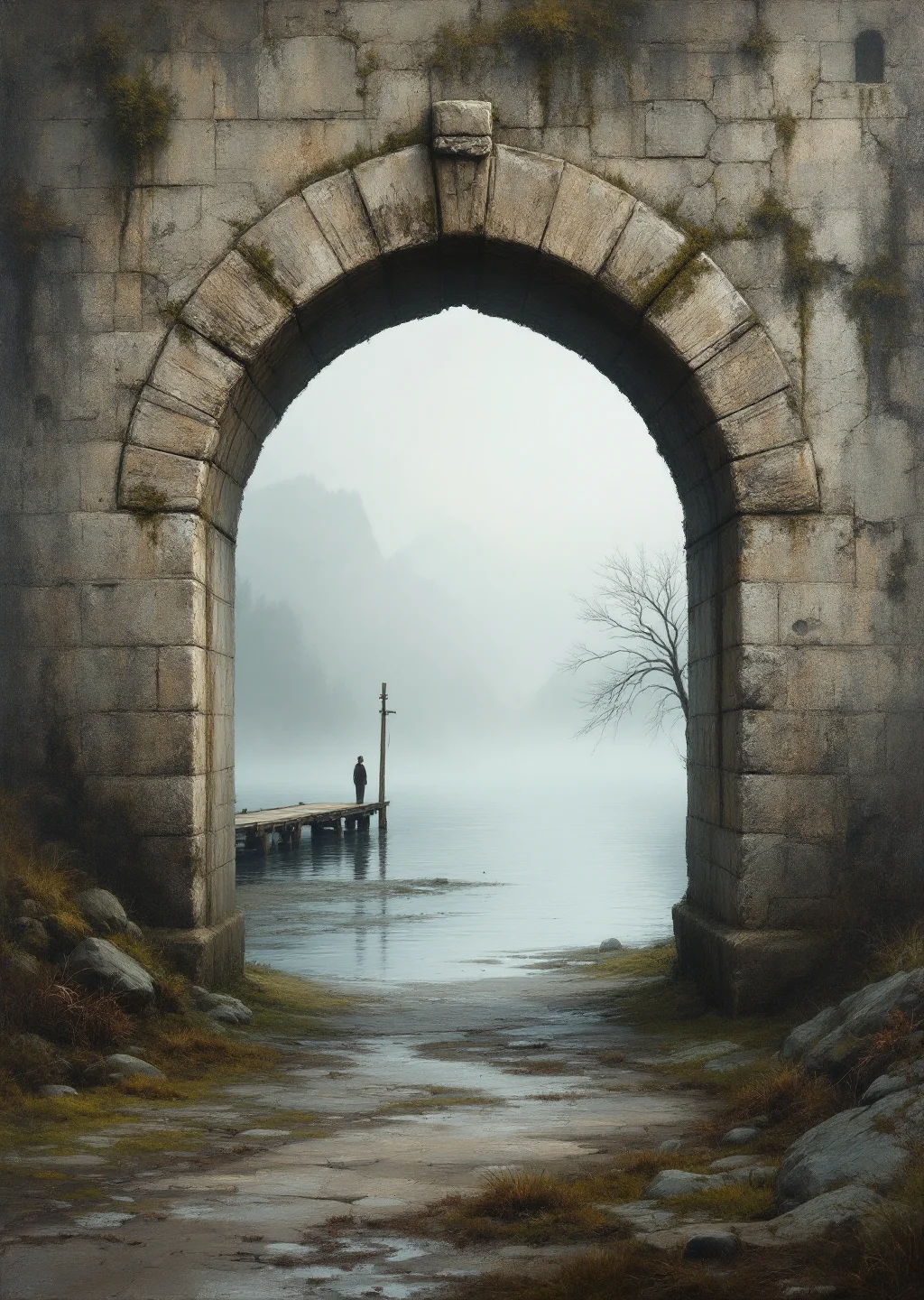
Vellum Gate
Every rule here is written in chalk, and undone by rain.
At a glance
- Kingdom IV (The Scriptorium)
There is a kind of place that mistakes bureaucracy for permanence, and Vellum Gate is its patron saint. The arch itself is honest enough — old stone, river-damp, the last hard threshold before the land gives up and hands you to the water. It is everything chalked above the arch that has the trouble. Look up as you pass under and you'll see the rules: rank on rank of them, chalked one over the other in a dozen different hands, each notice commanding today and vanishing tomorrow. Half of any given rule has been half-countermanded by a later one. The other half has been rained on.
Nobody at Vellum Gate seems to find this a problem. That is the first thing to understand about the place — that it treats the chalking of a rule and the keeping of a rule as entirely separate activities, neither of which need trouble the other. A decree goes up. A storm comes through. A fresh decree goes up over the smear where the old one was. The wall is never wrong, because the wall is never the same wall twice, and everyone below it has long since stopped pretending otherwise.
Read the notices while you can. The highest one — the one the weather hasn't reached yet — poses the whole gate's philosophy as a riddle: I am written above and undone by rain. I command today and vanish tomorrow. The answer is a decree, of course, which is the only thing this arch produces in any quantity. As lasting as chalk in a storm, and about as binding.
But if you look past the fresh chalk, down where the newest hands haven't bothered to write because there was nothing left to write over, you'll find something older. One word is carved into the stone above the gate — cut deep, meant to last, from back when whoever raised this arch still believed a rule could be permanent if you only committed it to stone instead of chalk. Two of its letters have flaked away regardless. The word, worn as it is, is chalk — which is either the driest joke the vale has ever made at its own expense, or the most honest confession a gate has ever carved into itself. Every rule here is written in chalk, and undone by rain, and the founders knew it well enough to carve the fact in the one medium that might outlast the practice. It didn't. Two letters gone, and the confession only clearer for it.
Vellum Gate belongs to a whole kingdom that has confused the record for the thing recorded. Behind you, the copy-houses of The Copyist's Quarter fight over which transcript of the tolls is real; ahead and above the river, at Erasure Overlook, old texts were burned and one sentence has refused to burn for seventy years. Between the two, Vellum Gate does the thing this realm does best: it produces authority faster than the weather can wash it off, and calls the smear that's left underneath tradition.
Practically, it is a threshold and little more — a place you walk through rather than to. There is no toll here; the toll is downstream, and it wants a name, not coin. But linger a moment under the arch before the road runs out. Read a decree while it still commands. It won't tomorrow, and neither will the one written over it, and somewhere under all of them the word chalk is still carved into the stone, patiently telling anyone who looks the only rule this gate has ever actually kept.
Where you'll find it
Vellum Gate is the last arch of dry land before the road runs out and the river begins, in Kingdom IV (The Scriptorium). You come to it out of The Copyist's Quarter, where the copy-houses are still arguing over whose transcript of the crossing-tolls is the authoritative one. Pass under the gate, follow the road until it stops being a road, and you'll find the Ferryman poling out of the mist to meet you.