The Chronicle of Epic Words
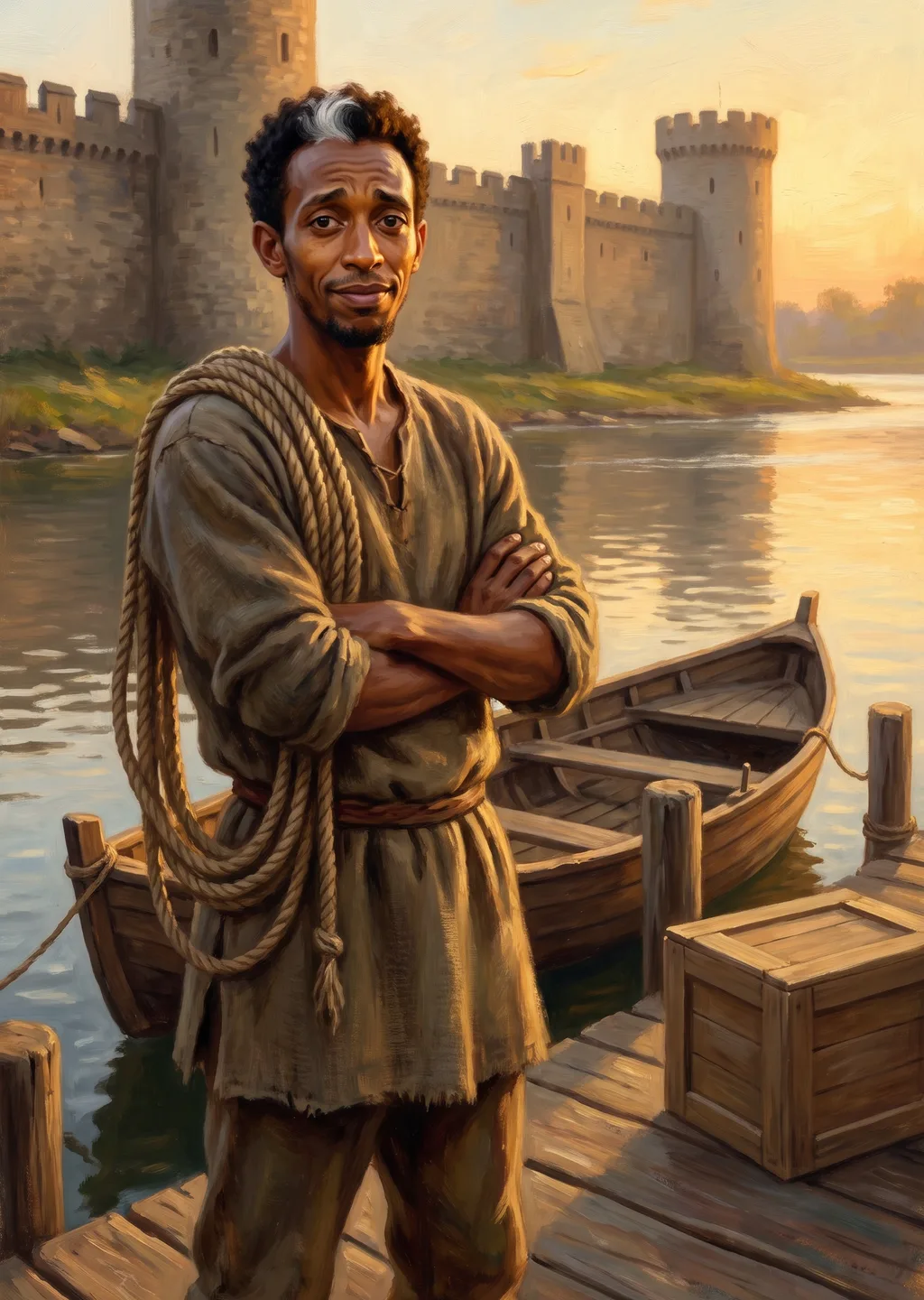
Darro
A river-runner who has moved discreet cargo for eight years and only just started wondering why.
At a glance
Old enough to have run the river eight years. Young enough to still be surprised by what he's been carrying.
- Home The rivers
- Kingdom XVIII (The Grammar Vault)
- Faction Neutral · River-runner
- Ally Rowan
Darro will tell you, quickly and at length, that he is not a smuggler. He is a river-runner — a man with a boat and a schedule and a very reasonable arrangement with a certain kind of client — and if some of that client's freight would rather not meet a customs officer, well, that's the client's affair, and Darro has made a working career out of it being none of his. He is warmer than his trade should allow, faster with an answer than a man in his position ought to be, and he has spent eight years being paid, in part, not to ask questions. He has gotten so good at it that he's forgotten it was ever a skill.
He's been on the river for eight years — mostly ordinary cargo, grain and timber and crates of nothing in particular, with the occasional favor for houses that can't run their business through the customs post without somebody asking uncomfortable questions about the customs. That was the whole job, as far as he ever needed it to be: a discreet errand-boy for people with discreet reasons. It never crossed his mind to wonder why so many of the names on his manifests don't appear on anything official — a smudge here, a lifted line there, a client who prefers to be described rather than named. In his line of work, that is simply what a client looks like. You do not, if you want to keep the work, look at it too hard.
You'll meet him mid-argument, on the landing below the leaning towers of Tense Keep, where two crews are shouting over an intercepted crate and carefully not calling it anything. When it comes open on a bed of straw, there's a single object inside wrapped in oiled cloth — "that's not cargo," Darro says, too fast, "that's ballast" — and it is the most beautiful ballast anyone has ever seen, and it is not his. Beneath the straw is the manifest: a careful scrivener's hand, three entries gone clean out of it, the ink not scratched but absent, as though someone had catalogued the shipment correctly and then someone else had quietly uncatalogued it. Darro squints at it like a man reading a language he's fluent in and has suddenly decided he distrusts. "Client's handwriting," he says. "Or a clerk's. Whoever it was, they knew exactly what they were logging — and exactly what to leave off the log after." He has no idea how right he is, or how wrong the word "client" has been for the length of his career.
When the object goes to the stranger the crate itself seemed to recognize, the feud deflates the way arguments do once the thing being argued over is no longer available to argue about. The rival crew grumbles off. Darro exhales like a man who has just dodged several kinds of trouble at once, and lands, cheerfully, on his working policy: "Whatever that was, I'm going to go ahead and not ask." It has served him fine so far. He says so like a charm against the day it stops.
There's a softer thread to him, and it runs east. On the eastern road there's a barmaid with two braided ponytails, and Darro carries her around the way he carries an urgent parcel he can't quite deliver — a warmth conducted almost entirely through mailed things and undelivered courage. Catch him at The Passive Voice, where the ale is brought and the complaints are received with equanimity, and you'll find him on his fourth draft of a letter and his fourth crumpled ball of parchment. "It's not the words," he'll insist, not looking up. "I have plenty of words. It's that every version sounds like it's being written by somebody about to ask for something, and I'm not. I just want to say I still think about the two braids." He never says her name — eight years of not-naming the cargo has become a reflex he brought home without meaning to — but the woman keeps the Pressed Petal, and her name is Rowan, and the thing between them has been unfinished and long-distance and mostly conducted through parcels since long before you turned up to watch him stall at "Dear —."
He does, eventually, fold the letter with more care than the paper strictly warrants and hand it to a river-post rider before he can talk himself into a sixth draft. "There," he says, to nobody in particular. "Whatever happens now, at least it's out of my hands and into somebody else's boat." Which is, when you think about it, the only way Darro has ever known how to send anything anywhere — the cargo, the letters, the questions he's spent eight years declining to open. He's a good man with a bad habit of not looking, standing on a landing with a coil of river-rope in his pocket and the first faint, unwelcome suspicion that the not-looking has been costing him something all along.
Tales & Rumors
For eight years Darro has run the river with ordinary freight and the occasional favor for houses that can't put their business through customs without somebody asking uncomfortable questions about the customs. He thought that was the whole job — a discreet errand-boy for people with reasons to be discreet — and it never once occurred to him to wonder why so many of his clients' names appear on nothing official, because in his line of work that is what a client looks like. He is, on some level he hasn't examined too closely, beginning to find the not-wondering exhausting.
There is a barmaid on the eastern road with two braided ponytails, and Darro has been not-quite-writing to her for longer than he'd admit to her directly. It's never the words — he has plenty of words — it's that every draft comes out sounding like a man about to ask for something, and he isn't; he just wants to say he still thinks about the two braids. The fifth draft opens 'Dear —' and stalls there for a genuinely uncomfortable length of time. Eight years of not-naming his cargo, it turns out, is a hard reflex to leave at the dock.
When a stranger settles a problem for him, Darro doesn't pay — he presses a small coil of river-rope into your hand and insists it isn't payment, just 'the kind of thing you keep when someone solves a problem you didn't know how to name.' Coming from him, that is very nearly a philosophy, delivered by a man who has made not-naming things his whole living and is only now, on some quiet level, hearing how that sounds.
How They Measure Up
A river-runner keeps a running tally on himself, same as his cargo — and leaves the awkward line blank on purpose.
Hauls his own freight off the boat and up the landing, and complains about it the whole way, which he counts as a second job.
Ties off a mooring line without looking and hands you a coil of river-rope like it's nothing. It is, in fact, the most honest thing he owns.
Eight years of river weather and river hours and river customers, and the man still talks like it's early. That's stamina, mostly of the mouth.
Quick with a number and quicker with an answer — sharp about everything except the one question he's spent eight years politely declining to ask.
Has never once wondered why his clients' names don't appear on anything official, because in his trade that is simply what a client looks like.
Warmer than his line of work has any right to make a man. Talks past a feud, talks around a crate, and cannot, for the life of him, talk to a barmaid on the eastern road.
The Working Policy — not asking. Hand Darro a crate that recognizes a stranger, a manifest with the letters gone clean out of it, or a feeling he can't name, and his instinct is the same each time — file it under 'not my business,' close the lid, and keep running. It has served him fine so far. He is starting, very quietly, to suspect it hasn't.
Where you'll meet him
You'll find Darro on the landing below Tense Keep, in Kingdom XVIII (The Grammar Vault) — attached to one of two river crews shouting past each other over an intercepted crate, and doing that thing where nobody's actually said the noun yet, everyone calling the thing in the middle 'the thing' as though naming it might legally decide whose it is. He has the specific energy of a man who's just discovered his cargo is worth arguing about and would rather it weren't. The crate holds one object wrapped in oiled cloth that he'll swear blind is 'ballast,' and a manifest in a precise scrivener's hand with three entries lifted clean out of it — the ink not crossed out but simply gone. Settle the feud, and you'll likely find him later at The Passive Voice, on his fourth crumpled draft of a letter he can't bring himself to finish.